GILES, Thomas D.

0 1
Read Time:2 Minute, 28 Second

by Elon Hanson

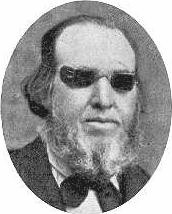
Thomas was blind; as to the cause we have no explanation.

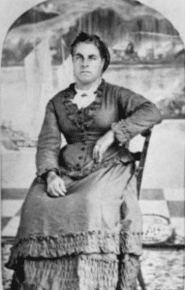
At age 35 years, he and his wife Margaret joined the church in Wales. They had three children: Joseph, 7; Hyrum, 6 and Maria, 1.

They left Wales and went to Liverpool, England, where they boarded the Sam Curling ship and sailed with a group of all-Welsh Saints. They set sail on April 17, 1856. They were five weeks reaching Boston, Massachusetts [on] May 23, 1856. From there they took the train to Iowa City, Iowa.

They had to wait three weeks until the handcarts were finished, and they left in the Edward Bunker Company about the middle of June with 300 Welsh Saints in the company. Giles, though blind, pulled his handcart much of the way.

Soon after leaving Iowa City, baby Maria became ill and died, and was buried beside the trail. A few weeks later, Margaret, his wife, died and was buried along the trail. The two boys, Joseph and Hyrum, were sent back to join another group of Welsh Saints because Thomas was unable to care for them in his blind condition.

At this time, Thomas was assigned to a tent with about ten other people, including Thomas Evans (with only one leg) and his wife Priscella Merriman Evans, a widow with five children, another blind man and a man with one arm.

At Fort Bridger, Wyoming, Elder Giles became seriously ill. Captain Bunker held the company up for two days and then ordered the camp to move on, but he left two men to bury the sick man (Giles) as they didn’t expect him to live only a few hours. Remarkable faith and frequent administrations of the elders who were left with Giles kept him alive until evening when Parley P. Pratt, the apostle, reached their camp. Pratt had known Giles in Wales. Elder Pratt gave Thomas Giles a remarkable blessing. In it, he made these promises: that he would be instantly healed and made well; that he would rejoin his company and arrive in the Salt Lake Valley safely; that he should there rear a family and that, because of his faithfulness, he would be permitted to live as long as he wanted to.

These blessings were fulfilled in their entirety. Elder Giles rejoined his company and reached the Salt Lake Valley [on] October 2, 1856, remarried and lived to bless and name seven of his grandchildren. Thomas Giles died November 2, 1895 after he had expressed a desire to go.

After Thomas D. Giles arrived in Salt Lake, he specialized in music — he played the harp and was widely known as the “blind harpist.” He also sang hymns and popular songs, and he traveled about the state giving concerts and playing for dances.

His harp is in the Daughters of Utah Pioneers Museum in Salt Lake City, Utah.


This article was previously published in the July/August 1990 issue of Pioneer Magazine
Happy
Happy
0 %
Sad
Sad
0 %
Excited
Excited
0 %
Sleepy
Sleepy
0 %
Angry
Angry
0 %
Surprise
Surprise
100 %
You May Also Like

COX, Orville Southerland

Occasionally, the monotony of the bellows was broken in other ways. For example: At one time, oxen were brought to the shop to be shod that had real hard hoofs, called “glassy hoof.” Whenever Deacon undertook to drive a nail in, it bent. Cox straightened nails over and over, as nails were precious articles in those days, and must not be discarded because they were bent. After a while, the boy said, “Let me.” He shod the ox without bending a nail. Thereafter, Cox shod all the oxen with one and all that came to the shop.
View Post

ALLRED, Isaac

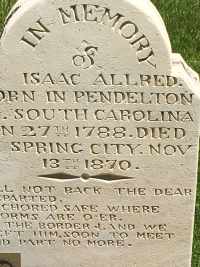
He promised them that they would not have to shed the blood of their fellowmen, but that this added affliction heaped upon them in this hour of their trials would turn out as a blessing upon their heads. Several of the young Allred boys joined the "Mormon Battalion" and performed with that Battalion in the longest march of foot soldiers in length of miles ever traversed by any army in the history of time.
View Post

COOLEY, Andrew Wood: A pioneer devoted to family

December 25, 1885. I wish I could have had the privilege of spending Christmas with you at home, but it is our lot to spend it apart. I hope you have spent it in a different way from what I have. We had a good dinner. The warden did the best he could to make the prisoners happy, but when a man’s liberty is gone, he can’t be happy when he has a family at home. I have thought of home the whole day long and so I do every day. I shall never be a happy man if I cannot enjoy the society of those that are my own flesh and blood which my family is. Things look dark to me, but I must hope for the best. God is at the helm
View Post

WOOD, George Lymer: An Incident in the Life

"The usual method of disposing of the dead was to weight the bodies and dump them overboard. When others and I asked the privilege of removing our dead and burying them on land, the Captain was hateful and mean about it. All of my dear ones except Samuel's wife I had to perform this last earthly service for. Others of the party had sustained like losses, and were as anxious as I to bury them as decently as possible. The Captain at last agreed to wait and we hired a Negro to help dig a trench big enough to put them in all together. We removed the dead from the boat and began our heart¬breaking task, but had it only partly done when the boat whistle blew and the boat began to get underway. All ran hastily back except the Negro, one woman and myself. She and I stood at the grave site of our dead and watched them go. What bitterness of spirit I experienced only God knows. Was this what I had come to America, the home of the brave, for? Here I was with two strangers standing beside the open grave of a group of strangers. Our common interests were all lying before us or fast receding from sight, subject to the whim of a heartless thing in human form. "Surges of emotion swept over me, sorrow, anger, love, fear, and despair, but my nearest duty was to protect these rapidly decomposing dear forms of mine from the ravages of wild beasts, heat, and other elements. Perhaps I had been blessed and spared to perform this last service. If! were dead with them our bodies would rot together. So I urged on my companions the need for work. I felt responsible for seeing this thing through.
View Post

ALLEN, Elihu Moroni

About 1863 the Allen family settled in Huntsville, Weber, Utah where the last 7 children were born. Their first home in Huntsville was a two-story log house. Elihu made a lot of the furniture they used. He made chair frames from pine trees and made the seats from braided leather that he cured to a very soft pliable seat.
View Post

SWEETEN, Colen Hagle

Finally, I heard his muffled voice calling from the bottom of the well. He said that the horse filled the entire hole. There was just about enough mud and water to cover the horse. He could not find anything of the man or the shovel.
View Post