0
0
 1
1
‘Me Good Indian’
By Charles Keith Kimber
This story originally appeared in the November/December 1970 issue of Pioneer Magazine
I LOVE THE small community of Grouse Creek, Box Elder County, Utah and like to spend all the time I can there. So, it was natural for me to want to write about the very first settlers of this small western settlement located on the borders of Utah, Idaho and Nevada.

Grouse Creek Jack was a highly respected Shoshone Indian for whom the community was named and also active, with other members of his tribe, in The Church of Jesus Christ of Latter-day Saints (Mormon), at Grouse Creek and neighboring Idaho communities.
When the Indian was eleven years old, he had an earth-shaking experience while playing in a canyon located near Grouse Creek, known as Rocky Pass. He beheld a sight that frightened him terribly. Through the pass came loud noises, then huge covered boxes on wheels, that were pulled by mules and horses.
Men were everywhere riding on horses around the moving boxes. The many sounds in the ordinarily silent pass bounced in echoes from the cliffs above and frightened the lad. White men with hair on their faces shouted to one another in a strange tongue. The little Indian fellow crawled under a juniper tree with boughs close to the ground and dug a hole in the needles under the tree. He completely covered himself with the needles so that just his head was poking out and remained in this manner, full of terror, for three days.
Years later he spoke of the episode on Rocky Pass in this fashion:
“When first see white man, me pretty much coward, hide in brush so maybe after white man leave.”
The wagon train seen by Jack as a boy must have been the party of California bound emigrants led by Joseph Walker who passed this way in 1843,
Respected Brigham
Grouse Creek Jack knew and respected Brigham Young. He was about 15 years old when he first met the great church leader in Salt Lake City. He explained the meeting this way:
“Brigham come with hand held up. Me don’t know what he want, maybe pray.”
Grouse Creek Jack (Pugah-junip) the “Mormon” Church and was a faithful member all of his 109 or 110 years. He loved young people and would always address his talks at Sacrament meetings in the Grouse Creek Ward Chapel to the youth, giving them some kindly advice. In his declining years, he made a special journey from his home in Fort Hall, Idaho, to Grouse Creek, Utah for the express purpose of having Bishop John Hadfield get him a set of temple clothes ready so that he might have them for his burial when the time came.
He said he was a good Indian since joining the church and worked on the Logan Temple, carrying mortar and plaster up the scaffold during its construction. He was married to Ankes Pompy Jack in this same temple.
Had Wild Life
He said he used to play cards, gamble and drink moonshine, whiskey and smoke, then something came to him from up above and told him to stop and go and be baptized. If baptized, he would go up instead of down and would feel good. He said that he liked the Book of Mormon saying,
“Good Indian baptized, die, put in ground, come up, go to clouds young man, white and feel good. Bad Indian, no baptized, die, put in ground, stay there. Me married in Logan Temple, baptized in Logan Temple, my wife, me. meet all bishops, Salt Lake, Price, Pocatello, Logan, all over. Brigham Young came over, no Indian Bishop help me, but Book of Mormon did. My head is all right, my heart is all right. Book of Mormon help me. That’s all I want now, feel good. That way Book of Mormon help care for me, cure me. Book of Mormon help in everything and that’s all I want today.”
It has been said that he had a remarkable memory for a man of his age (at that time, 104) and could recall the names of persons he had not seen for 50 or 60 years, even the sons of these people whom he had known as small children in Grouse Creek.
Loved the Valley
Jack loved the Grouse Creek valley and told of when he and his family hunted buffalo and other wild game.
“Me dig hole in ground, hide in it and cover over with sagebrush so buffalo no see, then shoot with bow and arrow. Me eat buffalo meat and make shirt, pants and moccasins from skin. Make fire by rubbing two sticks together, red pine best to make fire because it hardest wood.”
His honesty was never doubted by those who dealt with him. Philip Paskett, a pioneer of the valley knew Grouse Creek Jack very well and would get Jack and his people to haul hay for his livestock, then pay them. Mr. Paskett would tell the Indians to make up a load of hay for their own horses.
One time after hauling, the little group of Indians proceeded to load up for themselves and they piled the hay and tromped it down until they had a tremendous hay load. On the way to their encampment, they had to negotiate a small, but steep hill. The horses were not equal to the task of pulling it all the way up so came back in confusion. The wheels of the wagon cramped and the entire load was spilled on the ground. Undaunted, the Indians attempted to put it all back but it did not seem to want to go.
An Extra Load
Mr. Paskett happened along a few minutes later and seeing the predicament, he suggested to Grouse Creek Jack that they take the hay to their camp in two trips. The Indians were then afraid that it would be called two loads, but they followed the advice given them. Mr. Paskett called the hay one load and this made Jack so ashamed that he came and asked forgiveness for him and his people. An extra load of hay was given to the Indians to further bind an understanding and lifelong friendship between the two men. Jack said that Mr. Paskett had taught him a valuable lesson that he would never forget.
Mrs. Ankes Pompy Jack was 88 years of age when she left this mortal existence on March 2, 1939. At the L.D.S. service for his wife, Grouse Creek Jack, his face wrinkled by the blast of desert sun and the passing of many, many winters, his frame bent by the weight of time, stood with bowed head at the grave of Mrs. Grouse Creek Jack. As if to mark the decades of time that the couple had lived, a huge modern transport plane soared high overhead and he raised his head heavenward as if to tell his mate he would soon join her, which he did in 1941, two years later at the age of 109 or 110 years.
A true pioneer if there ever lived one.
(Material was gathered for this article from many sources, including the Deseret News, Salt Lake Tribune, John Betteridge, Grace Warburton, Albert and Glen Paskett and several other Grouse Creek residents who remembered this remarkable man.)


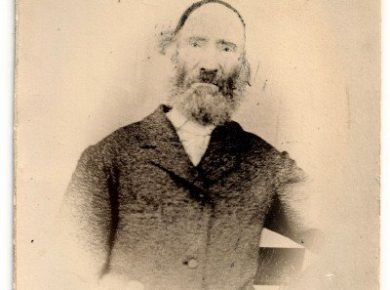
 Brother Joseph