ASHTON, Samuel

0 1
Read Time:56 Second

This article originally appeared in Vol.65, No.2 (2018) of Pioneer Magazine.

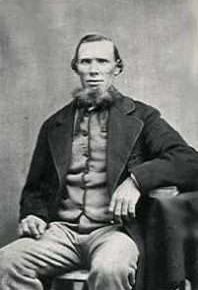
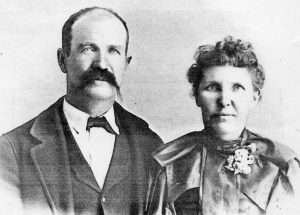
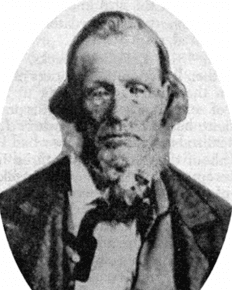
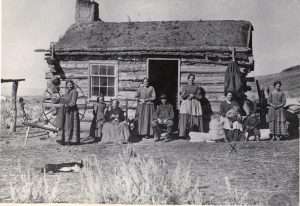
Samuel Aston (1815-1890) sits in the door of his cabin, with his family.

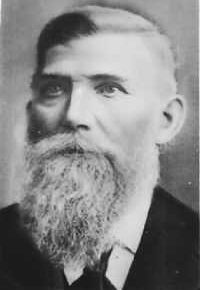
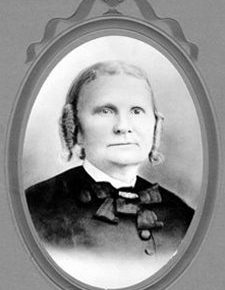
Samuel Ashton and his wife Mary Bunting Ashton came across the ocean on the ship Horizon. They crossed the plains with a handcart company and arrived in the Salt Lake Valley November 30, 1856, where they stayed for a few years. In 1862 they moved to Kaysville and built a log cabin by the mountain road in East Kaysville.

Small of stature, Samuel Ashton was handicapped with poor health and was incapable of performing heavy manual labor. His wife was a competent doctor and midwife, so she supported the family by delivering babies and caring for the ill. Samuel was an early stay-at-home father who took care of the home and yard. While it took many years to accomplish, the Ashtons’ yard became well-known for its beautiful beds of petunias, portulaca plants (moss roses), and many other flowers.


See Daughters of Utah Pioneers, Phillips Camp Biographies (Allen to Barton).

Happy
Happy
0 %
Sad
Sad
0 %
Excited
Excited
0 %
Sleepy
Sleepy
0 %
Angry
Angry
0 %
Surprise
Surprise
100 %
You May Also Like

ANDERSON, Neil

One day, when it was soon time to harvest the beets, he called the boys together to show them how to top the beets. When he had them all around him he took a big beet and his best knife and toped the beet and at the same time he cut the end of his finger off. Then he said, "Boys, that will never do. Don't do it that way!"
View Post

POND, Stillman Pond

On February 2nd 1846 the migration west began. Stillman and his family remained in Nauvoo until after the battle of Nauvoo in September 1846 when they were driven at the point of a bayonet across the river. Tribulations and hardships were many as the winter set in early and the Mormon refugees were without the proper food, clothing and shelter. The camp was ravaged by malaria, cholera, and consumption. The Pond family fell victim of all of these diseases. Stillman’s wife, Maria, became consumptive and all the children were afflicted with malaria. Snow fell early on the plains of Iowa and along the way Stillman and Maria buried their son Lowell Anson in September of 1846 on the plains of Iowa. Maria’s body wracked with pain and bowed down with grief for the loss of her son; was unable to walk and was confined to her bed in the back of the wagon with the fever of malaria. In this condition she gave birth to twin boys Joseph and J. Hyrum, the later part of September and the twins died a few days later and were also buried along the trail in Iowa.
View Post

GREEN, Robert Kenyon: Biography (1806-1884)

Winter in Ponca CampOn July 1st, 1846 a ferry was completed to cross the Missouri River. On the western side, a place called ‘Cold Spring Camp’ was established on recommendation of Bishop George Miller. It was late in the year, and the Green family pioneers had been delayed by heavy rains. They waited for instructions to either press on to the Rocky Mountains or find a place to spend the winter. Companies organized by Brigham Young and Heber C. Kimball at the Cold Springs Camp combined with Bishop Miller's Company and became the advance party for the church.
View Post

BELLISON, James Thomas and Louisa

Before many days, an incident occurred which tells a lot about James' attitude toward draft animals. His granddaughter, Pearl Allen Read, tells of the company coming to a bog of mud in the trail which caused many wagons to get stuck. As each team came to the bog, the Captain standing there would join the drivers in whipping the animals to get them through.When it was his turn, James forbade the Captain. "These are my animals and no whip is to be used on them." Although James' team pulled through the bog successfully, the Captain was angry and thereafter continued to find fault with this independent member of his company.James Thomas' life-long insistence that his animals be treated well was admired by those who knew him and was learned and perpetuated by his children throughout their lives.
View Post

COX, Amos

Sister Brady Englestead has told me of how her sister who was about 14 years old had been sick for months, and got so she wouldn’t eat, and although they had the elders administer many times, still she seemed to get worse. One day she said “If you will have Amos Cox administer to me I think I will get well.” Father was only 17 years old at the time and had never administered to anyone in his life, but they sent for him out in the field where he was scything grain. He said he was dumb founded, but told them he would come. There in the field he asked Heavenly Father what to say and said he believed it was one of the most humbling experiences of his life. He went to the house, washed his hands, and sealed the anointing. He promised the girl that she would get well, then when he looked at her and saw how frail and pale she looked, he was scared and so weak that he sat down.
View Post