 0
0
 1
1

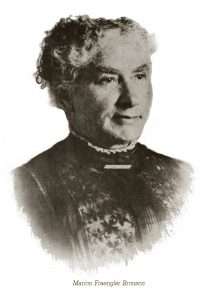
(1848-1935)
Maren (or Marion) Fraengler was born at Studstrup, Denmark on April 2, 1848, the youngest child of Joseph Poulsen Fraengler and Anne Nielsen. There were five other children; Niels, Poul, Johannes, Ane Kathrine, and Ane Marie. Marion’s father was a musician and she and her children were also blessed with great musical ability.
At the age of seventeen years, she went to a factory to learn cheese and butter making. Then she took a position in another factory as overseer. At this place she met Anders Sorensen who was the head overseer. One girl at the factory, a close friend of Marion, told her of an uncle who had met Mormon missionaries. The uncle had sent her a hymnbook. Marion read and reread these hymns which had a lasting impression upon her.
At twenty-three she married Anders Sorensen and became the mother of two children; Josephine Pauline, born at Frøstrup, Denmark, December 10, 1870, and Andreas Nicholas, born at Frøstrup, Denmark, December 4, 1871. The little boy died and the father became an invalid. Many months he lay upon his bed suffering. Having no money, Marion was forced to work in the homes at housework, at sewing, in the fields, or any honest work to pay the doctor bills.
It was at this time a Mormon missionary came to their home. She was converted at once and later both she and her husband were baptized. It was in 1873.
Her husband died four years after their marriage leaving her to care for little Josephine. Besides her grief, she had also to suffer the bitter displeasure and opposition of both his family and hers. All this because she had embraced the Mormon Church. These relatives succeeded in taking her little girl away from her and she was forced to sell her watch and other personal belongings to pay an attorney to establish her right as guardian. But, through it all, her faith never faltered.
With her child in her own care again she applied for work at the Mission Headquarters where she worked until her emigration to Utah.
A longing to see her dear mother again before leaving for America urged her to go to Aarhus where her mother was visiting. Upon leaving she lacked courage to tell her mother that in three days she would sail for America. She feared the news might break her mother’s heart.
At this time, she knew nothing about temple work or the necessity of gathering genealogy, but she felt impressed to gather what she could. She succeeded in getting such incomplete items as the Parish Priest could supply.
It was indeed a happy day for Marion when she boarded ship with its cargo of emigrants. She knew she would never see her loved ones again, yet that satisfied feeling the gospel gives comforted her.
Every time the ship lunged the passengers expected it to be their last. Then the rumor that one of the firemen had fallen into the machinery below was on everyone’s lips. All this time Marion had clutched the rail and held on to her little girl.
In 1876 she came to Utah, Ogden being her first stop. There the emigrants waited anxiously to see their prospective homes. She could not speak English at this time and her trunk and luggage was sent to Lehi, Utah by mistake. She was told to climb on a freight wagon drawn by four oxen, which took her to Huntsville, Weber County, Utah. Upon this slowly moving caravan she rode all night through Ogden Canyon and reached Huntsville the next morning. It was sometime before she secured her luggage.
In Huntsville, taking her small child with her, she hired out at anything she could get to do. For several months she did housework and sewing in the home of President Francis A. Hammond.
In 1877 she was married to Wilmer Wharton Bronson in polygamy. She cared for her seven children while her husband filled a three-year mission in Great Britain. At the end of this time, he went to see a daughter of his – by his first wife. Her name was Colista Hammond and she was living in Bluff, Utah. He was impressed with San Juan County and decided to send for his family. Marion was instructed to sell their home in Huntsville, which she did, and came with her children to San Juan County in 1888. She was met at Thompson, Utah by a boy, Charles Walton, Junior whose sunny smile and cheery songs made the trip more pleasant. For many days they traveled by team before reaching Monticello where her abodes were to be brush sheds, dugouts and log cabins. She went through many hardships in polygamy. Many times, she was forced to flee from her home with her little children to escape the officers.
She made her home in San Juan County and for twenty-five years she was a “minute woman”, going wherever the voice of suffering summoned her. She was called by the Church to take a class in Bluff, Utah to study maternity care under the direction of Mrs. Hannah Sorenson. Her obstetric art will be remembered long after she is gone.
For many years she was a widow and until 1917 she took an active part in Relief Society and other organizations. She was set apart by the bishopric of Monticello as head teacher in Relief Society, which position she held until her accident. In 1916 she was run down in the darkness of night by an automobile leaving her a cripple to walk with crutches. In all of these afflictions she was patient; her life’s story is that of a saint. The many people who have been comforted in mind and body by the pleasant face and gentle skill of Grandma Bronson do not hesitate to accord her the title of “Saint”. And the history of her sacrifices for the Gospel’s sake is sure to inspire faith in all that hear it. At the time of this writing she was 84 years old.
Marion Fraengler Bronson died October 12, 1935 at her home in Monticello, Utah.
Written by her daughter Lucy Bronson Adams


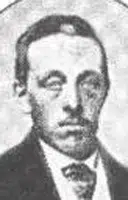
 Brother Joseph