BRACKENBURY, Joseph: The First Martyr of the Latter-day Dispensation

0 1
Read Time:2 Minute, 50 Second

It has long been held in the Church that Joseph Murdock, infant adopted son of Joseph and Emma Smith, was the first martyr of this dispensation. In March 1832, he developed pneumonia through exposure after the mob dragged the Prophet Joseph Smith out of the Johnson home in Hiram, Ohio. However, one particular individual has been forgotten and overlooked through the years whose life was stopped short just a couple months before the tragic death of the infant Joseph Murdock.

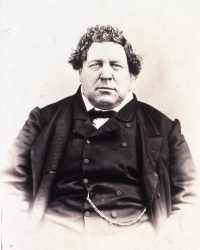
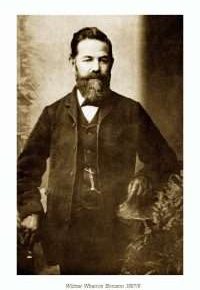
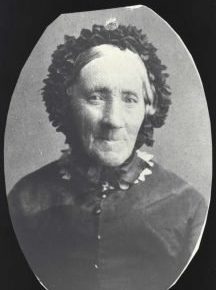
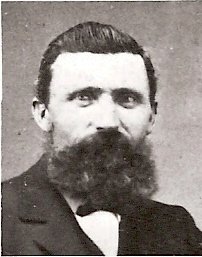
Joseph Brackenbury was bom in Lincolnshire, England in 1788 and immigrated to the United States in 1818 to New York City where he met and married Elizabeth Davis Goldsmith, a widow, with whom he had six children. In 1830, upon hearing about Joseph Smith and the recently organized Church, the Brackenburys moved to join with the Saints in northern Ohio.

At the October 1831 Amherst, Ohio conference; Joseph Brackenbury stated that he “consecrated all to God before he was baptized, he was also determined to go on to the end of his life.” At the conference, Oliver Cowdery ordained him to the High Priesthood and then called for elders desiring to preach the gospel. That December Joseph left with Edmund Durfee on a mission to the East

While proselytizing in the town of Pomfret, New York Elder Brackenbury was taken seriously ill which was later ascertained to be a case of lethal poisoning administered by the local mob. Elder Brackenbury was confined to bed at the Joel Johnson home where he “remained in great distress, which he bore with [the] fortitude of a saint for one week and expired with an unshaken confidence in the fullness of the gospel which he had preached, and a firm hope of a glorious resurrection among the just.” Joseph Brackenbury died the 7th of January, 1832.

Later in the evening following the burial of Brackenbury, at “about half past eleven o’clock” Joel Johnson “dreamed that some persons were digging up Brother Brackenbury’s body, and was so exercised about it that he called up some of the brethren” to go with him to the grave. Upon their arrival the brethren “found a party of doctors at work, who had nearly cleared the grave of earth” and that they were planning to either dissect or otherwise mutilate the body. The men fled but young David Johnson (who was large for his age) “took after the largest one who was caught.” The culprit was “bound over in one thousand dollar bonds for his appearance at court, but was never tried.”

On the death of Elder Brackenbury, Benjamin F. Johnson wrote in his journal:

Now it seemed as though Satan was permitted to try both our faith and our fortitude, for after a few weeks of the most powerful and successful preaching, in the midst of ridicule, scoffing and persecution. Elder Brackenbury was taken sick and within a few days died Our enemies now felt they had a great triumph; for where now were the gifts of the gospel when our strongest man could die, and my sister, though she had embraced the gospel, was yet upon her crutches? These things seemed at the time a great trial, yet in no decree did it dampen the faith of any, and while listening to the ravings of our enemies, the truth, with the love of it became the more deeply planted in my heart.

Happy
Happy
0 %
Sad
Sad
0 %
Excited
Excited
0 %
Sleepy
Sleepy
0 %
Angry
Angry
0 %
Surprise
Surprise
100 %
You May Also Like

GLEASON, John Streator: The Martyrdom of the Prophet

“The scene through which I have been called to pass since I arrived in this place from the East has almost alienated me from my country. Almost one continual round of mobocracy by night and by day. When I contemplate the scene it almost makes me shudder, and my blood run cold in my veins. I have been an eye witness to almost the whole scene from the beginning. My life has been exposed—threatened from time to time. . . when they were filled with wrath …. About a week before the assassination of Joseph and Hyrum Smith I was arrested—marched to jail by a band of the desperate and could not even lay there in peace—was aroused about 12 o’clock by a rush of men into the yard and a loud rattleing [sic] and hallooing at the door of the jail. One of our men went down and opened the door, when they rushed up stairs and caroused about a while, and left us.”
View Post

MAUGHAN, Harrison Davenport & Mary Freestone

Education had already become a high priority in the mind of this teenager. After twelve or fifteen months of employment she had saved enough money to enroll in the new Brigham Young Academy in Logan. Where had she learned what she needed to know to get admitted? How was she able to make her way in the environment of an academy? She may have attended school briefly as a small girl and perhaps for one year just after returning from Franklin Meadows. Mary left one little school workbook, labled “Alpine City, Utah.” It is filled with evidence of studies in math, geology, grammar (including diagraming sentences) and a lot of theology from the Bible. She also left another workbook in penmanship and a series of well-written essays on a variety of subjects. These showed good spelling and extraordinary penmanship, a beautiful script worthy of a highly educated person. Mary attended Brigham Young Academy for perhaps only three months, or maybe asmuch as two semesters. At the end of the spring term in 1882, the students exchanged messages in little autograph books, with one greeting per page in the form of a poetic sentiment. Each page is written in beautiful script – a very impressive exhibit, when compared to twenty-first century handwriting, which is often illegible at the college level!
View Post

HILL, George Washington: Stalwart Convert and Missionary to the Indian People

The missionaries were "to labor among the Indians in Oregon country." They were instructed leave their homes and families and " to settle among the Flathead, Bannock or Shoshone Indians….teach the Indians the principles of civilization; teach them….to live in peace with each other and with the whites;….to settle down….to build houses…" (7) This mission became known as the Salmon River Mission.
View Post

CALL, Helaman Pratt

My father had done a little experimenting. We had a large bathtub in one of the bedrooms in our home—it hadn’t been remodeled. They had just put in a bathtub and a toilet and a hand bowl in one of the bedrooms so there was quite a bit of room in there. It was a large oversize tub. I thought my father was going to baptize me but Charles Jones was going to baptize me. He had experimented how full he could fill the tub without running it over and still get me and him both in the tub. They put a stopper on the overflow so that the water would come up higher than the normal overflow would allow.
View Post

JENKINS, Jane: A Widow Supporting Her Family

In order to support herself and her family of small children, Jane made cookies, cakes, and bread which were put into small home made baskets and the children would sell them to regular customers and at the Southern Down Resort. In order to have a variety of cakes, the mother and children would go down to the seashore when the tide was out and gather larva from the rocks. This substance looked somewhat like lettuce. They washed the sand from it and put it into baskets and buckets. It was later baked as part of the cakes. These children thought nothing of walking three or four miles and selling this food for a schilling a pound. Sometimes Cecilia and Ann worked as nurse girls and as ladies maids.
View Post