 0
0
 1
1
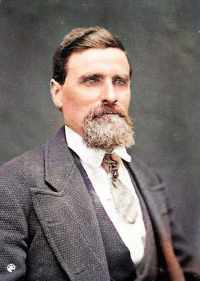
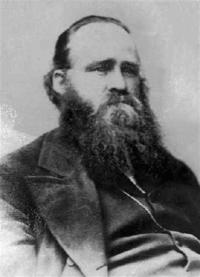
 William Rowley Jr. was born June 21, 1785, at Crodly, Herfordshire, England. He was the son of John Rowley and his wife Ann. He lived all his life in Southern England, in Herfordshire, Worchestershire and Gloucestershire. At the age of 22 years he married Ann Taylor, on June 2, 1807. To this union were born seven children. James, christened on March 21, 1808, Jane, christened February 6, 1811, Ann christened July 21, 1813, William, christened October 19, 1823, and Hannah born December 22, 1827. All were born in Suckley, England. Ann Taylor Rowley died soon after the last baby was born and left William with his large family of motherless children.
He found a good mother for his brood in Ann Jewell, whom he married August 5, 1835. She was the daughter of William Jewell and Sarah Hyde, and was born December 5, 1807, the first year he married his first wife. He was 22 years older than this second wife. This was quite an undertaking for Ann, as her husband’s older children by the first marriage were nearly as old as she.
In the year of 1837, their first child was born, a girl, born on May 8, at Suckley or Leigh, Worchestershire. This was a happy time for them. They had a comfortable home, surrounded by lawns and orchards. Mr. Rowley made a good living by raising hops on his farm, and by selling the hops and fruit from his orchard. They were a happy and contented family, very devout in their beliefs. They had joined a sect known as the “United Brethren,” along with many other people in that section of England. The “United Brethren”, a group which had broken off from the Wesleyan or primitive Methodist faith, with a Mr. Thomas Kington, as the Superintendent, were becoming quite active at that time. This Thomas Kington, and most of his followers later joined the Mormon Church.
William and Ann Rowley were ever searching and seeking for more light and truth. They spent much time reading the Bible and in calling upon the Lord in prayer. They were prospering, and their family was increasing. On December 14, 1839 their second daughter was born and was named Elizabeth.
On April 17, 1841, a brother Wilford Woodruff, of the Council of the Twelve, came to Worchestershire with the gospel, and was welcomed into the home of William and Ann. They listened intently to the gospel message, and recognized it as the light they had been looking for.
Here is the story from the writing of William G. Rowley, a grandson;
“This is the story my grandmother, Ann Jewell Ford, told me when I was a small boy, about and by whom they were converted to the L.D.S. Church in England.
While Elder Wilford Woodruff was on his first mission in England, he called at their home and told them about the story of Joseph Smith’s prayer and vision and the restoration of the Gospel. They were very much interested in his message and invited Apostle Woodruff to make his home with them in their vicinity, which he did. All of the family who were old enough were converted and blessed by him.
Sometime later while Brother Woodruff was staying at their home, a mob of men came to their home, and grandpa opened the door and asked them what they wanted. They said, they wanted Woodruff and they were told that Brother Woodruff had gone to bed. This did not satisfy them, and they said they wanted Woodruff and were going to get him. Grandpa said, “If you get him it will be over my dead body.” Members of the mob took hold of grandpa and dragged him out into the yard where they beat him until he was unconscious. While the mob was draggin’ him away he called to grandmother, telling her to close and lock all the doors, which she did. After they had beaten grandfather until they thought he was dead, they found the house locked, and departed, afraid to break into the house by force.
A testimony of the truthfulness of the Gospel, as taught by the Mormon Elders grew in the hearts of William and Ann and they rejoiced in the light of this new found faith. They started planning and saving in preparation for joining the saints in Utah, or in Zion, as they called the land of America. More children came to bless this union. Their first son John was born July 14, 1841, a little over a year since they joined the Church. Next came Samuel, born October 29 1842. Richard was born February 10, 1844, Thomas, May 11, 1846 and the baby, Jane, born July 17, 1848.
During the years they had many hardships. Disaster struck them. For two years in succession their crops failed and they were forced to sell their home at a public auction. They also lost their farm. Then came the greatest blow of all. William had a wagon tip over on him while going about his work. This put him to bed for a long time, and his injury, together with the worry and anxiety over financial circumstances were too much for him and he died February 14, 1848, at the age of sixty two years and seven months. This was a real blow to Ann, for she was left without a husband and home, with seven small children of her own and some of the younger children of the husband’s by the former marriage. Under these trying conditions may be seen the faith and courage and determination of this good woman, and the noble characteristics which were so necessary for Ann Jewell Rowley to possess to carry through the hardships she encounters later.
Ann went to work with her needle to help support her large family of growing children. The oldest child at home, Eliza, of the former marriage, was twenty five, but a very frail girl. Her oldest was Louisa, then eleven. The oldest boy, John, was seven, and the youngest was Jane, seven months. Ann was a splendid sewer, but prejudice in the community towards her because of her religion kept many customers away. With all she could do she was still unable to provide for her large family, to keep them fed and clothed as they should be. She was unable to send them to school. This was always a great sorrow to her. She was at last obliged to seek help from her brother, Thomas Jewell, a tailor by profession. He hired her to work in his tailor shop, making men’s clothing. She became very efficient in this work. The oldest boys, John, Samuel and Richard procured work at a Brickyard, walking the distance of three miles to and from work each day.
She found time to teach her children to read and write and the fundamentals of arithmetic, and with what schooling they were able to provide for themselves they went through life. They used good English, and were able to meet the problems of life which faced them in their day.
Ann was very faithful in her Church duties and in seeing that her children attended their meetings; and with faith and prayers and hard work she carried on.
The Saints in Europe were now pleading for ways and means whereby they could gather with the Saints in Zion. In 1854, President Brigham Young expanded the Perpetual Emigration Fun Program of the Church to help the poor to come to the British Isles, and from Europe to America and on to Zion. By traveling lower class, cheaper ship transportation, and then by using handcarts instead of teams and wagons to cross the plains many were able to come who could not otherwise have come. In the year 1855 the following invitation was issued by President Young: “Let all the Saints who can gather for Zion, come while the way is opened for them; let the poor ones come also, whether or not they receive aid from the Perpetual Emigration Fun. When they reach Iowa City let them come on foot, pulling handcarts, saving the immense expense for teams and wagons.”
This was glorious news for Ann and her family. They at once applied for P.E.F. funds and started preparing for the journey, bidding farewell to relatives and friends to be left behind. They embarked on the good ship “Thornton” for America and Zion.
Captain Collins of the ship “Thornton,” cleared on May 3, and set sail on the 4th for New York, with 164 saints on board. This ship was only built to carry 550 passengers, so with 264 extra people on board it was very crowded. It took six weeks to cross the ocean and several deaths occurred during this passage. The ship was in a calm for several days. The saints on board fasted and prayed for deliverance, as they did also when the ship took fire in mid-ocean. Both times their prayers were answered and they were delivered. The captain was a very cruel man. He did not molest the passengers, but was very cruel to the crew, which was hard for the saints to witness. On arriving in New York he was court marshaled and never allowed to return to sea.
Leaving New York they went by rail and boat to Iowa City. Here the saints were well treated and helped out with provisions, etc. They next went to Council Bluffs. The saints were light hearted and worked hard building their handcarts and preparing for their trek across the plains. Several companies had already left. Some thought it unwise to leave so late in the season, and at a devotional meeting Brother Levi Savage, who had crossed the plains several times, portrayed the intense suffering they would have to endure if they started so late in the season; the thought of it made him cry like a child. Captain James Willie, who had returned on the “Thornton” from a mission to Bristol, rebuked him sternly and told the saints if they would do as he told them winter would be turned into summer. Nevertheless, ** during the meeting another suggestion was made for them to pray and receive their own revelation as to what to do. Many, including Ann and her family had nothing with which to support themselves through the winter if they stayed and felt that their only choice was to go on and place themselves at the mercy of the elements and the Lord.¹, they were democratic about it and took a vote, which resulted in a decision to go now as they were anxious to go to Zion. A few of the saints remained, to make the trip in the Spring. Brother Levi Savage accompanied the saints to Zion.
On July 15, 1856, the Willie Handcart Company started out with happy hearts and singing. The first part of the trip was so hot their feet blistered and later on there were many with frost bitten limbs.
Before starting, orders from the Captain were that only those who were unable to walk would be allowed to ride. Ann and her children and one handcart started out, with only baby Jane riding. Each taking their turn pushing and pulling. Ann became ill the first day and never saw a well day through the whole trip. She never once did leave her post or complain. The first night out it rained and soaked the bedding and clothes but when the sun came out the next day it soon dried them out.
On September 2nd the guard announced that a band of Indians had run off thirty head of their stock. They pursued them but barely escaped with their lives. This was the only time the Indians molested them on the entire trip. They saw where the Indians had killed many people of the Babbitts Company, who had taunted them when they passed; and they saw a squaw wearing a blanket which had been taken from one of the murdered women of the Babbitts Co. They also saw bits of clothing, hair and blood stains where the crime had been committed.
When a little over 600 miles on their way, they encountered a buffalo stampede, and only by skillful maneuvering were they saved.
At North Bluff they got their first cut in rations 15 lbs. per man, 13 lbs. per woman, and 5 lbs. per baby. This was plentiful in comparison to what they were rationed later. When the children became so hungry they picked up pieces of rawhide off the cartwheels and ate them to help sustain life. Many died along the way. Eliza died early in the journey and was buried along the wayside. John became so cold and ill he fell by the wayside and would have died but a rough kick from the Captain revived him and he went on. He experienced a badly frozen hip, and Thomas got a frost bitten hand.
At Fort Laramie they received some help with food and clothing, but as they got farther into the mountains they encountered blizzards and cold weather until by the time they reached the Sweet Water River they were so bad off that Captain Willie pushed on in search of help. At one time fifteen died during one night, and were buried in one grave.
Captain Willie hadn’t gone far when he met Cyrus H. Wheelock of the Dan Jones Party coming with wagons and provisions to help them out. Some were so crazed for the want of food that they over indulged and died from the effects of overeating.
The sick were loaded into the wagons which broke the trail, and they pushed on to Salt Lake Valley arriving on November 9th. Here the Rowley family was taken in by some of the good folk and cared for a short tine. Then the family was broken up. John stayed there until his hip healed. Louisa and Richard hired out to a man by the name of Tate from E.T. City, Tooele County. Elizabeth married a man by the name of David Udall of Springville, and Ann and the rest of the family went on to Nephi, Utah, where they remained until Spring. Louisa left E.T. City and went on to Nephi where she met and married Noah Guymon. After John recovered, he also went to Nephi where he met and married Mary Ann Gadd. He remained there and married several more wives, then later moved to Old Mexico. Richard stayed with Brother Tate for some time, then got homesick and left and joined his mother who had moved on to Parowan.
Ann married a fine man by the name of Bastian, whom she met at Nephi. He paid her debt to the P.E.F. and took her and her family to live in Parowan. Later Bastian died and she married a man by the name of Ford. Both of these men were loved and respected by the members of her family who saw to it that fine headstones were placed to mark their place of burial.
Samuel married Ann Taylor of Parowan. They had a home in Parowan and when the call came to settle the San Juan Country, they with their families made the trek through the “Hole in the rock” and help to settle the area by living in Bluff. Later after they had finished the mission to which they had been called to settle they moved to Emery County they were instrumental in settling the town of Huntington. Samuel died and is buried there.
Thomas married Maggie Tattersol, daughter of Aunt Alice Mardsen. He also went with the company to San Juan and Huntington.
Richard went as a young man back across the plains as a teamster to bring immigrants from Europe and the British Isles. While on this trip he met Mary Ann Ray and they were married in Salt Lake City. He brought her to Parowan where they spent the rest of their lives.
Jane, the baby, married Charley Connelly, of Leeds, Utah, and lived there.
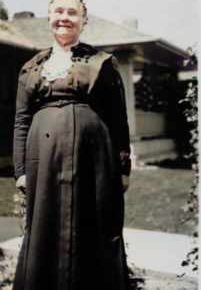
Ann was called by the people of Parowan, “Grandma Ford.” She was loved and respected by all who knew her. She proved her worth on many occasions and remained faithful to the end. She died at the age of 81 years on March 19, 1888, at Huntington, Emery County, Utah. She is buried in the Huntington Cemetery. She was living with her sons Samuel and Thomas at the time of her death.


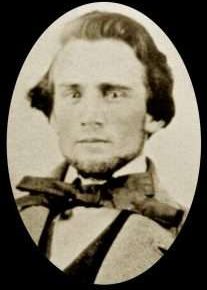
 Brother Joseph