OLSEN, James Peter “Jens”

0 1
Read Time:3 Minute, 16 Second
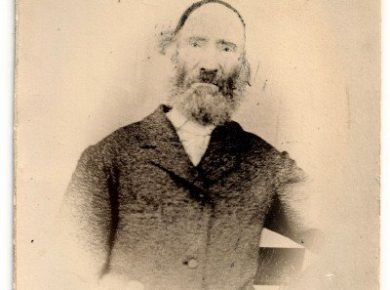
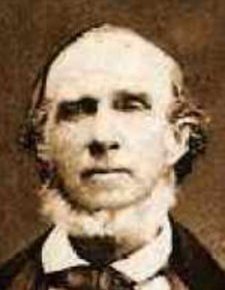
James Peter “Jens” Olsen (1841-1883)

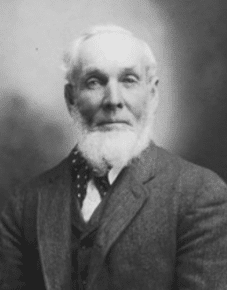
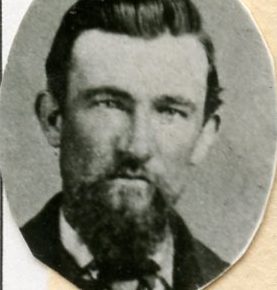
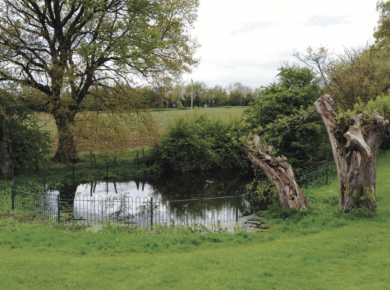
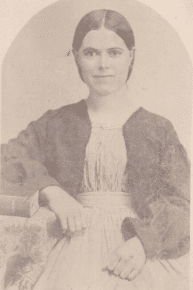
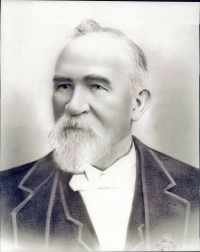
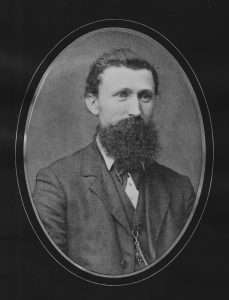
James Peter Olsen was born in Viemose, Kalvehave, Praesto, Denmark, on the 14th of May 1841. His father was Rasmus Olsen and his mother was Ingeborg Hansen or Sorensen. James was called Jens for short.  The family owned and lived on a beautiful estate, which was on high ground overlooking the ocean. In 1852 the family became acquainted with Mormon missionaries and was taught the gospel. Jens’ father was baptized on July 12, 1852. 

Later, on November 19, 1853, Jens and some of his siblings were baptized. Soon after the family joined the church they started making plans to gather to Zion.  The day after Christmas, December 26, 1853, the family boarded the steamship Eideren at Copenhagen with 378 other passengers. The family arrived at Liverpool, England on January 9, 1854. There many of the company became sick. The illness was so bad that twenty-two children and two adults died. 

When it was time for the immigrants to board the ship Benjamin Adams, an examining physician declared fifteen from the group unfit for the voyage and would not permit them to sail with the rest of the company. While on the ship from Liverpool to America Jens’ younger brother, Hans Rasmus, became ill. He died on March 9, 1854 and was buried at sea. 

When Jens and his family arrived at the New Orleans ship docks they saw Negro slaves being held in corrals like animals. They were being sold for about $25.00 each. At New Orleans the family boarded the steamship L.M. Kennet and went up the Mississippi River, arriving in St. Louis, Missouri on April 3, 1854. They then continued on to Kansas City where they prepared for the journey to cross the plains.

Jens was about 13 years old at that time and would have been a lot of help on the journey as they made their way to the Salt Lake Valley.  He would have gathered firewood, milked the cow, brought water to the camp, even drove the oxen some of the time. On October 5, 1854 the Olsen family finally entered the Great Salt Lake Valley.  They did not get to stay there very long because many of the company they traveled with were asked to move on to the Sanpete Valley to help settle that area and teach the Indians how to raise crops. 

Twenty eight wagons with these Scandinavian Saints left Salt Lake and headed for Fort Ephraim. It took them close to another week to travel to where their new home would be.   In the spring of 1864, just before Jens turned 23 years of age, he was asked to go to Omaha, Nebraska with ox teams to help bring emigrants to the Salt Lake Valley. It took him six months to make the round trip. 

While on these trips Jens met Annie Catherine Christensen and they were married after they arrived in Utah. He was sealed in the Endowment House to her and his second wife, Ane kirsten Nielsen on 24 Feb 1865. He and Ane had five children.  

Jens was called to go to St. George to work on the construction of the temple. That was a one year assignment.  He also helped on the construction of the Manti temple.  Jens held the rank of Lt. In the guard during the Indian wars.  He was a good mediator with the Indians and Chief Blackfoot visited his home many times. He would bring pine gum for the children.  On October 16, 1882 Jens left home, his wives and children, for a mission to Denmark. He labored there for ten months, being ill most of the time. He was then released to go home. He lived only two months after arriving home. His death was at the age of 42 on the 13th of October, 1883.

Happy
Happy
0 %
Sad
Sad
0 %
Excited
Excited
0 %
Sleepy
Sleepy
0 %
Angry
Angry
0 %
Surprise
Surprise
100 %
You May Also Like

BRIGGS, Thomas

Bountiful Pioneer At their December meeting the South Davis Chapter eulogized the pioneer life of Thomas Briggs, which was presented by Bruce Briggs, a second great-grandson. Thomas Briggs emigrated to…
View Post

GREEN, Robert Kenyon: Biography (1806-1884)

Winter in Ponca CampOn July 1st, 1846 a ferry was completed to cross the Missouri River. On the western side, a place called ‘Cold Spring Camp’ was established on recommendation of Bishop George Miller. It was late in the year, and the Green family pioneers had been delayed by heavy rains. They waited for instructions to either press on to the Rocky Mountains or find a place to spend the winter. Companies organized by Brigham Young and Heber C. Kimball at the Cold Springs Camp combined with Bishop Miller's Company and became the advance party for the church.
View Post

SAVAGE, David Leonard: Indian Peacekeeper

In twenty minutes, he was decked out in war paint and feathers and riding through Cedar Fort giving his terrifying war cries and soon the mountains rang with the death call of these desperate people. They were on the war path for sure, assembling their forces they hid in a ravine near Lehi. When the stage coach passed, the driver and all the passengers were massacred.
View Post

ROBERTS, Levi

After travelling over the mountains one day we met with some of our brethren from the Valley. This was a time of rejoicing. Captain Brown who left us at Santa Fe with the sick which went by the way of Fort Kearney and a few brethren with him from the Valley, brought news that we were not to go to the Valley, and told us we had better stay another year in California. So the company divided right where we met each other; some went on to Winter Quarters; some to the Valley, and some turned back. Daniel Browett, Slater, Cox, Levi Roberts and myself turned back to Sacramento and went to work for Mr. Sutter who treated us very kindly. I sent a mule to my wife with Brother Harris, which she got…. We all went to work at the same place for Captain Sutter. We took the work of cutting a millrace. Brother Browett went [p.379] to work with the millwright, this was in September and later on in the fall, I and two others took sick with the bilious fever. We were so sick we couldn't help each other to a drink of water. We lay under some ties and had to crawl around with the sun to keep from making us chill…. Our appetites were very poor, and our food was flour, water and squash. Had it not been for the thoughts of my wife and family I could have died, but we all three recovered after awhile and went to work on the millrace again and worked all winter. Sometime in the winter two of the brethren who were working for Mr. Sutter in the mountains found gold in a tailrace they were making. Mr. Sutter let me see the first gold they found before sending it to San Francisco to get it tested. In May 1848 some of the brethren and myself made a trip in the mountains to try and find a road over (instead of going down Truckee River, as we had to cross it about 20 times) but when we got in the mountains we found so much snow we had to return, and on our way back I stopped at what we called the Mormon Island, where there was some of the brethren at work getting gold, Brother Sidney Willis and his brother; also Brother Hudson. I stayed here for a short time and got some gold.
View Post

GREEN, Elizabeth Jane

Candace asked Hamilton about his mother’s pictures and he answered “I don’t know, I’ve never touched them.” Candace asked if she could get them and he gave his consent. She went into the other room and came out with some pictures carefully wrapped in tissue and brown paper. It was such a thrill to find a picture of Elizabeth Jane Green as a young mother and five of her sons, a picture of my grandfather James Copeland Orr, taken before he left on a mission, a picture of Charley, Walter, Richard and Earnest. Some of these pictures had been taken up at Mercur, probably when the boys had taken some produce to market or gone up to Mercur on a date or to a dance. Mercur at this time was one of the biggest towns in Utah and the people of Clover and St. John sold nearly all of their produce at Mercur.
View Post