STUCKI, Esther: My Ancestor

0 1
Read Time:2 Minute, 33 Second

Submitted by Alexa West, a student at Little Valley Elementary School in St George, Utah.

Esther Stucki Gubler
(1886-1953)

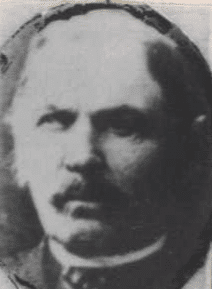
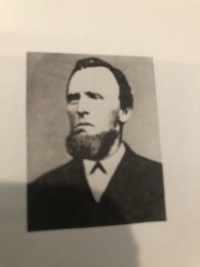
Esther Stucki Gubler was born to Samuel and his third wife, Anna Mary, on August 11, 1886. She was their second daughter. Her older sister was Mary Stucki Tobler. Her father began going blind about the time Esther was born, but he did not give up and kept on with many of his activities.

She helped her family with the gardening and the peach orchards. In the evenings at home they would peel peaches and apples and the girls would spread them on the shed and house roofs to dry. It seemed to Esther, as a young girl, that after they had been working in the field all day they shouldn’t have to continue on with this drying process at home. But that was the main way they had of making a living other than when her mother worked for others. They sold dried peaches wherever they could. While Esther cared for her father, her mother and older sister worked in the cotton fields in Bunkerville, Nevada, and accepted cotton as pay. This they took to the Washington cotton factory where it was made into a course cloth for their clothing supply.

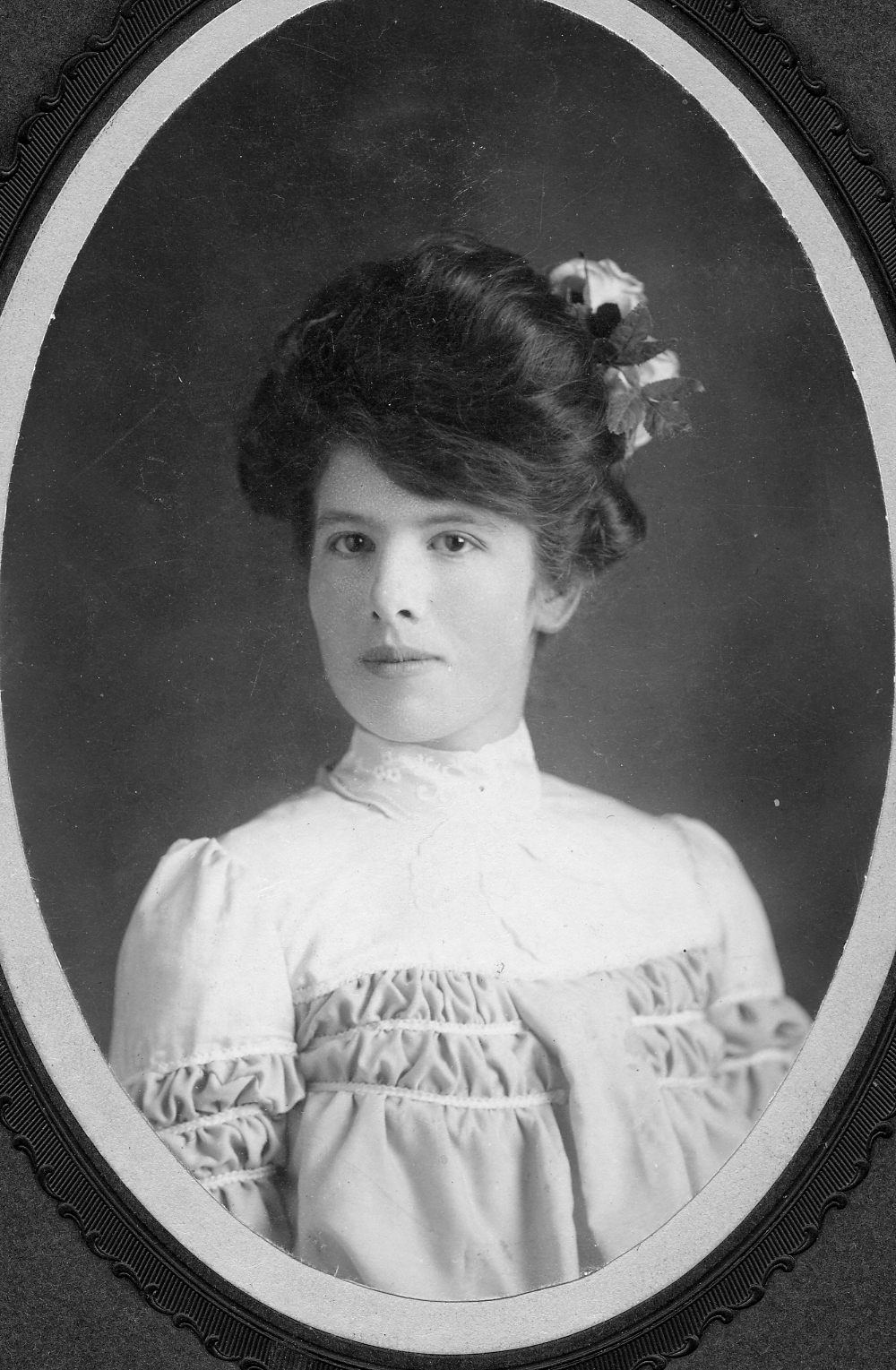
Esther was educated up to the eighth grade at Santa Clara school. Esther and Ensign Gubler were in their late teens when they started going together. Esther was a beautiful woman with dark brown hair with brown eyes. She and Ensign were married September 22, 1909, in the St. George temple by David H. Cannon.

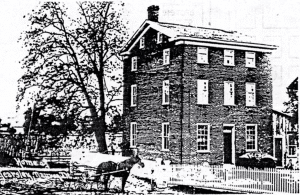
After her father, Samuel, died she received $400 dollars from his estate. She and Ensign used the money to buy uncle Ensign’s home. The uncles second wife, Ann, was still living. They signed an agreement with her that she could live with them for the rest of her life. She lived with them for twenty years.

Esther was the mom of eight children: Marvel Joy, their first, died at 18 months, Veda Blossom, Norman Ensign, Florence Mary, Mae, Nina, Rena and finally Doreen, who was born when Esther was forty-nine years old.

Esther sewed all of the clothes for the family, including underwear. She churned her own butter, and every year bottled 1,000 quarts of fruit and vegetables to last through the winter. Esther was a hard worker and everyone always loved her. She’d work with her husband in the fields, come home and fix the family lunch, rest for a bit, then go out and work again. She would wear the same coat, dress and shoes for years. She rarely bought anything for herself.

Esther and her daughter, Doreen, were killed instantly in a car accident at 3:45 p.m. while they were driving to St. George to shop. We still do not know the reason the accident happened.

It was cool learning about my great grandma Esther, especially because my middle name is Ester after my grandma West.

Alexa Ester West

Happy
Happy
0 %
Sad
Sad
0 %
Excited
Excited
0 %
Sleepy
Sleepy
0 %
Angry
Angry
0 %
Surprise
Surprise
100 %
You May Also Like

KARTCHNER, William Decatur: Man of Steel, True to the Faith

The only time for any kind of play was at night, and on one occasion in the Spring of 1836 he stayed at play until after nine p.m. When he went to the house the doors were locked so he had to sleep in the hay in the stable. In the morning he went with the other hands to breakfast and to his surprise Mr. Miles, the old boss had prepared a large whip which he used on William’s back so unmercifully that it raised a solid scab half the length of his back. His cries were heard by all the neighbors, and then he was sent to work without breakfast. His oldest brother, Peter, came from the western country to visit him. Upon hearing his grievances, they laid a plan for William to run away and go with Peter. William had saved up five dollars and asked Peter if that was enough to bear his expenses. Peter told him that he could go without a cent.
View Post

YEARSLEY Sr., David Dutton: Giving His All

The Yearsleys made their way through the bitter cold winter weather to Winter Quarters. The hardships were so extreme that some entire families were buried along the way. “Thus, from day to day, slowly and wearily traveling, went the exiled Saints across the undulating surface of snow-covered Iowa. The Roads were very bad, the weather cold and stormy, and the streams, now frozen, now swollen by spring freshets, almost and at times quite impassable. Again and again they were obliged to double teams on the heavily loaded wagons, to drag them through deep streams and miry marshes on their line of travel. Some days three or four miles would be the extent of their journey. Many a halt was made, at times for weeks (5).”
View Post

WOOLSEY, Thomas: Mormon Battalion Volunteer

On 15 Jun 1856 they left their all to overtake the first covered wagon train of Mormons, to cross the plains that year. The oldest daughter was sick with chills and fever when the journey began, and had to be carried from the house to the wagon. Her father's brother who did not belong to the LDS church and was opposed to their leaving their home, predicted she would not live to go far, but Elder Hickerson promised her she would not have another chill, and she never did.
View Post

CHAPMAN Julia Ann

Other than for Julia's health, Isaac was well equipped to travel. In the heat of the late spring, Julia gained some weight and felt pretty well. Deciding that they could safely make the trip, Isaac loaded the wagon, making a special bed for his wife. At first she did very well, cheerful that at last they could go west and be with their relatives. But as the trip continued, the strain began to tell. Some mornings she was unable to get up. When they crossed Loup's Fork they again pulled out of the line, getting one of the Elders who lived at the Fork, Isaac and he administered to her. She seemed to relax and feel better, but during the night she lapsed into her last long sleep. After they buried her, Isaac was so grief stricken that he sat for days, staring in front of him, felled by his tragedy. One evening James Walsh came to his fire and said, "I have seen many tragedies along the trail, and I respect you for your grief, but life must go on. Now you owe your little ones an even greater responsibility than before. Now you must be both father and mother to them. Crying tears of anguish over your lost wife is right and proper, but you must never allow your grief to immobilize you. What would Julia want you to do? You have begun a great quest, which, unfortunately, she was too weak to finish. Now you must finish it for her." Out in the night Isaac walked for hours, asking why? Why? But with the coming of midnight, a peace enveloped him like a cloud. His beliefs taught him that although her body was dead, she, herself was still alive and would wait for him. He must not fail her. The next morning, 10 July 1852, he gathered a bunch of wild flowers and placed
View Post

CALL, Helaman Pratt

My father had done a little experimenting. We had a large bathtub in one of the bedrooms in our home—it hadn’t been remodeled. They had just put in a bathtub and a toilet and a hand bowl in one of the bedrooms so there was quite a bit of room in there. It was a large oversize tub. I thought my father was going to baptize me but Charles Jones was going to baptize me. He had experimented how full he could fill the tub without running it over and still get me and him both in the tub. They put a stopper on the overflow so that the water would come up higher than the normal overflow would allow.
View Post

ROBERTS, Owen: Welsh Convert

On Friday, May 20th, they started on the railroad for St. Joseph, Missouri where they arrived safely; from thence they proceeded on their way up the Missouri River on the steamboat “St. Mary”. Here they were treated roughly by the crew and others. They had no where to sleep or sit, but were almost constantly compelled to stand on their feet night and day until May 26th where they landed on the banks of the Missouri River below Florence, Nebraska at which place they lodged for a while so they could fit up their teams and baggage to cross the plains to the Rocky Mountains.
View Post

SHIRTS, Peter

The road was to follow an old Indian trail on the west edge of the Black Ridge. When asked how the wagons would get across the deep canyon which barred the way, he replied, “We’ll leap it!” The 165 ft deep canyon crossing became “Peter’s Leap.” The stream became “Leap Creek.” A sturdy windlass was erected on top of the north canyon wall. The wagons coming from the north were stopped here. The cargo was lashed securely to the wagon box. The teams were unhitched and led down the winding 30 percent grade to the canyon bottom.
View Post