0
0
 1
1
Submitted by La Mar Adams
- Born: 25 July 1810, Leeds Canada
- Died: 26, April 1886, Snowflake, Arizona
A Savage Indian Pioneer Story

David Leonard Savage was born July 25, 1810, in Leeds, Canada, converted to the Church there, eventually went to Nauvoo where he worked on the temple, and arrived in the Salt Lake Valley with the Second Company of Saints September 24, 1847. He was a kind faithful man and a friend and helper to others. The following Indian stories written by a granddaughter are recorded at the end of two different biographies of David, one written by his wife Mary and the other by his daughter, Mary Theodocia Savage.
The following instance took place while the family lived at Cedar fort.
One evening while Johnson’s Army was at Camp Floyd a small company of soldiers was riding in the foothills of Cedar Fort when they came suddenly upon a few Indians while they were eating their even meal. Unwisely they fired into their midst killing one Indian. An Indian witnessed the act, he shot an arrow at the soldiers and ran for a horse. In twenty minutes, he was decked out in war paint and feathers and riding through Cedar Fort giving his terrifying war cries and soon the mountains rang with the death call of these desperate people. They were on the warpath for sure, assembling the forces they hid in a ravine near Lehi. When the stagecoach passed the driver and all the passengers were massacred. At Cedar Fort, anxious moments followed the men keeping a close watch for the Indians.
Finally, they were seen advancing to the attack. Wishing to avoid bloodshed, some men went to see them under a flag of truce but were rebuked by the redskins. Then my grandfather who had heard of the trouble while in route with his freight had gone to see if he could help his friends and he said, “I am sure if I go out alone I can make peace.” Against protest, he gave his gun to his companions insight the Indians, and holding his arms high as the friendship signal went calmly forth to meet them.
There seemed to be no relenting on the part of the Indians. They met my grandfather with spears raised and arrows drawn. He spoke to them in their own language with coolness and great dignity. He told them the Mormons were their friends and had nothing to do with the ones who had offended them and that the great spirits would be displeased with them if they killed their white brothers. Finally, spears were lowered and arrows sheathed and the Indians dispersed.
Grandfather’s daughter, Amanda Polly, also knew the Ute and Paiute languages. When the Indians would come and they would have trouble making them understand they would ask for Savage’s Papoose, meaning Amanda, who had no trouble conversing with them.
David Savage was a great friend to the Indians. He learned to speak their language fluently, which came in handy many times.
A Few Incidents of Early History:
The Mormons had become such dear friends of the Indians that they did not want to kill any of them and would often look to see if garments (knowing them to belong to Mormons) were there before they would harm white people. If they were not the Indians would kill.
There were many [wagon] trains fired on as they journeyed to California by the Indians. Grandfather Savage’s services were in great demand as a protection to them. A company would often wait weeks.
On one occasion a rich company came through going to California about the year 1851 or 1852. They stopped and asked Brigham Young what they could do to be safe from the Indians. He told them he could fix it so they would be perfectly safe until they got to Cedar City. He said he would send a letter to David Savage at the above place who was a great Indian Scout and much loved by them and that David Savage would see them safely through. The country they were passing through was hostile.
They arrived in Cedar City safely and delivered the letter from Pres. Young. David Savage went with them through the Indian country, riding a mule along by the side of the wagons so the Indians could see him. The first night they camped in Indian territory, the people with him were very much frightened to see such numbers of Indians coming toward them. They had recognized their friend, Savage, and had come to greet him. The word would be sent along the line by Indian runners to tell the Indians their friend was coming.
He was met at every stop by bands of Indians who came to see him. The captain of the train asked grandfather what they would do with the horses to keep the Indians from stealing them. Grandfather told him, “We will just let the Indians take them and herd them and they will bring them back all right.” The Captain said, “Oh if we do that we will never see them again.” But Grandfather said that an Indian never breaks his word. The Indians took the horses all away. Grandfather told them to bring them back just at sunrise, which they did to the surprise of the Captain and all the company.


 Brother Joseph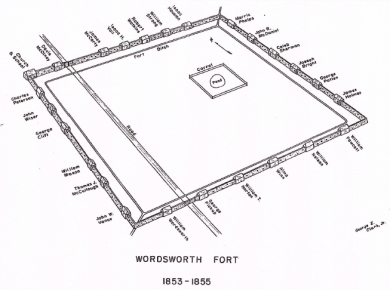
 Pioneer John