 0
0
 1
1
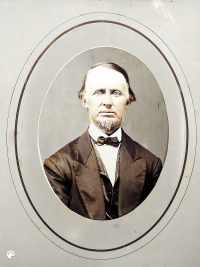
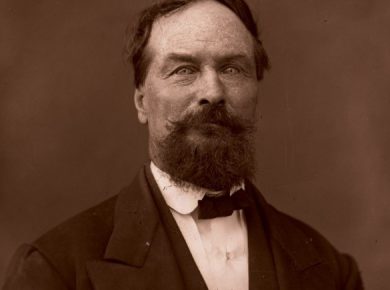
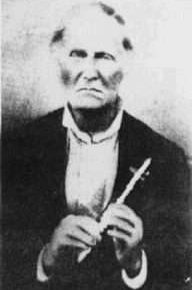
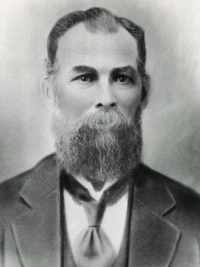
Joseph was born June 25th, 1806, to Daniel Allen Sr. and Nancy Agnes Stewart, in Whitestown, Oneida (Cold Rain), New York. As a full grown man, he was small in stature – about 5′ 8″ of blonde complexion, curly hair and unusually small feet and wearing boys’ size four shoes. He was a good mixer and as he grew older he went partly bald having only a rim of white hair left. He never would sit for a photograph!
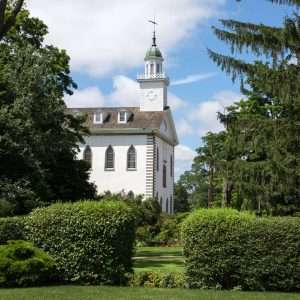
 He said people could remember what he looked like. He joined the church February 3, 1831, and moved with the Saints from New York to Kirtland, Ohio. There he met and married Lucy Diantha Morley.
He went with the brethren to Zions Camp in May 1834. They were organized into companies for the journey by Joseph Smith. Each company was divided as follows….a captain, two cooks, two firemen, two tent men, two water men, one runner, two wagon horsemen, one commissary – twelve men in all. At the sound of the bugle all bowed in prayer in their several tents and every morning about 4:00 at trumpets call, every man knelt again in prayer.
They were followed by enemies and spies. … It was about the first of June when the prophet had a revelation that a scourge would come upon the camp in consequence of some unruly spirits that appeared among them, and they would die like sheep with the rot. Still if they would repent and humble themselves before the Lord, the scourge might be turned away in a great measure. Yet some still murmured and they were stricken with cholera.
The following incident happened during this long tedious journey. Joseph’s shoes wore out and he went on as long as he could. His feet were bare and bleeding. In the large toe of one of his fee, up under the nail, was a very large splinter that went clear to the nail bed. It was red and swollen with puss, seeping out from around the splinter. He also had other lacerations on both feel! He didn’t complain to the prophet about his shoes being gone, and his feet sore and bleeding, but one day he said to the companion he was traveling with, “I simply cannot go on any farther; my feet are too sore.”
They sought out a fallen log (tree) and there sat down to rest. There, too, they knelt down to pray. They prayed for some shoes out there in that raw, bleak country away from stores or from any town where shoes could be bought if they had the money to buy them. They must have had great faith for after sitting there awhile longer to rest they rose to go on and saw there beside the log a pair of shoes.
“They were surely meant for you, Brother Allen,” said his companion. “They would not do for me at all. They are too small.”
So Joseph put on the shoes which fit perfectly and they traveled on. They always camped in a body even if they separated in the daytime. Someone in lead would select a camp site and they all came to it together at night sooner or later.
He was never one to complain to the prophet. For one so humble as he that prayed for shoes and had his prayers answered with a messenger from God bringing them to him, we who knew him best know how fine and true and dependable he was.
It was near Jacksonville on the bank of the Illinois River where some of the brethren found some ancient altars and the skeleton of a man with an arrow between two of its ribs, which was made known to the prophet that he was an officer killed in battle at the last destruction among the Lamanites and his name was Zelph.
One night five men rode into camp and with horrible oaths declared that an army was coming from Richmond (Ray county and Clay County) to destroy them. The weather was fine and clear at the time but soon a black cloud rose out of the west and in about twenty minutes it began to rain and hail. The lightening flashed all through the night and the thunder rolled in awful majesty. Hail as large as hens eggs came down breaking down trees and causing much destruction. The wind was so terrific that it blew many of
their tents down and they found shelter in a nearby meeting house but it hailed very little in their camp.
The mob came to the river two miles away but could not cross as it had risen forty feet during the night. Lucy Morley who was at this time among the plundered Saints in Missouri remembers of this awful night and has often told of the brightness of the lightening during that night. It seemed brighter than the daylight.
The mob had been hindered in their violent threats and their leader afterward visited the camp and related to them that he believed that there must be an almighty power that protects their people. The prophet had another revelation saying the time had not come for the redemption of Zion so they were honorably discharged or released. He was in Lyman Wight’s Company to return to their homes. Some were put in position in the church and others, Joseph being among them were sent on missions.
As Joseph and his companion were walking along they saw a small parcel in the road. Joseph picked it up and found it to be a plug of tobacco and decided to carry it along. His companion wanted him to throw it away because he said it didn’t look right for a missionary to be carrying tobacco but Joseph said, “I’ll keep it a little longer.”
As they neared the ferry the keeper came to meet them. He asked, “Have you men any tobacco? I haven’t had any for days and I’m nearly crazy.” Joseph told him he had some and would give it to him if he would take them across the river safely. The keeper wanted it then and tried to take it from him. Joseph told him, “Not now, but when we are safely over you may have it.” So in order to get the tobacco the keeper rowed them over and then he grabbed it from him.
Later on during his mission in the South, Joseph and his companion had made an appointment for a meeting during the evening. It was in the spring of the year and on the day they were to fulfill their appointment they came to a stream which the day before they had crossed easily. However, it was now so swollen with a rushing torrent of water it was impossible to cross on foot. They knew about a ferry up stream some distance away but going to that crossing would make them late for their meeting. So they did what most Elders would do. They knelt down and prayed for help. On looking up they saw a big, fine man on an extra-large horse coming across the stream towards them. They were simply floating, or so it seemed. The horse could not possibly reach the bottom of the stream bed.
“Do you gentlemen wish a crossing,” he asked?
“We do.”
“Then mount with me and I will take you over.”
They got on the horse with the man and were soon safely over. After climbing off they turned to give their thanks to their kind and extraordinary beneficiary, but to their astonishment both horse and rider were nowhere to be seen. There was not a ripple in the water to indicate that he had gone back into the river. This event took place when Joseph was 29 years old on September 2, 1839.

1997 Sesquicentennial Project Sons of Utah Pioneers
- Born: 25 June, 1806, Whitestown, Oneida, New York
- Died 25 April, 1889, Huntington, Emery, Utah
- Entered Utah 30 September, 1853, John E Forsgren Handcart Company
Spouse#1: Lucy Diantha Morley, DOB 4 October 1815 in Kirtland, Geauga, Ohio
- Married: 2 September 1835 in Clay Co., Missouri
- Lucy Died: 19 October 1908 in Orderville, Kane Co., Utah
Children and Birth Dates
- Mary Elizabeth 15 August 1836
- Caroline Delight 15 September 1838
- Lucy Gunn 28 September 1840
- Cordelia 31 January 1843
- Calista 25 February 1845
- Joseph Lorenzo 25 February 1847
- Isaac Morley 28 March 1849
- Charles Albert 16 August 1851
- Hyrum 12 August 1853
- Harriet Lenora 8 April 1857
- Simon Morley 6 October 1859
- Clara Amelia 8 May 1861
His Accomplishments:
Joseph Stewart Allen was born 25 June 1806 in Whitestown, Oneida Co., New York. His parents were Daniel Allen and Nancy Agnes Stewart. He had 11 brothers and sister. His older brother, Daniel and Joseph were the only ones who joined the LDS Church. He was baptized on 13 February, 1831. He served a mission in Indiana. He was an elder in Zion’s Camp. He endured the persecutions in Iowa, Missouri and Illinois. His early training as a frontiersman helped in pioneering and colonizing. He learned the cooper trade from his father in law, Isaac Morley. He was a farmer and shoemaker. He married Karen Maria Hansen on 28 June, 1854 in Manti, Utah.
Spouse #2: Karen Maria Hansen, DOB 5 November, 1835 in Vester Marie, Barnho1m, Denmark.
- Married: 28 June, 1854 in Manti, Utah.
- Her Parents: Maurice Hansen and Christina Ingeborg Jespersen.
- Karen Died: 7 August 1884 in Orderville, Kane Co., Utah
They were sent to the Muddy Mission and later moved to Long Valley where they were in the United Order. They had eight children.
Children
- Elizabeth Eliza 20 April 1857
- Christena Marie 27 April 1859
- John Millard 24 July 1869
- Ellen Lucinda 3 January 1864
- Erastus Snow Peter 15 January- 1867
- Daniel Spencer 20 July 1870
- Lydia Jane 5 November 1872
- Diadamia 2 October 1875


 Brother Joseph