1
1
 1
1
This article originally appeared in the July/Aug 1990 issue of Pioneer Magazine
by McCoy McMurray
There are those who live and die in notoriety. Some constantly walk amidst applause and accolades. But for most of our progenitors, not so. As far as the world is concerned, their walk was in obscurity. Their births, their deaths and the events in between seemed to have caused little stir. Nevertheless, within the circles where they lived and moved, lives were deeply touched.
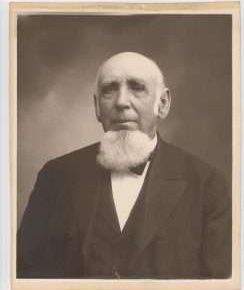
The pioneer I would like to introduce was born more than a century and a half ago, (1821) in the beautiful Isle of Man. His name – Thomas Callister. Incidentally, the Prophet Joseph Smith was then but 16 years of age. I suppose that in the Isle of Man, the name “Callister” might be something like “Smith” or “Jones” here in the United States.
In any event, in 1821, a baby was born who was destined to make a mark, at least in the lives of those who knew him and certainly in the hearts of many who came after him.
There weren’t any schools in the area of his early years. He wasn’t able to get a formal education, as many of us today would hope for and even expect. But he did live in a humble and devout home, and he was teachable, and even though he lacked formal education he was taught by his parents the great Christian principles of honesty, integrity and a willingness to work. And if he didn’t have a lot of textbooks around (as he would have liked), at least he had a Bible, and even as a boy Thomas’ parents taught him to read and study and appreciate the scriptures.
Early in his youth Thomas wondered about things that seemed inconsistent with what he read in the scriptures. He wondered, according to his autobiography, why there weren’t angels in the world in his day and why heavenly communication, as recorded in the Bible, wasn’t a reality in his time as well as in times of old. With only that background and education, he was “bound out”as an apprentice tailor, (he writes in his diary) destined to become skilled in the tailor’s trade. But he was anxious about religion, and had deep yearnings as a boy. He wanted to succeed as a tailor and was determined to make the most of his life.
He records in his journal that when he was about 19 he chanced to see a little handbill advertising a meeting to be conducted by some Mormon Elders from America. They were going to hold a meeting and proclaim a new religion and talk about the Priesthood and the revelations from God. One of the Elders was John Taylor, destined to later become a president of the Church.
Thomas’ interest was quickened. He attended the meeting and was deeply touched… so much so that years later he could even remember the things that were said that day. They seemed to center on the plan of salvation, the purpose of life and what his destiny might be. A short time after the meeting, he was baptized – the only one in his family to join the Church. No sooner had he been baptized than the spirit of “gathering” descended upon him. And in those days the spirit of “gathering” was exactly that. It meant coming to America! In contrast, today those who come into the Church are being admonished (aren’t they) to remain in their native lands and build up Zion in distant places.
But in those early days, consistent with the emphasis of the leaders and consistent with those great impressions, there came the intense desire to gather among the people with whom he was now identified. He wanted to live close to the Prophet, of whom he had a testimony. And so he determined, as a young man, that he would take his journey to America, When he made the announcement to his family, and made efforts to go, his brother came to him, just prior to his departure, in fact, and offered him one half of everything he had if Thomas would not go and join the “Mormons,” and if we read his history correctly, that was a substantial amount. His family tried to dissuade him, to entice him to stay in the Isle of Man and live among his own family – forget about this new religion and simply center his life on the work and profession of his brother.
But Thomas was unyielding. Determined to follow his conscience and go to America, he embarked on a voyage that would take him across the Atlantic. Imagine – 55 days at sea! It’s almost unbelievable, isn’t it, compared to the way we travel today when jets can take us nearly anywhere in a matter of just a few hours! But in those days, it was travel by sea. He came over on the ship Tremont, landing at New Orleans. He took another boat up the Mississippi and on to Nauvoo and then went over to Macedonia about 20 miles east of Nauvoo where he settled.
He met the Prophet and others, including John Taylor, whom he had known in England, and became intimately involved with the great work surrounding the Restoration. There were many events that unfolded. In his journal he wrote about the mobocracy and persecution, and what it was to see families – little children and wives – driven into the streets – to have livestock stolen and to see people plundered. He knew all about it because he was a victim. He wrote in his journal about the martyrdom and the events just preceding it, and how he was standing guard that night – on the memorable night of June 27, 1844:
“I was standing guard on the road leading to Carthage. Two strangers came from that place, and I hailed them. They stopped, and told me that Joseph and Hyrum had been murdered by a mob in Carthage Jail.I told them I didn’t believe it. They told me what object could they have by telling me a lie, as they were strangers passing through the country. I then went in to our little town with them which was soon a commotion.”
In his journal he wrote about his beautiful marriage to Caroline Smith, a cousin to the Prophet. A second marriage took place a few months later when he married Helen MarClark. I suppose this is one of the beautiful plural marriages in the history of the Church. Helen Mar records that it was just like living with a beautiful and wonderful sister. They made a great home.
Eventually those events unfolded that prompted him and others to leave Nauvoo early in February, 1846. They, with their wagons, crossed the Mississippi River on the ice in the afternoon. They had gathered in their wagons what belongings they could, and sold all else for a “log chain and six chickens.” Nobody wanted to buy property since it could be had for the taking after the Saints left it behind. They gave up everything they had except the few things they could carry with them in their wagons.
The early pioneers stayed the first winter in Winter Quarters. Thomas was among them. He was called to leave with Brigham Young in the first company but contracted cholera and was delayed. He eventually left with the second company of Saints arriving in the Salt Lake Valley in September, 1847. Thomas and his family settled in the MillCreek area, not East MillCreek, and suffered all the hardships and deprivations of those early years in the valley. He witnessed the plague of the crickets and the miracle of the gulls.
He was civic minded, serving several terms in the State Legislature. He was called to be the Bishop of the 17th Ward in Salt Lake City. During that time, he was called by Brigham Young to go down to Fillmore in Millard County and there preside over all the wards and branches in that county. We have in our possession a copy of the original letter containing this calling written in the beautiful handwriting of Brigham Young himself. The original letter, along with the letter of appreciation from the members of the 17th Ward given to him at the time of his leaving, have been given to the Church Historian’s Office.
Thomas remained in Fillmore the rest of his life, serving as Bishop and Stake President and Colonel in the Nauvoo Legion. He was elected to the State Legislature several times, filled a mission to England and established the telephone and telegraph throughout Millard County.
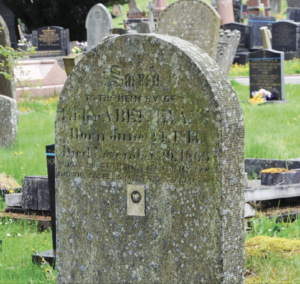
He had remarkable experiences with the Indians. They trusted him. He had a great capacity to deal with and befriend them. He was involved in the Walker War and the Black Hawk Wars. Chief Kanosh, a dear friend, spoke at Thomas Callister’s funeral in 1880.
In looking back over the life of Thomas Callister, I am deeply touched. I made a little note in about 1958 relative to his posterity at that time (and there hasn’t been much effort to keep track since)—there were then 10 who had served as Bishops, 5 as Stake Presidents, and 1 had served in the Quorum of the Twelve Apostles of the Church—and more importantly, one of his great granddaughters walks as my eternal companion.
As I look back at his life there were things that came to my mind that illustrated and somehow underscore the great scriptures. I think of the day he saw that handbill, little realizing that the glance would change his course in life. The words of Alma to his son Helaman come to mind:
“By small and simple things are great things brought to pass.”
I think of the day when he was about to depart for America, and the enticement of his brother to stay in the Isle of Man, and renounce his new faith—and am then reminded of the proverb that many of you can quote:
“Trust in the Lord with all thine heart and lean not unto thine own understanding. In all thy ways acknowledge Him and He will direct thy paths.”
I think of the mob attacks in Nauvoo and Macedonia, the drivings and the burnings and am reminded of those lines we sometimes sing:
“Sacrifice brings forth the blessings of Heaven.”
And even though we walk in obscurity, we have the hope and the promise that if we keep God’s commandments, the blessings of eternity will be ours.


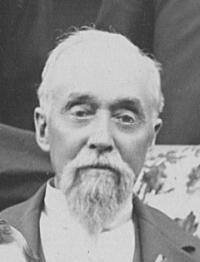
 Brother Joseph