 0
0
 1
1
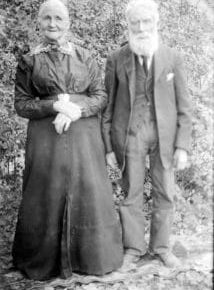
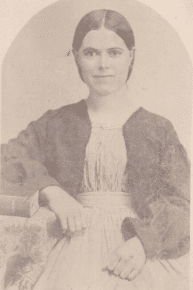
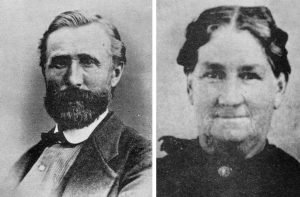
 HIS ACCOMPLISHMENTS: Neil Anderson joined the church, 27 August 1859 in Sweden and was ordained a Priest there. He came to America in 1861 and settled in West Jordan, Utah. He was with a group of church members from West Jordan, meeting some pioneers coming into the valley, when he saw Hannah Pierson, who would later be his wife.
Upon seeing her he said to the other men,
“You can have any of them, but she is mine.”
It was love at first sight. Neil and Hannah were married 25 October 1862 and sealed in the Endowment House, August 1863. Their first home was north of the now West Jordan Cemetery, a one room dug out. They greased a paper for windows and used a big wooden box for a table. They kept this box all their life, Their first child was born there, but it died in infancy.
They were asked by the church to go to Fairview, San Pete County, Utah. Their new home in Fairview was a dugout, but later they were able to built a log cabin. They had many troubles with the Indians and lived in constant fear of them. When the men went to work in the fields the young boys had to keep watch every minute. If any Indians were seen they would notify the men and all would run for safety. Many of the young boys were killed by an Indian’s arrow. Two children were born to Neil and Hannah in Fairview. They were Emma and Neil.
Neil Anderson fought in the Black Hawk Indian War. When the treaty was signed Neil’s signed his name with an “X”. Later in his life he would receive twenty dollars a month from the government for his service in the war. After the war was over there was peace with the Indians. The Church people promised that they would invite the Indians to eat with them at their homes. Hannah cooked many meals for them and when the big Indians would sit at her table she was afraid to turn her back to get more food. Those days were terrible, living in constant fear all the time.
They moved to West Jordan, now known as Midvale, Utah.
 There Neil engaged in farming. He raised some of the first sugar beets that were raised in this valley. One day, when it was soon time to harvest the beets, he called the boys together to show them how to top the beets. When he had them all around him he took a big beet and his best knife and topped the beet and at the same time he cut the end of his finger off. Then he said,
“Boys, that will never do. Don’t do it that way!”
He also worked on the railroad that united the east with the west at Promontory Point. Neil became a citizen August 16, 1865 at Provo, Utah, just four years after he came to Utah. In 1885 he went back to Sweden on a mission and served for two years. Before he left he could not write, but while there he wrote home some of the most wonderful letters.
Neil always kept the Word of Wisdom, never drinking coffee or liquor and never smoking tobacco. He often chastened his wife Hannah because she liked her coffee. One day he went to church and came home and told Hannah that the church leaders had told the men that they should take another wife. Hannah said, “Alright, if you do I will walk out.” Neil decided he had better keep the wife he had.
He was ordained a Seventy, July 1876 by Job Smith and a High Priest, March 25, 1899 by William Dunbar. When the Jordan Stake of Zion was organized in 1900, Neil was set apart as second counselor to President Robert Ellwood, by Apostle Francis M. Lyman. Neil died of cancer at the age of 74. He was known as a good honest man, a true Latter-Day Saint.
Neil Anderson
- BORN: 4 May 1836, Svedala, Malmohus, Sweden
- DIED: 1 July 1910, Midvale, Salt Lake, Utah
- PARENTS: Pehr Anderson and Sissa Olsson
- SPOUSE:
- Hannah Pehrson Anderson, Born: 8 October 1843, Hikelberga, Malmohus, Sweden.
- Married: 25 October 1862, Salt Lake City, Salt Lake, Utah.
- Died: 24 November 1940, Midvale, Salt Lake, Utah.
- CHILDREN:
- Maria Ann Anderson, Born: 27 Oct. 1863, Midvale, Salt Lake, Utah, Died: in infancy.
- Emma Anderson, Born: 30 Nov. 1864, Mt. Pleasant, San Pete, Utah. Married: Andrew Larson, 22 March 1894, Died: 30 Sept. 1940.
- Neil Anderson, Born: 29 April 1867, Mt. Pleasant, San Pete, Utah. Married: Blanche Bishop, 22 March 1892, Died: 7 July 1953.
- Sarah Jane Anderson, 4 March 1870, West Jordan, Salt Lake, Utah, Married: John Jenson, 28 Aug. 1889, Died: 19 May 1932.
- Elizabeth Harriet Anderson, 30 April 1872, West Jordan, Salt Lake, Utah, Married: Eli Mitchell, 22 May 1893, Died: 17 June 1941.
- Hannah Amanda Anderson, 4 Oct. 1874, West Jordan, Salt Lake, Utah, Married: Olf Olson, 4 Jan. 1905, Died: 16 March 1944.
- Ellen Marie Anderson, 16 Sept 1877, West Jordan, Salt Lake, Utah, Married: Archie Ernest Borst, 1905, Second marriage: Carl Lemke, Died: 18 Nov.1957.
- Laura Matilda Anderson, 29 December 1879, West Jordan, Salt Lake, Utah, Married: Thomas Brinley, 12 Dec. 1907, Died: 23 Nov. 1960.
- Maud Marinda Anderson, 19 Sept 1882, West Jordan, Salt Lake, Utah, Married: Henry Bringhurst, 16 Jan. 1907, Died: 12 June


 Brother Joseph