ROBERTS, Owen: Welsh Convert

On Friday, May 20th, they started on the railroad for St. Joseph, Missouri where they arrived safely; from thence they proceeded on their way up the Missouri River on the steamboat “St. Mary”. Here they were treated roughly by the crew and others. They had no where to sleep or sit, but were almost constantly compelled to stand on their feet night and day until May 26th where they landed on the banks of the Missouri River below Florence, Nebraska at which place they lodged for a while so they could fit up their teams and baggage to cross the plains to the Rocky Mountains.
0 1
Read Time:4 Minute, 0 Second

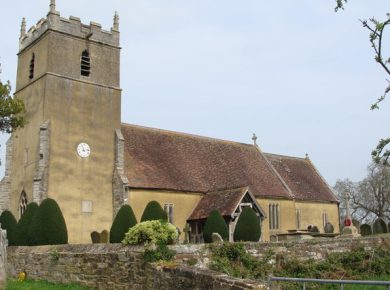
Owen Roberts was born on 21 June 1818 in Llandysilio, Anglesey, Wales.  He was the son of John Roberts and Jane Jones.  Owen was a miner and he worked quarrying limestone in the village along with his father and brothers as this was the main industry in Llandysilio and Llandulas, Wales.

Owen was converted to the gospel of Jesus Christ from hearing Dan Jones, the famous Welsh missionary who converted many people.  Owen’s wife, Mary Martin, was the first to join the church as records indicate she was baptized in 1847 and Owen was baptized in 1850.  Their daughter, Jane Price Roberts was baptized in July 1856.

They set sail for America on 11 April 1859 on the ship “William Tapscott” sailing from Liverpool, England to New York.  Owen was age 37, Mary was 32 and their daughter, Jane, was 11.  Accompanying them on this voyage was Mary’s mother, Gwenllian Williams, who had been a widow for one year as her husband, Thomas Martin, had died on 8 July 1858 and so she is making the trip with them.  They sell most of their possessions in order to finance the trip.

Passenger Ledger of the William
Tapscott

On Monday, the 11th day of April 1859 the ship “William Tapscott”, a triple-decked square-rigged ship, lifted anchor and was tugged out of the Mersey River into the open sea with 726 souls on board.  Elder Robert F. Neslen was appointed president of the company.

Elder Neslen writes that he felt it quite a task when he was appointed to take charge of a company composed of people from so many countries, speaking nine different languages and having different manners, customs, and peculiarities and thrown together under such close circumstances.

Thirty-three days later they landed at Castle Garden, New York.  On Thursday, May 12th, they cast anchor in New York harbor at 7 p.m. and the next morning landed in Castle Garden.  They stayed there until Saturday, the 14th. In the afternoon Owen and his family started up the Hudson River on a steamboat to Albany, New York where they arrived on the 15th.  In the morning Owen and his family were transferred to the railway for Windsor, Canada where they arrived the next morning.  On Tuesday, the 17th, they left on the railroad for Chicago and arrived there the next morning where they changed cars again for Quincy, Illinois, and arrived there on the morning of the 19th.  A steamboat named “Pike” was then their conveyance on the Mississippi River to Hannibal, Missouri where they landed the same evening. On Friday, May 20th, they started on the railroad for St. Joseph,

Missouri where they arrived safely; from thence they proceeded on their way up the Missouri River on the steamboat “St. Mary”.  Here they were treated roughly by the crew and others.  They had nowhere to sleep or sit but were almost constantly compelled to stand on their feet night and day until May 26th when they landed on the banks of the Missouri River below Florence, Nebraska at which place they lodged for a while so they could fit up their teams and baggage to cross the plains to the Rocky Mountains.

Owen and his family were in the Neslen Company so they traveled in wagons pulled by oxen carrying all their earthly possessions.

They arrived in Salt Lake City on 15 September 1859 and camped in Emigration Square that first night.  They stayed in Salt Lake City for six months and in April 1960 headed north with 60 other families to a settlement on the Cub River or “Muddy River” as it was known.  (Now known as Franklin, Idaho) They built small cabins along the Cub River and commenced farming.  The families drew numbers to distribute town and farm lots.

A fort was laid out and logs were brought in to build cabins, facing inside and serving as walls of the fort.

Owen could speak English so he was able to converse with other settlers. Their long journey was over.  They had left Wales in April 1859 and now it is the Spring of 1960.

The years go by and the work is hard.  He is no longer engaged in mining but has become a farmer/laborer to support his family.  His daughter, Jane, has met a young man named Thomas Hull who lived a few cabins away.

They get married on 2 April 1864 in Franklin, Utah Territory.

Owen Roberts lives to be 80 years old and his wife, Mary, is 77 when she passes away.

Owen dies in 1898 and is buried in the Hillcrest Cemetery in Shelley, Idaho.  His wife, Mary Martin Roberts, dies in 1904 and is also buried in the Hillcrest Cemetery in Shelley, Idaho.

Happy
Happy
0 %
Sad
Sad
0 %
Excited
Excited
0 %
Sleepy
Sleepy
0 %
Angry
Angry
0 %
Surprise
Surprise
100 %
You May Also Like

GREEN, Robert Kenyon: Biography (1806-1884)

Winter in Ponca CampOn July 1st, 1846 a ferry was completed to cross the Missouri River. On the western side, a place called ‘Cold Spring Camp’ was established on recommendation of Bishop George Miller. It was late in the year, and the Green family pioneers had been delayed by heavy rains. They waited for instructions to either press on to the Rocky Mountains or find a place to spend the winter. Companies organized by Brigham Young and Heber C. Kimball at the Cold Springs Camp combined with Bishop Miller's Company and became the advance party for the church.
View Post

TWITCHELL, Ephraim & Phoebe Melissa Knight

One day Branch President Ephraim Twitchell was traveling from Sacramento a long way by wagon. The last day of his journey he was traveling late, after dark. He did not stop because he was almost home. He was alone in his wagon, when suddenly there was a man sitting beside him on the spring seat. He just appeared from nowhere. He told Ephraim that he should take his family from San Juan Bautista and go to San Bernardino. Ephraim responded that they had not been in San Juan very long and that his children had their friends there. He noted that he did not think he could get them to go with him. The man beside him replied, "Yes, you can, and you must go to San Bernardino or you will lose them." When Ephraim turned to answer him he was not there. He had disappeared just as he had appeared -it seemed like just out of thin air. Ephraim knew the gospel very well and remembered their story in the Book of Mormon about the three Nephites. He thought this must be the answer-the messenger was one of the three Nephites. He then saw a beautiful new coat that the messenger had left on the spring-seat beside him. He thought the messenger had really been there-that he had not just imagined or fantasized. Ephraim went home and told his wife, Melissa. They talked about the move. They prayed about it for a couple of days. They knew they must go to San Bernardino, California. Every one of their children and one nephew, John Newton Twitchell, the oldest son of Jasper Twitchell went with them. Anciel Ephraim's oldest son came a year later.
View Post

COX, Amos: Brief life story

One day she said “If you will have Amos Cox administer to me I think I will get well.” Father was only 17 years old at the time and had never administered to anyone in his life, but they sent for him out in the field where he was scything grain. He said he was dumb founded, but told them he would come. There in the field he asked Heavenly Father what to say and said he believed it was one of the most humbling experiences of his life. He went to the house, washed his hands, and sealed the anointing. He promised the girl that she would get well, then when he looked at her and saw how frail and pale she looked, he was scared and so weak that he sat down.
View Post

JACOBSEN, Christian Jensen: Frontier Craftsman

Another life altering experience occurred in 1854 when L.D.S. missionaries introduced the Jensens to a new religion. After a short investigation Christen and Kirsten were baptized on a cold day in December and became the first members of the church in their local area. Soon after, Christian was called to be a local missionary and also to preside over two branches of the church. In the fall of 1857 he was assigned to open a mission on LæsØ, an island located midway between Jutland and Sweden. As a missionary he received frosty receptions but soon encountered some inhabitants in need of his clock repairing skills. This led him to adjust his strategy and avoid the topic of religion until he had the family’s clock dismantled. Once the family knew him as a clock repairman, they were more prone to discuss religion with him. Using this strategy, and after visiting the island several times, Christian baptized a dozen or so members and organized the Byrum Branch there.
View Post

RUCK, Elizabeth Collett

That is the date when Wilford Woodruff was at Leigh (about 9 miles from Redmarley) baptising Thomas and Ann Oakey (Elizabeth’s sister) among others (9 in all) when the dog was thrown in the pool as recorded by Wilford Woodruff himself.
View Post

SMOOT, Doug: Modern-day Pioneer of Technology

After completing 42 years at BYU, Doug now (2008) is a principal in Combustion Resources Co., continuing his work in energy, fossil fuels and combustion A member of several professional organizations, he has published approximately 200 technical articles, eight invited review articles, and four books on combustion. He received the first Governor’s Medal for Science and Technology in Utah in 1987. Two of his books (written with others) have been translated into Chinese. An internationally recognized authority in energy, combustion, and fossil fuels, Doug has consulted with over 100 organizations in the U.S., Mexico, China, Japan, India, Egypt and several European countries.
View Post