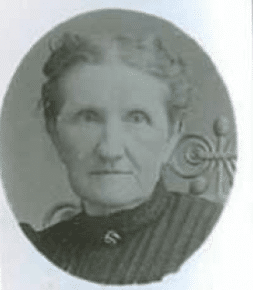
MITCHELL, Richard Charles: Shelley Idaho Pioneer

They finally came to this underdeveloped part of Idaho where his family took advantage of the pre-exemption homestead rights and took up 360 acres of land two miles north of what is now Shelley, Idaho.
0 1
Read Time:3 Minute, 20 Second
Richard and Sadie Mitchell

Richard Charles Mitchell was born at Hooper, Weber, Utah, on 16 December 1878.

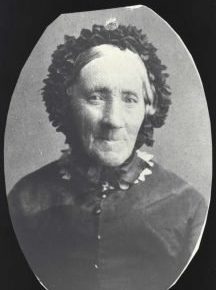
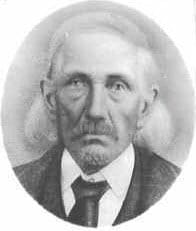
He was the youngest son of pioneer parents, James Mitchell and Anne Hull.  He came to the Shelley area with his family when he was a young boy.

His grandparents came from Scotland and England, as did his parents and family as converts to the Latter Day Saint Church.  They settled in many different cities before coming to Shelley such as Salt Lake City, Hooper, Utah, San Bernardino, California, and Franklin, Idaho.  They finally came to this underdeveloped part of Idaho where his family took advantage of the pre-exemption homestead rights and took up 360 acres of land two miles north of what is now Shelley, Idaho.

Shortly before this time, when the family was living in Franklin, Idaho, Robert Hull, brother of Ann Hull Mitchell and a nephew were killed by drunken Indians near Blackfoot while on their way to work on some land they had taken up.

The family of James Mitchell, Richard’s parents, came and settled here the day before the John F. Shelley family came from Iona, Idaho, and built the first home and store.

Thomas Mitchell, the eldest brother, worked in the Shelley Merc for Mr. Shelley for many years.  He also served as a Counselor to Mr. Shelley in the bishopric.  Church meetings were held in the John F. Shelley home first; then when a schoolhouse was built, they were held there until a church could be constructed.

There were many months of hard work ahead for the family.  As soon as possible a large two-room cabin was built of logs.  Also barns and corrals for the stock.  Sagebrush had to be dug out with a ‘grubbing’ hoe before the ground could be plowed.  Grandma insisted on a place for a large garden first.  Water for drinking and home use was hauled from the Snake River until a well could be dug a few years later.

By this time several of the older children were grown and married and had been given 40 acres of land by their parents (James and Ann).

Richard Charles met Sadie C. van der Vlies in Ogden, Utah and they were married in the Logan LDS temple.  She and her parents came to this country from Holland as converts and had settled in Ogden, Utah.  After their marriage, they came to the Mitchell ranch located two miles North of Shelley, Idaho, close to the Snake River.  By this time most of Richard’s brothers and sisters were married and had homes of their own.  Richard was the youngest and stayed on to help his father (James Mitchell) who had been crippled in a farm accident.  Richard and Sadie moved into the house with his parents until they could build a home of their own.

On 1 September 1918,  grandfather, James, passed away.  Several of the sons had sold out and moved to various parts of the country.  It was then that Richard, Sadie and family, and his mother (Anne Hull) moved to Burley, Idaho to be near his brother, Thomas Mitchell who had moved to Burley, Idaho.  The original farm was sold to Christian Anderson and he later sold it to Otto Beck.  It is now the first ward church farm.

Richard and Sadie at this time were the parents of seven children.  They moved to Burley, then due to a “bank failure” lost the farm there and then moved to Preston, Idaho where he was yard foreman at the Utah Idaho sugar plant.  But he always wanted to come back to Shelley.  This he finally did and bought a home from Heber Child and worked in the potato warehouses for many years.  They were the parents of nine children, two preceding them in death.

Richard Charles died 15 January 1952 in Shelley, Bingham, Idaho and was buried on 20 January 1952 in the Shelley Hillcrest Cemetery.

Happy
Happy
0 %
Sad
Sad
0 %
Excited
Excited
0 %
Sleepy
Sleepy
0 %
Angry
Angry
0 %
Surprise
Surprise
100 %
You May Also Like

WOOLSEY, Jacob C. & son Joseph H. : 1848 Pioneers

Jacob C. Woolsey is the "brother-in-law who dug Abigail Lee's grave" at the "9th or Last Crossing of the Sweetwater" on 2 Sep 1848. Abigail Schaeffer is the widow of the above Joseph Woolsey and eight of her twelve children joined the Church and came to Utah! She was married to John D. Lee "for her protection and for convenience of traveling."
View Post

SAVAGE, David Leonard: Indian Peacekeeper

In twenty minutes, he was decked out in war paint and feathers and riding through Cedar Fort giving his terrifying war cries and soon the mountains rang with the death call of these desperate people. They were on the war path for sure, assembling their forces they hid in a ravine near Lehi. When the stage coach passed, the driver and all the passengers were massacred.
View Post

BLAIR, Seth M.

The following biography was previously submitted to www.pioneerstories.com Spouse: Cornelia Jane Espy, Harriett, Sarah Pioneer Type: Early Pioneer Seth was raised in Tennessee along the banks of the Mississippi River…
View Post

James Henry Rollins, Faithful Pioneer

The San Bernardino colonizers were called back to Utah by Brigham Young when Johnson’s Army threatened. Henry and his family heeded the call, leaving behind still another home. In Utah, they settled in Minersville where he opened a lead mine and served as postmaster. He spent most of his life there serving faithfully in the church as a Bishop and in other callings well into his 80’s. He spent his last years in Lyman Wyoming to be near his children, where he passed away February 7, 1899.
View Post

JENKINS, Jane: A Widow Supporting Her Family

In order to support herself and her family of small children, Jane made cookies, cakes, and bread which were put into small home made baskets and the children would sell them to regular customers and at the Southern Down Resort. In order to have a variety of cakes, the mother and children would go down to the seashore when the tide was out and gather larva from the rocks. This substance looked somewhat like lettuce. They washed the sand from it and put it into baskets and buckets. It was later baked as part of the cakes. These children thought nothing of walking three or four miles and selling this food for a schilling a pound. Sometimes Cecilia and Ann worked as nurse girls and as ladies maids.
View Post

ALLEN Jr., Daniel: A Life of Consecration

Having completed their assignment, Daniel and his committee returned to Nauvoo, only to find buildings burning, mobs raging, and the saints gone. Daniel hurried to his home to find that his family was still alive, but his wife Mary Ann had just had a new baby and was very ill. He pled with the mob to let him stay a few days so his wife could recover, but they said they would kill them all if they weren’t gone by the next day. They hurriedly loaded what they could in the wagon and made a bed for Mary Ann and the baby. The Allen wagon was one of the last three to leave Nauvoo. They traveled together for a short distance, but couldn’t keep up because of Mary Ann’s grave condition. Being left alone with only one other wagon, they trudged through the mud and snow as best they could until they reached the head of Soap Creek (it looks like this might be less than 100 miles from Nauvoo). Mary Ann had struggled so valiantly, but could endure no more, so she whispered her last words to her loving husband…”We’ll meet again dear love in a better world and I shall wait your coming”. She died on the trail in May, 1846, along Soap Creek, Davis County, Iowa with no one but her family and the angels in heaven to mourn her passing.
View Post