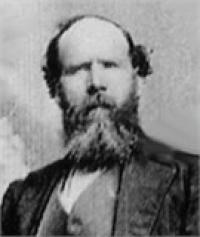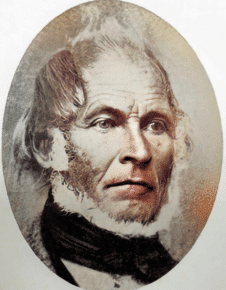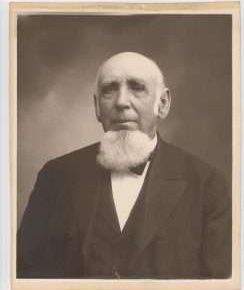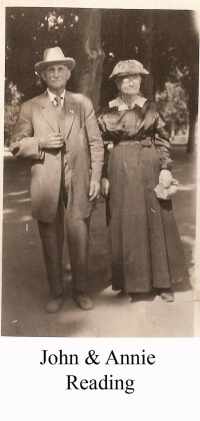
READING, John

0 1
Read Time:1 Minute, 17 Second

This article originally appeared in Vol.60 No.2 of Pioneer Magazine

By Ronald W Andersen

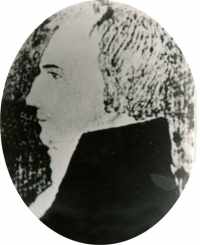
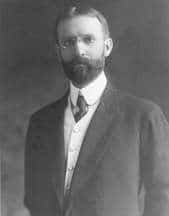
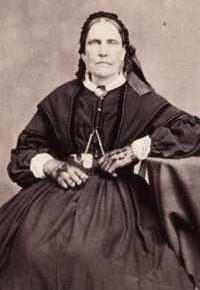
John Reading joined the Church on July 3, 1853, and married Mary Ann Brown on May 29, 1856. She was nine years his senior and had been a member of the Church for almost 10 years. The year they married, they came in a wagon company to Utah.

John was a horticulturist and set about building a nursery. According to Andrew Jenson, Reading’s nurseries and flower gardens consisted of five large greenhouses covered with 7,000 square feet of glass, the most extensive nursery of its kind in Utah at the time.

An advertisement appearing in one of the old Salt Lake City directories read as follows:

JOHN READING
Nurseryman—Seedman
Florist—Evergreens—Fruit Trees
Ornamental Trees
Full stock of Field, Garden, and Flower Seeds
Bouquets, Wreaths, and Crosses for Weddings and Funerals—A SPECIALTY

The ubiquitous Lombardy poplar, seen everywhere in Utah, is native to Italy and other Mediterranean countries. John Reading is credited with introducing it into Utah in 1862.

On January 28, 1874, the Horticultural Society of Utah met and discussed the codling moth question. All were of the opinion that a united effort on the part of the owners of orchards in the infested districts would be necessary in order to destroy or even check the insect. John Reading stated that he was corresponding with gentlemen in the east who were qualified to give information that he would lay before the society as soon as received.

Happy
Happy
0 %
Sad
Sad
0 %
Excited
Excited
0 %
Sleepy
Sleepy
0 %
Angry
Angry
0 %
Surprise
Surprise
100 %
You May Also Like

TAYLOR, William & Elizabeth Patrick

After the surrender of the city, the Taylors returned to their home, a distance of eight miles. There they found that about 7,000 of the mob had camped for two nights at or near their place, turning their horses into the Taylor’s cornfield. The mob ate or destroyed about 300 bushels of potatoes, 75 geese, 100 chickens, several head of cattle, 40 head of hogs, 20 stands of bees; also, they had burned about one mile of rail fence in their campfires.
View Post

ATKIN, Thomas

Mary became seriously ill with a "rupture" in her side. The doctors could do nothing to help her. Thomas, watching her suffer, resolved he would be more devoted in serving the Lord, if only the prayers and desires of his heart and those of his children regarding his beloved wife would be granted. Eventually, Mary was healed. He did not forget the resolution and promise he had made with the Lord and commenced in earnest to inquire of his spiritual advisors.
View Post

MELLOR Jr., James: Inspirational Story

Mary, however, was so hungry and faint that she finally told Louisa to go on without her. Louisa would have none of that. She instead walked ahead a short distance, kneeled down, and poured out her heart to the Lord to help them. She arose and headed back toward her mother on the same path she had just taken. She walked a short distance when she suddenly saw something in the prarie grass. It was a freshly baked pie! It was laying right side up, and the crust wasn't even broken. They both thanked the Lord for the immediate answer to her prayer, ate the pie, and resumed their tip toward the company. In the meantime, since they had not caught up with the company in the time expected, James Sr. had taken his handcart to go look for them. He found them and took them in the handcart back to camp.
View Post

ROBERTS, Levi

After travelling over the mountains one day we met with some of our brethren from the Valley. This was a time of rejoicing. Captain Brown who left us at Santa Fe with the sick which went by the way of Fort Kearney and a few brethren with him from the Valley, brought news that we were not to go to the Valley, and told us we had better stay another year in California. So the company divided right where we met each other; some went on to Winter Quarters; some to the Valley, and some turned back. Daniel Browett, Slater, Cox, Levi Roberts and myself turned back to Sacramento and went to work for Mr. Sutter who treated us very kindly. I sent a mule to my wife with Brother Harris, which she got…. We all went to work at the same place for Captain Sutter. We took the work of cutting a millrace. Brother Browett went [p.379] to work with the millwright, this was in September and later on in the fall, I and two others took sick with the bilious fever. We were so sick we couldn't help each other to a drink of water. We lay under some ties and had to crawl around with the sun to keep from making us chill…. Our appetites were very poor, and our food was flour, water and squash. Had it not been for the thoughts of my wife and family I could have died, but we all three recovered after awhile and went to work on the millrace again and worked all winter. Sometime in the winter two of the brethren who were working for Mr. Sutter in the mountains found gold in a tailrace they were making. Mr. Sutter let me see the first gold they found before sending it to San Francisco to get it tested. In May 1848 some of the brethren and myself made a trip in the mountains to try and find a road over (instead of going down Truckee River, as we had to cross it about 20 times) but when we got in the mountains we found so much snow we had to return, and on our way back I stopped at what we called the Mormon Island, where there was some of the brethren at work getting gold, Brother Sidney Willis and his brother; also Brother Hudson. I stayed here for a short time and got some gold.
View Post