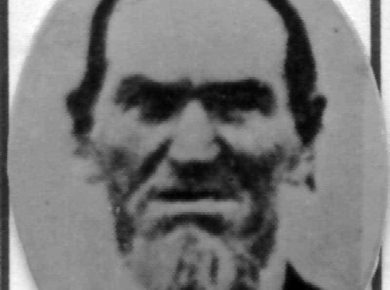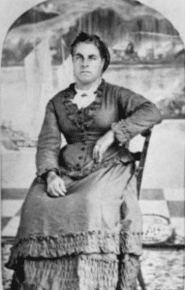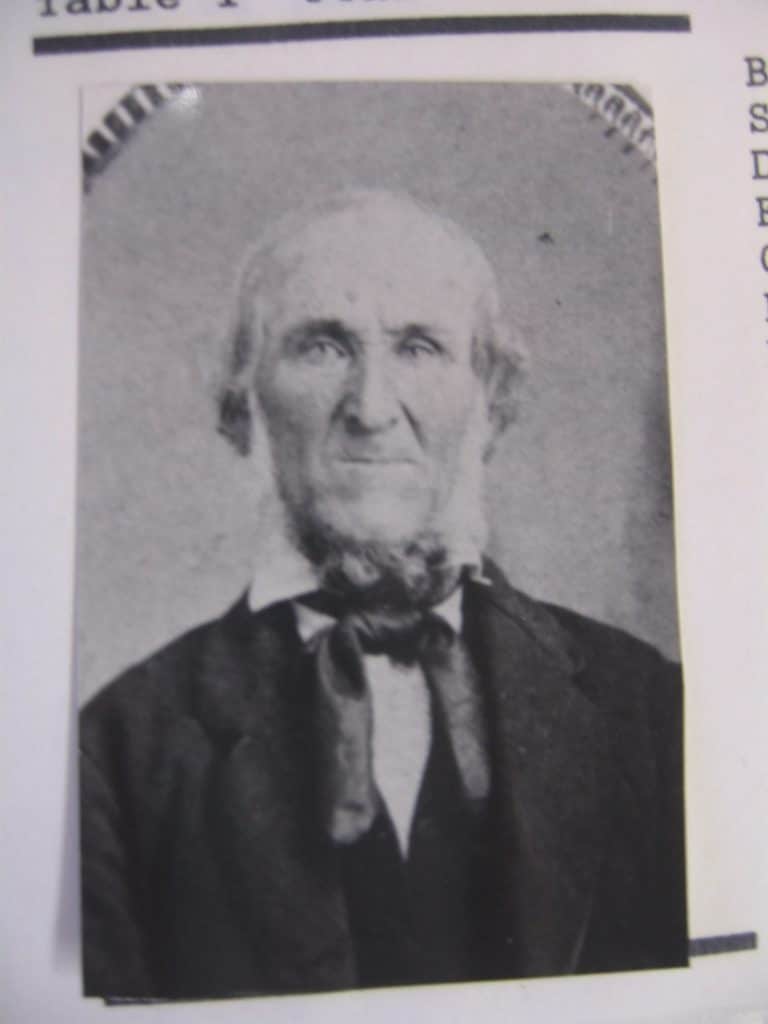
ALLEMAN, John

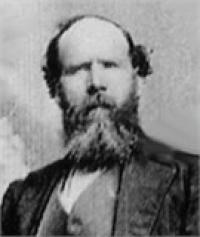
JOHN ALLEMAN and his family arrived in Nauvoo in 1838 from Pennsylvania with two wagons, ten horses and their household possessions. He bought farm land and built a brick home for his family. He assisted in building the Nauvoo Temple and served as a cavalryman in the Nauvoo Legion.
0 1
Read Time:1 Minute, 47 Second

Born: 28 June 1808, Middletown, Swatara Twp, Dauphin, Penn.

Died: 28 Oct 1883, Springville, Utah, Utah Entered Valley: 3 Oct 1852, 14th Wagon Co., Capt John B. Walker

Parents: John Christopher and Catherine Heppick Alleman

Married: Christean Stentz, 11 Dec 1832, Middletown Swatara Twp, Dauphin, Penn. Wife born: 28 Nov 1811 near Middletown Swatara Twp, Dauphin, Penn.

Wife died: 31 Oct 1886, Springville, Utah, Utah.

JOHN ALLEMAN and his family arrived in Nauvoo in 1838 from Pennsylvania with two wagons, ten horses and their household possessions. He bought farmland and built a brick home for his family. He assisted in building the Nauvoo Temple and served as a cavalryman in the Nauvoo Legion.

In the winter of 1846 when the church members were driven from their homes, they crossed the frozen Mississippi River with one team of horses and one of oxen, a few cows, and what household and personal goods could be placed in the two wagons. He and his family were part of a group, selected to remain at a way station to plant crops and prepare for church members who would follow. Eventually they journeyed to Winter Quarters. He served for a time at one of the stops between Nauvoo and Winter Quarters.

In the spring of 1852 they started for the Salt Lake Valley, arriving in October of that year. John brought with him to Utah, nuts and seeds for planting and always kept a beautiful and orderly yard and barn and furnished nuts and flowers to everyone who desired them.

Children:

  1. Anna Catherine, B 27 Oct 1833 Pennsylvania, D 31 Mar 1852, Utah.
  2. Benjamin Jordan, B 27 Aug 1835, D 17 Mar, 1903.
  3. Susannah b. 29 Dec 1837, d. 26 Dec 1856.
  4. John, (twin) b. 15 Oct 1840, d. 9 Dec 1904.
  5. Christiana Mary (twin) b. 15 Oct 1840, d. 27 Apr 1888.
  6. Daniel Joseph, b. 25 Sep 1843, d. 13 Oct 1898.
  7. Sarah Jane, b. 19 Feb 1847, d. 18 Aug 1920.
  8. Martha Elizabeth, b. 21 Dec 1849, d. 4 Jan 1936.
  9. James Hyrum, b. 6 Novv 1852, d. 4 Jan 1924
  10. William David, b. 7 Apr 1855, d. 18 Nov 1886
Happy
Happy
0 %
Sad
Sad
0 %
Excited
Excited
0 %
Sleepy
Sleepy
0 %
Angry
Angry
0 %
Surprise
Surprise
100 %
You May Also Like

TWITCHELL, Ephraim & Phoebe Melissa Knight

One day Branch President Ephraim Twitchell was traveling from Sacramento a long way by wagon. The last day of his journey he was traveling late, after dark. He did not stop because he was almost home. He was alone in his wagon, when suddenly there was a man sitting beside him on the spring seat. He just appeared from nowhere. He told Ephraim that he should take his family from San Juan Bautista and go to San Bernardino. Ephraim responded that they had not been in San Juan very long and that his children had their friends there. He noted that he did not think he could get them to go with him. The man beside him replied, "Yes, you can, and you must go to San Bernardino or you will lose them." When Ephraim turned to answer him he was not there. He had disappeared just as he had appeared -it seemed like just out of thin air. Ephraim knew the gospel very well and remembered their story in the Book of Mormon about the three Nephites. He thought this must be the answer-the messenger was one of the three Nephites. He then saw a beautiful new coat that the messenger had left on the spring-seat beside him. He thought the messenger had really been there-that he had not just imagined or fantasized. Ephraim went home and told his wife, Melissa. They talked about the move. They prayed about it for a couple of days. They knew they must go to San Bernardino, California. Every one of their children and one nephew, John Newton Twitchell, the oldest son of Jasper Twitchell went with them. Anciel Ephraim's oldest son came a year later.
View Post

PETERSON, Charles Sreeve

Mr. Powell, tried to persuade him to give up his faith or otherwise he would have to surrender his work position. He flatly told him no, as to deny his knowledge that he had received would be the greater sin. In his words, “I knew it would be a great sacrifice to me to give up my employment and the comfortable home which I appreciated so much, but to give up the principles which I had received and which I knew to be true would be a far greater sacrifice, and of the two I would choose the lesser … no position, wealth or earthly honor could move me from my convictions and purposes at that time…”
View Post

ASHCROFT, Henry

In those days, the Saints in each settlement were instructed by the General Authorities to have dramas and other amusements for entertainment. In the field of music and drama, Henry was especially gifted. He was a member of the first dramatic organization of Hyde Park. He, Rachel Seamons (Hancey), and Eliza Seamons (England) received much praise for their stage work. Henry had a wonderful bass voice and sang in the choir.
View Post

ALSON, Thomas

At the time there were no free schools held in Utah, so students were required to pay tuition, which was rather difficult to provide; while attending with Peck, my tuition became considerable in arrears, therefore, he proposed that I assist him with classes at a salary of $1.00 per week and my tuition, (in all about $1.35 per week) the $1.00 per week to apply on deferred payments.I engaged to teach the Hoytsville School early in January 1876, at a salary of $45 per month. The school house consisted of one log room about 30 by 40 feet, heated by a stove in the center. The teacher was also the janitor etc.
View Post

WOOD, William Sr.

He was with the body of the Saints on their western movement when the call came for 500 of their gallant men to volunteer to fight in defense of the Government against Mexico. He enlisted in the Mormon Battalion July 16th 1846, marching with the company from Council Bluff, Iowa over a trackless plain where foot of man had never trod. On that perilous journey he helped to make roads, dig wells, and suffered untold agonies from hunger and thirst while marching on the desert day after day in the blazing sun. He was discharged at San Diego, California on July 16 1877.
View Post

ANDERSON, Neil

One day, when it was soon time to harvest the beets, he called the boys together to show them how to top the beets. When he had them all around him he took a big beet and his best knife and toped the beet and at the same time he cut the end of his finger off. Then he said, "Boys, that will never do. Don't do it that way!"
View Post