 0
0
 1
1
Faithful Pioneer

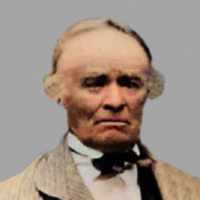
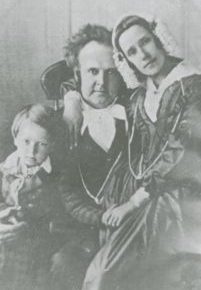
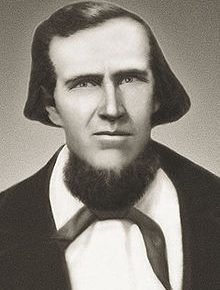
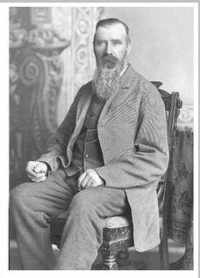
Joseph Howard, son of William Howard and Tamar Mills was born November 12, 1819 at King’s Norton, near Birmingham, England. His father was an England Farmer and his children were brought up and taught in the knowledge of farm. Each was given work to do and he did it, learning how to be useful and also helpful. Joseph had many tasks to perform as a child. He, while just a mere youth, became a very expert in handling the scythe. In those days all the grain was cut with the scythe and later flailed. He had a hard boyhood, but the knowledge gained was very useful later in life. He had taught to him by example and precept, many truths and principles of honor and right living. by his parents who were God living and strict living people. A good foundation of character was laid for the building of a superstructure upon later he became a man.
He met Ann Shelton, who was clerking in a Grocery Store, where he went to make some purchase. He was attracted by her charming manner, beautiful blue eyes, glorious auburn hair, and physical beauty. She naturally had high thoughts and ideals, which the youthful Joseph was not slow to realize and take into calculation.
After a courtship of some length, this couple married in the St. Peter, St. Paul Church, Aston, Birmingham, England and began a happy married life, locating on five acres adjoining his father’s in Gravely Hill near Birmingham. Ann returned to the home of her mother for the birth of her first four children, but after her mother died the remainder of her children were born in the home on the farm. The children were raised and received early training such as Joseph had been. They had simple little pleasures, but to them they were wonderful.
A canal ran between and divided the 5 acre farm from that of Joseph’s father, William. A pleasant pastime of the children was to watch the horses as they pulled the loads of freight and coal in boats along the canal. Locks were located near by and it was such fun to see the boats raised and lowered as they proceeded on the journey to the big cities. Then too the many times the children would be in bet in their childish fashions that the next horse would be white, red, or black. It seemed if they could count more white ones than others, it was luck coming to them. They were all taught to help in the house and out on the farm as there was work for all to do.
Joseph Howard was rather strict in his discipline and often found it necessary to correct and chastise the children. On one occasion the mother had had a trying morning, the children were perhaps full of life and fun and rather difficult, especially Thomas and William, and it was later found out by their father. They were then down in the field putting cut cabbage plants. As their father called, they came to him still holding in their hands some of the unplanted cabbage seedlings. He chastised them for their conduct and to make it more impressive took a branch from one of the trees and used it in a way they never forgot.
Another job that came in turn to most of the children was flailing the grain on the barn floor. It was tedious and long but necessary as threshers were not known in those days. Many tasks were given all to do and as they grew they developed physically and also mentally.
Arrival in Salt Lake City
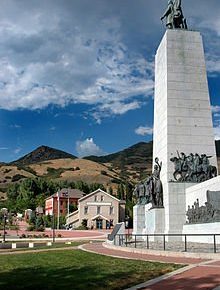
The journey proceeded each day bringing its problems and nigh nearer the goal, Salt Lake City. They arrived at Pioneer Park October 16, 1864 where Thomas and William welcomed them and took care of their immediate needs and wants. The boys had heard that their father had died and were quite surprised to see him standing so erect and strong. But who can tell their terrible feelings when they knew that they should never see that wonderful Mother of theirs again in this life.
Family Located in Bountiful
The family moved to the W. S. Muir farm, at West Bountiful where they resided about 7 years. Then Joseph Howard Homesteaded on what is called Upper Flat, his son Thomas living just to the North of him.
Joseph Howard married Caroline Woodall, in the year 1866, who proved a good helpmate and a careful wife. Rather rigid in her training of the children, but a warm heart. She saw them grow to manhood and womanhood and marry and marry and move into homes of their own.
Joseph Howard became a member of East Bountiful Ward and was active in all his activities. He did all he could to help the cause of Christ, and when he became almost bedridden, unable to get about he was advising and counseling his children and grandchildren to do as they should so no heartaches would come.
Leader Dies
Joseph Howard died October 17, 1896 at his home in the upper flat and was buried in Bountiful Cemetery. Had he lived a little over a week longer it would have been 32 years since their arrival in Salt Lake City.
What a happy reunion there must have been on that day, October 17, 1896. Ann Shelton and Joseph Howard after all their cares and worries, never more to part, united by the Holy Priesthood, in the Temple of God, their future is sure in its security. What a heritage to leave to the House of Howard. What a record to live up to O ye Howard descendants.
“Gird up your loins fresh courage take; Our God will never us forsake.
Do this and joy, your hearts will swell: All is well, All is Well.”


 Brother Joseph