 0
0
 1
1
The Angel of Death shall Lay Waste
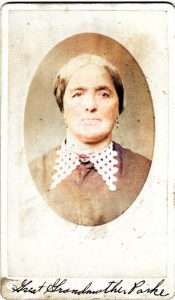
Maria Jackson Normington Parker
by Wayne K. Hinton, Past National President of Sons of Utah Pioneers

My grandmother Hintons grandmother was named Maria Jackson Normington Parker. She was my great, great Grandmother. Maria was a family name, Jackson her maiden name, Normington came from her first husband and Parker from her second husband.
Maria was born December 25, 1820 at Burnley, Lancashire, England to Robert and Jane Thornton Jackson. Before her fifth birthday Maria began winding bobbins at a cotton factory. She was intelligent by nature, but had little opportunity to attend school so she left little written record of her life.
On September 29, 1839 Maria married Thomas Normington. Soon children arrived. Joseph, born in 1840, died the next day. Matthew Heber followed in 1841, and Jane Ann in 1843. Matthew died in 1843, as did Jane Ann in 1851. Lovina was born in 1845, Mary Ellen in 1847, Hanna in 1849, Ephraim Robert in 1850 and Daniel in 1854.
On November 20,1840 Maria was baptized a member of the Church. Her husband was baptized ten days later. For years they dreamed of joining the Saints in America.
With a PEF loan the Normingtons along with Marias two-member brothers, Robert and William, began planning to depart for the United States.
One Sunday a sister bore her testimony in tongues. Branch President James G. Bleak understood the interpretation, but said nothing. Maria gave the interpretation:
“I, the Lord am well pleased with the offering made by my servant Elder Bleak and notwithstanding he shall see the angel of death laying waste on his right hand and on his left, on his front and on his rearward, yet he and his family shall gather to Zion in safety, and not one of them shall fall by the way.”
Maria helped fulfill this prophecy. When President Bleak became weak and ill and was left alongside the trail.
Maria and her brothers took her handcart, backtracked, found him and returned him to camp. Despite illness and hardship, the entire Bleak family survived with not one being lost.
On May 25, 1856, The Normingtons were among 856 passengers who departed Liverpool, England on board the ship Horizon which docked June 30 at Boston. They arrived at Iowa City via railroad on July 8 where they waited until July 26 for handcarts. On that day 576 Saints, 146 handcarts, seven wagons, thirty oxen and fifty cows and some beef cattle departed under direction of Captain Edward Martin as the last of the five 1856 handcart companies.
Before the Company reached the first supply station at Florence Nebraska, eighteen-month-old Daniel died suddenly. Two weeks later Maria gave birth to a baby boy who died immediately after his birth. At Fort Laramie not even a fraction of the expected supplies were available to the Martin Company.

On October 19 the last crossing of the North Platt proved terrible. The stream ran high and carried mushy ice chunks. Shortly after the crossing a fierce storm began with high winds, hail and snow. Winter conditions enveloped the wet and weary travelers. Cholera soon afflicted the weakened travelers. Five-year-old Ephrin Robert Normington begged for a piece of bread. Maria placed a bite of biscuit on his bps. Before he could eat it, he died. Immediately, his sister, Hannah, now seven years old, snatched the biscuit from her dead brothers lips and ate it. Maria, realizing the extreme hunger of her three-living daughters, resolved to do all in her power to preserve their lives.
Thomas Normington died a couple of days before October 28 when Joseph A. Young and Abel Garr arrived in camp with word that relief wagons were on their way. He was buried in a shallow grave with 16 others.
Maria persisted in pulling her handcart until her feet were frozen so painfully, she could not walk. She turned the handcart to her daughters as she crawled on her hands and knees until her hands were so frozen as to be useless. She then crawled on her knees and elbows. Those who saw the resulting open wounds were shocked and some cried. She carried scars on her knees and elbows to her grave.
In the face of adversity, Maria continued on. She gave her meager rations to her daughters as she ate dirt to satiate her own hunger.
At Martin’s Cove Maria slipped into unconsciousness and remembered nothing of the last part of the journey in a rescue wagon that arrived in Salt Lake City November 30,1856.
John Parker was among those furnishing a wagon and provisions, driven by his twenty-one-year-old son William, this wagon conveyed Maria and her daughters. Generous families took the survivors into their homes and nursed them back to health.
It was several months before Maria could walk. When the girls had regained their strength, they moved into John Parker’s home on Second South between West Temple and Main Street. Maria and her daughters were then moved to the John Parker farm in what is now Taylorsville.
John’s first wife, Alice, had died in England. His second wife, Ellen, a widow with nine children, had given birth to two additional children, a son and daughter of John’s. In November 1857 Maria became the plural wife of John Parker and bore him two children, a son Robert and a daughter, my great grandmother who was also named Maria.
In October 1862, John was called to the Dixie Cotton Mission to help develop the cotton industry. Maria stayed behind at the Taylorsville farm for another year before she moved herself and children to Virgin, Utah where she lived in a dugout.
Virgin had a presiding elder, but John Parker became the first bishop of the Virgin, Utah ward in which capacity he led out in organizing a United Order, a co-op cattle association, and a co-op store run by Maria and her sister wife, Ellen. Maria became a mainstay in the ward choir.
Above all, Maria remained a faithful Saint. She felt the gospel was the most glorious blessing of her life. Her response to difficulties and struggles was to be more faithful, resilient, and persistent. Her family loved to hear her pray; she seemed to see and talk to God face to face. She lived a life of doing good and living consistent with gospel principles. She also lived to see the completion of the St. George Temple and was able to have her family sealed. On March 19, 1881 Maria suffered a stroke at her home in Virgin and died at age sixty. She remained to the end a good and faithful wife and mother who taught her children by precept and example to be honest, industrious and true Latter-day Saints. Among her descendants are general authorities, mission presidents, stake presidents, bishops, stake patriarchs, and untold numbers of missionaries. And thus we see the fruits of living an honorable, faithful and devoted life.


 Brother Joseph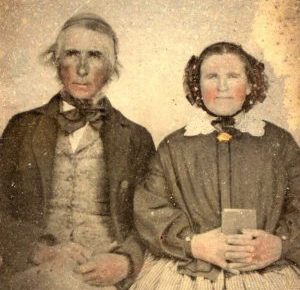
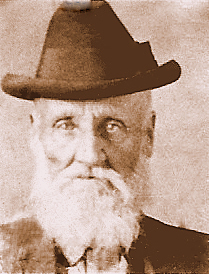
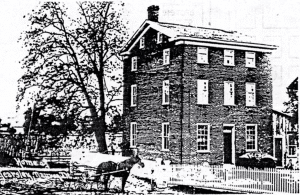
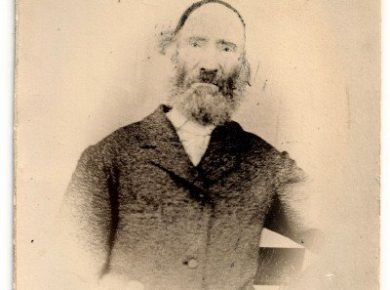


 Pioneer John