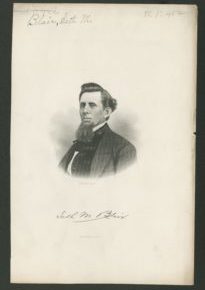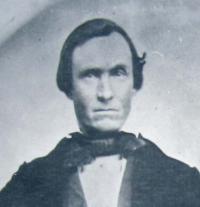
GLEASON, John Streator: Rush Valley Miner

John S. Gleason did indeed own the Mountain Lion mine, or parts there-of, but also the Blue Wing mine listed above and much to our surprise, at least seventeen other lodes shown in Figure 13.0. Two miles north of Ophir is Jacobs City in Dry Canyon. Some of the richest lodes of the Ophir Mining District came from this location. John S. Gleason owned in part the Iris(Ira) and Jacobs Hill lodes (Shoo Fly) in Dry Canyon. Millions of dollars of rich metals were taken from the Ophir and Jacobs City locations. The date of sale of the Mountain Lion Lode no. 2 was 4 March 1871. It was sold with the webster and women rights lodes for $2,000 dollars. The Mountain Lion Lode and thirteen other lodes were sold on 10 June 1871 for the combined sum of$5,000 dollars.
0 1
Read Time:3 Minute, 8 Second

Mining in Rush Valley

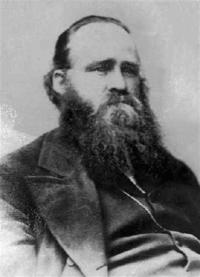
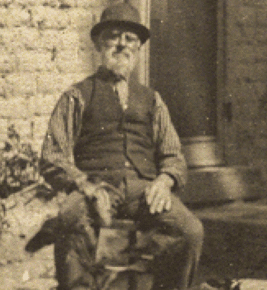
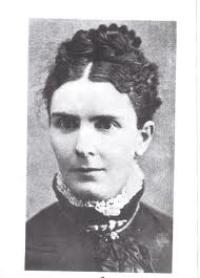
John Streator Gleason (1819-1904)

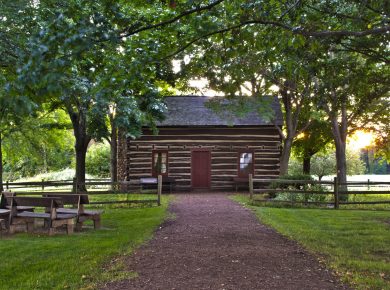
One of the premier days of my life is the day I took my mother (Marie Gleason Bennett) to Ophir City in the County of Tooele. It was here that, family tradition has it, John Streator Gleason sold his “Million Dollar” gold mine, the Mountain Lion Mine, in the year 1873 and used the proceeds to purchase the family farm in Pleasant Grove City. She had relived this story over and over and was delighted to see the City of Ophir.

Ophir Utah

What information could I find by searching the Internet? The Goshuite Indians lived in the area before the white man came. They had some ornaments and bullets made of silver, which they had mined from local exposed ore. General Patrick Connor and his troops, led by the Goshuites to the East Canyon of the Qquirrh Mountains, made some of the first claims. This area was known as Rush Valley and then Ophir in 1865. The Ophir Mining District was organized in 1870, and by 1871, more than 2,000 mining claims had been staked. The chief metals were lead, silver, zinc, and very small amounts of gold.

The Ophir mines were the Kearsage, Mountain Lion, Petaluma, Silver Chief, Tampico, Blue Wing, Velocipede, Shamrock, Miner’s Delight, Wild Delirium, Montana, and the Silveropities (Ophir Utah-Northern Towns). Wondering what aspects of the family tradition could be substantiated, my wife, Marilyn, and I visited the County Recorder in Tooele. We spent a delightful and informative day at the Tooele County Recorder’s office browsing through the mining records. We were able to confirm that John S. Gleason did indeed own the Mountain Lion mine, or parts thereof, but also the Blue Wing mine listed above,, and much to our surprise, at least seventeen other lodes.

Two miles north of Ophir is Jacobs City in Dry Canyon. Some of the richest lodes of the Ophir Mining District came from this location. John S. Gleason owned, in part, the Iris (Ira) and Jacobs Hill lodes (Shoo Fly) in Dry Canyon. Millions of dollars of rich metals were taken from the Ophir and Jacobs City locations.

The date of sale of the Mountain Lion Lode No. 2 was March 4, 1871. It was sold with the Webster and women’s rights lodes for $2,000 dollars. The Mountain Lion Lode and thirteen other lodes were sold on June 10th, 1871, for the combined sum of $5,000 dollars.

Finding 19 lodes partly owned by John S. Gleason raised the question; why was he mining in the Ophir District and was he an original claimant. Ore was “discovered” in the Rush Valley in the year 1865. John had returned from a mission in England in the fall of 1863, and he had time to explore new finds. John had been a selectman in Tooele County and was familiar with the terrain. As an officer in the Davis County Militia, he may have had contact with Army personnel who had “discovered” ore in Rush Valley. No matter the history, his interest in mining was extensive and spread much beyond the Mountain Lion Mine.

Recording mining claims was not federally required until 1870. However, the Rush Valley Mining District kept records of many claims prior to 1870. The Ira Lode and the Red Pine West Lodes show John S. Gleason as one of the original claimants over his own signature dated June 20, 1870, at 7 o’clock a.m. and May 24, 1870, at 8 0 clock a.m, respectively. The Mountain Lion Lode was filed on June 11, 1870. John sold his interest in mining in the years 1871–1872.

Happy
Happy
0 %
Sad
Sad
0 %
Excited
Excited
0 %
Sleepy
Sleepy
0 %
Angry
Angry
0 %
Surprise
Surprise
100 %
You May Also Like

STEED, Milton Ezra & Ida Hansen

The bishop had just come out of the chapel ad was standing on the top step visiting with another rancher when, unnoticed, that young man walked across the church yard, up the steps, and hit that bishop square on the jaw and knocked him down. Silence settled over the crowd; people stood motionless in a state of shock. Some of the men had their fists clenched, but no one made a move. All were wondering what the bishop would do. The bishop, however, was silently asking what the Lord would do if he were the bishop. The young man stood over the bishop with his fists clenched, glowering down at him. After a few seconds, which seemed much longer, the bishop got up and looked that young man squarely in the eye and calmly said, “Well brother ________, if that is the way you feel, perhaps you had better hit the other cheek.” He turned his head and waited.
View Post

BELLISON, James Thomas and Louisa

Before many days, an incident occurred which tells a lot about James' attitude toward draft animals. His granddaughter, Pearl Allen Read, tells of the company coming to a bog of mud in the trail which caused many wagons to get stuck. As each team came to the bog, the Captain standing there would join the drivers in whipping the animals to get them through.When it was his turn, James forbade the Captain. "These are my animals and no whip is to be used on them." Although James' team pulled through the bog successfully, the Captain was angry and thereafter continued to find fault with this independent member of his company.James Thomas' life-long insistence that his animals be treated well was admired by those who knew him and was learned and perpetuated by his children throughout their lives.
View Post

CHAPMAN Julia Ann

Other than for Julia's health, Isaac was well equipped to travel. In the heat of the late spring, Julia gained some weight and felt pretty well. Deciding that they could safely make the trip, Isaac loaded the wagon, making a special bed for his wife. At first she did very well, cheerful that at last they could go west and be with their relatives. But as the trip continued, the strain began to tell. Some mornings she was unable to get up. When they crossed Loup's Fork they again pulled out of the line, getting one of the Elders who lived at the Fork, Isaac and he administered to her. She seemed to relax and feel better, but during the night she lapsed into her last long sleep. After they buried her, Isaac was so grief stricken that he sat for days, staring in front of him, felled by his tragedy. One evening James Walsh came to his fire and said, "I have seen many tragedies along the trail, and I respect you for your grief, but life must go on. Now you owe your little ones an even greater responsibility than before. Now you must be both father and mother to them. Crying tears of anguish over your lost wife is right and proper, but you must never allow your grief to immobilize you. What would Julia want you to do? You have begun a great quest, which, unfortunately, she was too weak to finish. Now you must finish it for her." Out in the night Isaac walked for hours, asking why? Why? But with the coming of midnight, a peace enveloped him like a cloud. His beliefs taught him that although her body was dead, she, herself was still alive and would wait for him. He must not fail her. The next morning, 10 July 1852, he gathered a bunch of wild flowers and placed
View Post

GREEN, Elizabeth Jane

Candace asked Hamilton about his mother’s pictures and he answered “I don’t know, I’ve never touched them.” Candace asked if she could get them and he gave his consent. She went into the other room and came out with some pictures carefully wrapped in tissue and brown paper. It was such a thrill to find a picture of Elizabeth Jane Green as a young mother and five of her sons, a picture of my grandfather James Copeland Orr, taken before he left on a mission, a picture of Charley, Walter, Richard and Earnest. Some of these pictures had been taken up at Mercur, probably when the boys had taken some produce to market or gone up to Mercur on a date or to a dance. Mercur at this time was one of the biggest towns in Utah and the people of Clover and St. John sold nearly all of their produce at Mercur.
View Post

YEARSLEY Sr., David Dutton: Giving His All

The Yearsleys made their way through the bitter cold winter weather to Winter Quarters. The hardships were so extreme that some entire families were buried along the way. “Thus, from day to day, slowly and wearily traveling, went the exiled Saints across the undulating surface of snow-covered Iowa. The Roads were very bad, the weather cold and stormy, and the streams, now frozen, now swollen by spring freshets, almost and at times quite impassable. Again and again they were obliged to double teams on the heavily loaded wagons, to drag them through deep streams and miry marshes on their line of travel. Some days three or four miles would be the extent of their journey. Many a halt was made, at times for weeks (5).”
View Post

John Adamson

Two other children, Andrew and Margaret, were professional dancers in Scotland and danced for the entertainment of the passengers during the voyage. When they reached America they traveled to Florence, Nebraska where they were met with teams and wagons sent by President Brigham Young to help them cross the plains.
View Post

BLAIR, Seth M.

The following biography was previously submitted to www.pioneerstories.com Spouse: Cornelia Jane Espy, Harriett, Sarah Pioneer Type: Early Pioneer Seth was raised in Tennessee along the banks of the Mississippi River…
View Post