 0
0
 1
1
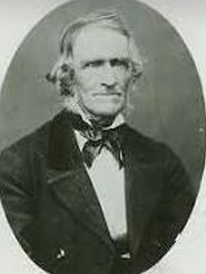
Thomas Rees, b 4 Jan, 1820, Pembroke, South Wales, md Rebecca Williams 8 Apr, 1841, d 8 Sept, 1892, Wayne County, Utah.
 This biography is a story of conversion and of a struggle to come to Utah that took years and cooperation of a faithful son.
Just 8 days before the Royal Astronomical Society was formed in England, heaven sent a choice spirit to earth to experience mortality under the tutelage of Thomas Rees Sr., and Eleanor Furlong, his parents. Thomas was born in humble circumstances and remained poor throughout his life, yet he was rich in spirit.
As Thomas Rees grew into adulthood he was raised in the farming community of Talbenny until he met Rebecca Williams from the neighboring town of Walton West. The two fell in love and were married. They remained in Talbenny on a farm while raising their family, which eventually grew to twelve children. It was difficult to make a living on a farm, so the children had to help their father scratch out their meager living. Thomas Matthew Rees (Brigham Rees’s son) wrote that the children began working the farm from sunrise until sunset when they were 6 years old, so they didn’t have time for school.
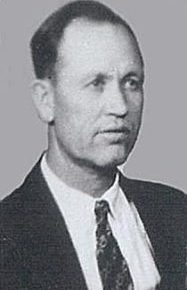
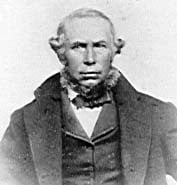
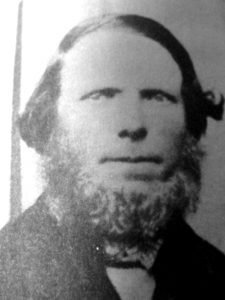
The physical description and character of Thomas Rees and Rebecca Williams was given by their grandson, Thomas Parley John:
“Grandfather was a fine looking man. I have heard it said that he was six feet , two inches in his stocking feet. No one had a better friend than grandfather Rees was. When he was a young man in the old country, he was mowing hay with a scythe and in going from one field to another with the scythe over his shoulder, fell and cut his back. From this time until the day he died he walked bent over, using two walking sticks…Grandmother was a rather small woman not so short but quite thin. She loved her bible and knew its contents well. Her patients [patience] was much more limited than grandfather’s. She made the best biscuits and butter that I have ever tasted.”
The twelve children of Thomas and Rebecca were Mary b 15 Sep, 1841, Rebecca b 11 Dec, 1842, Elizabeth, b June 1844, Betsey, b 25 Mar, 1845, Brigham, b 9 Apr, 1851, Heber, b 1852-3, Ellen, b, 22 June, 1854, Noah, 14 Aug, 1857, Margaret, b 15 Nov, 1859, Lettice, b 29 Dec, 1860, and Thomas Parley, b 2 June 1864. The family struggled to maintain a living on the farm, which was referred to as the “North Crocket Farm”. In 1865, Thomas sent Brigham (then 14 yrs old) to the home of a stone mason so he could learn to cut and lay stones because he wanted Brigham to have a better life than he. This would later prove a great blessing for the entire family.
Thomas didn’t believe in the teachings of the church that was forced upon them by England when they conquered Wales, but he had a strong belief in God. He believed that God had saved his life when he had fallen on the scythe because he was bleeding profusely until he prayed, and the bleeding stopped after the prayer. This probably set the stage for his conversion to the Church of Jesus Christ of Latter-day Saints. When the missionaries came, he and his family readily accepted the gospel.
After they were baptized in 1866, Thomas and his family wanted to go to Utah with the saints, but he didn’t have the money to do so. Thus, their pioneer pilgrimage began on their destitute little farm in Wales with an effort to save money for the journey. It took until 1868 for them to save enough to send Brigham and one of his older sisters to Utah. They sent them off with instructions to save money and help the rest of the family to come. Brigham sailed to the states on the steamship Colorado. If his sister traveled on the same ship with him, it was Elizabeth because she is the only one to closely match name and age. The ship carried 600 saints bound for Utah, and was the last of the year. It departed Liverpool on 14 July, 1868 (6), and arrived at the Castle Garden Immigration center of New York on 7 August, 1868. They traveled by train to Florence, Nebraska (another account says the train took him to Wyoming), then walked the last 800 miles from there to Utah because the rail hadn’t been completed to Ogden yet. Records record him arriving in Utah in 1869, so he must have been delayed en-route. Brigham would have been one of the last of the pioneers to walk to Utah before the Golden Spike was driven in Ogden.
When he arrived in Salt Lake City, he was told the only work was at the new mine on the west side of the valley, so he threw his blanket back over his shoulder and crossed the valley on foot in search of employment. His skills were needed, so he was hired by the Bingham Copper Mine and began saving money for his family back in Wales. It only took two years for Brigham to save enough money to bring the rest of his family to Utah. By that time, they were able to come all of the way overland on the train, so the journey was much easier for them. One puzzlement was that the Castle Garden Immigration list didn’t contain the names of Thomas or his family members coming to New York in 1871 or 1872. Perhaps they landed at a port to the south.
At some point, Thomas Rees learned to be a shoe cobbler because his grandson said he did this type of work in Utah. They lived in Salt Lake City for a time before moving to Portage, Utah. They moved S-S-W a few miles from Portage to the location now listed as Washakie and lived in a one room log house with a dirt roof. Some Shoshone Indians were probably there at the same time with Chief Washakie leading them. Nothing has been found of their relationships with Thomas Rees and family, but Brigham Young later established that town as the first Indian farming community in 1881 (8) . Thomas Rees and family may have moved back into Portage, or may have continued in Washakie with the Indians for a time. The next record is one showing Thomas Rees dying on 22 Nov, 1885 but no details surrounding his death have been found. Nevertheless, his youngest son, Thomas Parley Rees moved to Rabbit Valley (Loa & Bicknell, Utah) in 1892 and farmed there. Rebecca moved with him because she passed away in Thurber (now Bicknell), Utah on 8 Sep, 1892.
This family lived a life of poverty as they worked to establish themselves in fellowship with the saints in Utah. Though poor in worldly possessions, they were truly rich in faith and were familiar with the peace that comes through obedience and love.


 Brother Joseph
 Pioneer John