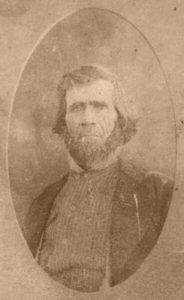
ADAIR, Thomas Jefferson

0 1
Read Time:2 Minute, 54 Second
The following biography originally appeared in Pioneer Magazine, 2010 Vol.57 No.1

Born May 28, 1884, Thomas Jefferson Adair was a cowboy on the Blue River Wilderness, south of Nutrioso, Arizona, where his father, Samuel Newton

Adair, was a rancher. Samuel had served a mission with Jacob Hamblin among the Hopi and Navajo Indian tribes in Southern Utah and Northern Arizona.

Thomas received his call to the Southwestern States for The Church of Jesus Christ of Latter-day Saints and was set apart on April 1, 1904; he was assigned to labor in Arkansas.

Elder Adair received a letter from Mission President James G. Duffin at the headquarters of the Southwestern States Mission in Kansas City, Mo., informing him of what he should take.

“Bring no books nor extra clothing except one pair of garments. Knit garments are worn by almost all the elders. We have made special arrangements with the ‘Western Knitting Co’ in Salt Lake City, whereby Elders can get a 20% discount. Also, if you want to get a Prince Albert suit in Salt Lake City, go to West’s Mail Order House. They have agreed to sell you a $21 suit for $14. We supply Elders here at the office with suitable grips, clothing of all kinds (except garments), books, tracts, etc. We keep on hand Bibles specially suited to our work. Bring no trunks or valises: you cannot take them with you in your travels, and we have no room to store them here. May the blessings of the Lord attend you on your journey to this city and throughout your mission.”

A few pages from Elder Adair’s journal show he and his companion spent part of their time looking for food and for places to sleep. After eating a morning meal, they were on their way, teaching as they went, and seeking food and lodging each night. They used each opportunity to preach the gospel and bear their testimonies.

“Friday 5 August 1904. We arose this morning feeling able to pursue our journey, and shortly after eating our breakfast began to do so. We ate dinner with a man by the name of Moreland. After dinner we had all the muskmelons we could eat. . . .

“Wednesday 10 August 1904. After eating our breakfast we borrowed a kettle, a tub, and some soap and went to the spring and washed our clothes. We got our washing out about noon, ate our dinner, and then wrote some letters while our clothes were drying. When they were dry, we put them in our grips and started on our journey. We walked five or six miles and found us a place to stay. The man’s name was Mr. Wickersham.”

During his mission, Elder Adair became ill. There are no details to show when or where Elder Adair contracted typhoid malaria, but malaria generally comes from drinking impure water or is contracted from mosquitoes. He had served 28 months as a faithful missionary when he contracted the disease. He was released from his mission and started for home.

Evidently, Elder Adair’s parents received word that he had arrived in St. Johns, Arizona, on July 23, 1906, and was quite ill with a fever. His parents lived in Nutrioso, about 75 miles from St. Johns, and they traveled to his bedside to help him. They found he was too ill to travel any farther, and he passed away about a week later on August 1, 1906, at age 22.

Happy
Happy
0 %
Sad
Sad
0 %
Excited
Excited
0 %
Sleepy
Sleepy
0 %
Angry
Angry
0 %
Surprise
Surprise
100 %
You May Also Like

Life of James Kippen

Mr. Kippen was a firm believer in the teachings of his church regarding work for the dead, doing work along this line in the temple for members of his family who had died out of the faith of the Mormon Church, believing that by this means he would be able to save their souls. He passed all through the scenes of hardships and difficulties which the settlement of Utah made a matter of history, and during the Johnston Army troubles, he served as a guard in the Green River country and in Echo Canyon.
View Post

SWEETEN, Colen Hagle

Finally, I heard his muffled voice calling from the bottom of the well. He said that the horse filled the entire hole. There was just about enough mud and water to cover the horse. He could not find anything of the man or the shovel.
View Post

ARMSTRONG, Francis

From this humble beginning began the rise of one of Utah's greatest entrepreneurs of his day or any other day. He obtained his own saw mill, then a lumber company, then a construction company. As the years went by, he purchased a flour mill, several huge ranches, and developed sugar companies, banks, savings and loan operations, railroads, transfer companies, insurance companies, and eventually electric street cars (the second in the world) and the supporting electricity production company.
View Post

ALLEN Jr., Daniel: A Life of Consecration

Having completed their assignment, Daniel and his committee returned to Nauvoo, only to find buildings burning, mobs raging, and the saints gone. Daniel hurried to his home to find that his family was still alive, but his wife Mary Ann had just had a new baby and was very ill. He pled with the mob to let him stay a few days so his wife could recover, but they said they would kill them all if they weren’t gone by the next day. They hurriedly loaded what they could in the wagon and made a bed for Mary Ann and the baby. The Allen wagon was one of the last three to leave Nauvoo. They traveled together for a short distance, but couldn’t keep up because of Mary Ann’s grave condition. Being left alone with only one other wagon, they trudged through the mud and snow as best they could until they reached the head of Soap Creek (it looks like this might be less than 100 miles from Nauvoo). Mary Ann had struggled so valiantly, but could endure no more, so she whispered her last words to her loving husband…”We’ll meet again dear love in a better world and I shall wait your coming”. She died on the trail in May, 1846, along Soap Creek, Davis County, Iowa with no one but her family and the angels in heaven to mourn her passing.
View Post

John Adamson

Two other children, Andrew and Margaret, were professional dancers in Scotland and danced for the entertainment of the passengers during the voyage. When they reached America they traveled to Florence, Nebraska where they were met with teams and wagons sent by President Brigham Young to help them cross the plains.
View Post

ALSON, Thomas

At the time there were no free schools held in Utah, so students were required to pay tuition, which was rather difficult to provide; while attending with Peck, my tuition became considerable in arrears, therefore, he proposed that I assist him with classes at a salary of $1.00 per week and my tuition, (in all about $1.35 per week) the $1.00 per week to apply on deferred payments.I engaged to teach the Hoytsville School early in January 1876, at a salary of $45 per month. The school house consisted of one log room about 30 by 40 feet, heated by a stove in the center. The teacher was also the janitor etc.
View Post