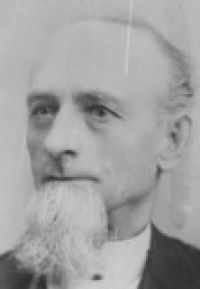
POWELL, Joseph and Thurza Ann

0 1
Read Time:2 Minute, 40 Second
This article originally appeared in Vol. 58 No.2 (2011) edition of Pioneer Magazine

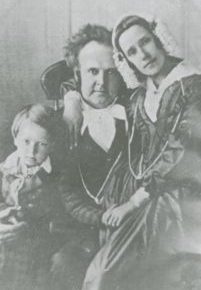
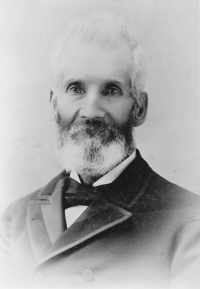
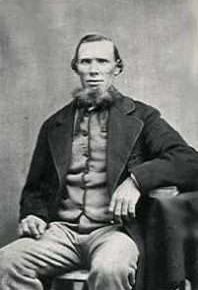
Joseph Powell was born Dec. 11, 1831, to George and Susan Pike Powell in Bridport, Dorsetshire, England. It is assumed that his father and family were rope makers in this coastal town, since they lived directly across the street from the large rope factory, which made ropes for the local industry of boating and fishing. 

Thurza Ann Powell was born Apr. 13, 1835, to Thomas and Mary Hodder Powell in Bradpole, Dorsetshire, England. She was the eighth of nine children—two girls and seven boys. 

Members of their families were converted to the Church in 1847 by Elder George Kendall. Within eight months 155 people had been baptized, including Thomas and most of his family, and Joseph Powell. 

On June 13, 1853, Joseph Powell and Thurza Ann Powell, first cousins, married in Allington. After several years of activity in the Bridport Branch, Joseph and Thurza Ann emigrated to America in 1854 with many others in the branch including Thurza’s father Thomas, her mother having died earlier that year. 

Joseph and Thurza had an infant son stillborn Mar. 1, 1854, buried at sea. Their first child listed in the genealogical records is Mary Elizabeth, born Nov. 9, 1855, “on the plains coming to Utah” prior to their reaching Council Bluffs, Iowa. This child died Apr. 22, 1857. The next child, Emma Jane, was born at Council Bluffs; the last 3 children were born in Venice, Illinois. 

Joseph and Thurza’s family, (and most likely Thurza’s father, Thomas Powell), crossed the plains in the John D. Chase Company, leaving Nebraska June 26 and arriving in the Salt Lake Valley Sept. 20, 1864. 

Later Joseph and Thurza went back to Venice, Illinois, with a mule train to pick up more immigrants. Joseph is listed in the 1880 census as living in the 1st Ward in Salt Lake City. Their son William Joseph was baptized at age 14. On Aug. 30, 1883, Joseph and Thurza Ann had their marriage sealed in the Endowment House. 

On Jan. 27, 1885, Joseph sealed Hannah Charlotte Jones or Sanders to him in the Endowment House. She was born in 1829 in England. And on June 17, 1887, he sealed Elizabeth Powell to him in the Endowment House. Elizabeth was the niece of his wife Thurza Ann and was also from Bridport, England. Then on May 16, 1888, he sealed Ann Sims to him in the Logan Temple. Ann Sims was also from Bridport, a distant relative and his same age. 

Joseph was a truck gardener in Salt Lake City. In 1896 Thurza’s brother talked Joseph, Thurza and their son William Joseph into moving to Castle Valley to help settle the town Desert Lake and help build the Buckhorn Dam. The venture was such a long, hard, and unsuccessful experience that their families moved back to Salt Lake City, where they continued gardening. 

Thurza passed away Dec. 31, 1910, in Salt Lake City and Joseph on Mar. 7, 1925. 

Source: “The History of Weymouth Branch” by John Dadd, LDS IGI records, Bridport branch records, “Thurza Ann Powell” by Verla Timmerman, and a personal visit to Dorsetshire, England. 

Happy
Happy
0 %
Sad
Sad
0 %
Excited
Excited
0 %
Sleepy
Sleepy
0 %
Angry
Angry
0 %
Surprise
Surprise
100 %
You May Also Like

JOHN, Thomas & Margaret Thomas

The first three nights on the trail were spent on the banks of the Elkhorn River, which was not far out of Winter Quarters. The river had many fish in it and some of the company fished a good deal while camped at that location. Others spent time harvesting grapes which were in abundance along the banks of the river. The company saw many buffalo herds and abundant antelope, deer, and elk along the trail. They only harvested one buffalo, but had many deer and antelope along the way. This journey was made before the white man exterminated the buffalo by shooting thousands and then leaving the carcasses to waste.This was not the end of the influence of the white man. Henry John documented the following: “The horse and the cow were soon to take the place of the buffalo; sheep were to replace the elk, deer and antelope. Domestic fowl claimed the place of the wild turkey; grouse and little prairie dogs were given wheat saturated with poison in order to move them out of the way so fields of grain could be raised. Wild plums and bending branches of wild fruit were to be rooted up and the more luscious fruits- peaches, pears, apples and others- were to take their place. The Indian wigwams were to be moved; white man’s cottages and beautiful residences were to take their places (2).” Henry Miller had a very stern reputation and lived up to that reputation on this journey as well. When the company came to the Green River, Captain Miller told them all to get out of the wagons and ford the stream on foot. The river was ice cold and one old man that had been very sick and worn out climbed on a mess box that was bolted on the back of a wagon. When Captain Miller saw this, he jumped into the river and pulled the old man off and threw him into the cold river. Twenty eight people died on the trip and many thought a good portion of those fatalities were attributable to Captain Miller’s harsh, unforgiving supervision
View Post

CROSS, Benjamin

Benjamin Cross, was chosen to be the first bishop of Peteetneet Creek ….October 26th, 1854 there was an article in the Deseret News of Israel Calkins having raised produce on nearly an acre belonging to Bishop Cross: 150 bushel of beets, 150 bushel of potatoes, 3 bushel of onions, 130 good cabbage heads and an additional 300 heads damaged by the grasshoppers, 3 barrels of pickle cucumbers, and quite a quantity of melons, squash, and peppers. Benjamin was assisting Charles B. Hancock financially to get a grist mill built in Payson. On November 15th George A. Smith came to Payson from Provo to speak in a meeting and stayed the night with Bishop Cross.
View Post

KILLIAN, Captain John

When the Elders administered to me, Brother Killian being mouth, I was in bed. He poured the oil on my forehead and I jumped right out of bed and put on my clothes. On hearing that Robbins was going to Quincy in the morning, I walked up to his house, three-quarters of a mile, and went with him in his carriage to Quincy, remained all day and returned with him at night.”
View Post

PORTER, Sanford: A Visionary Man

The last night there came a Voice–clear, audible, and distinct, "There is a God, and He has known the desires of your heart this number of years. I will instruct you three times this night the way that is right- -that you need never again doubt, but shall be satisfied in your mind concerning God.”
View Post

BRINKERHOFF, Jesse: A Father’s Journey of Love

The flu epidemic of 1918 sometimes known as the Spanish Flu, reeked havoc across the world killing an estimated 100 million people, more than 500,000 in the US, and killed mostly strong healthy adults. Fear spread the country, along with the flu. Hospitals were full, health professionals died, Schools, churches, public buildings,etc, were closed, and people feared being around others. Little girls made up jump rope rhimes, and here is an example, "I had a little bird, it's name was Enza, I opened the window and in flu Enza.
View Post

YOUNG, John Ray: Experiences

John R's mother was ill and stayed in Winter Quarters, but John R and his brother Franklin W ( 8 ) left soon after the advanced party, in the Jedediah M Grant Company. In his book John R. states that they were no ones responsibility, but everyones chore boys. It is heart renching to me to picture a sick mother sending a 10 year old son on a 1000 mile treck through wild country with an 8 year old in tow. One morning when they were camped on Hams Fork near Ft Bridger, in what is now Wyoming, a cow was sick and would not get up. John was left behind to try to get her up and bring her to the next camp site. It is terrible to think of the fear he felt as the last dust settled from the wagons as they faded from view. While tending the cow he saw an Indian across the river, and he decided to leave the cow and head for camp. The next morning several men returned to the previous camp site, and found that the cow had been butchered by Soux Indians 'on the war path after Shoshones', This band raided Ft Bridger, but left the Mormon train alone except for one sick cow.
View Post

ALLEN, Jude

In May 1845, the company turned west from their northwestern trek and moved across western Iowa to Fort Vermillion, a French trading post in the present south-eastern part of South Dakota. This group of Mormons was probably the first Anglo American settlers in South Dakota. Jude and the others in the company spent the next ten months hunting buffalo, herding cattle, putting up log cabins, raising vegetables and putting up hay.
View Post