0
0
 1
1
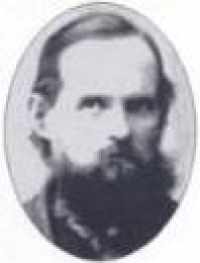
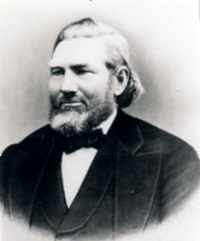
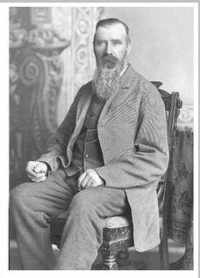
BENJAMIN CROSS and Family
Benjamin Cross, was chosen to be the first bishop of Peteetneet Creek March 23, 1851 and was Ordained by President Brigham Young, also sustained by the members at the meeting with Heber C. Kimball and President Brigham Young in attendance. The counselors he chose were Joseph Curtis and Breed Searle. The family of Breed Searle and Benjamin came to Peteetneet together.
Benjamin Cross was born in Mass. about 1788 and was a farmer by trade. In the 1830 Census of Richland, Oswego County, New York, there are two young men living with him that would have been born between 1800 and 1810, which could have been Benjamin’s sons. Four young ladies under ten were also listed in the census.
Benjamin is listed as 61 years old in the Territorial Census of 1850. He had married Roxana Matilda Powers about 1806 and lived next to her parents in Oswego County, New York.
Roxana was born in Conn. about fall, 1791, listed as 58 years old in the Census. In the 1840 Census – Richland, Oswego County New York an 80 year old woman is living with them. In the 1830 Census there is Nathan Powers, 80 to 90 years old and his wife, 70 to 80 years old on the very next line to Benjamin Cross. I have designated them Roxana I s parents, the father having died after 1830 and the mother after 1840.
A 10 to 15 year old boy is listed in the 1840 Census and I have designated him a son born about 1826. There may be other children but I haven’t found a reference to any.
The four women listed in the 1850 Census coincide with the information in the 1820 Census of New York. I’ve concluded them to be daughters. They are
- Amanda N. Cross – Born 1810 in New York;
- Louisa Cross – Born 1812 in New York;
- Matilda Cross – Born 1814 in New York;
- Eunice Cross – Born 1816 in New York.
When George A. Smith organized the Peteetneet Ward in Dec. 1850, he reported in a letter to President Young there were 35 members, old and young.
On September 1, 1851, Benjamin Cross reported to Church Headquarters there were 116 baptized members, no un-baptized numbers reported. A report was given of named, with genealogies reported to be in the Historical Department of the Church by the Deseret News.
In October 6, 1853, the report of Bishop Benjamin Cross was 287 baptized members and 140 non-baptized with less than 10 adults.
There was a letter January 9, 1853 from Bishop Cross to Stake President George Albert Smith about “the dam of Spring Creek and the ditches”, was the subject. Those who worked on it with several days hand labor and several more days with teams were; Henry Stevens, John H. Moore, William B. Maxwell, John Spencer, and Samuel Drollinger. There may have been others, but none in this report.
October 8th 1853 was a meeting and talk to the “old” residents and to instruct the newly arrived residents;
“Build your homes in the fort for protection from the Indians and the social aspects that you will find. Do not go out without taking your gun and try to be in pairs. If you go out alone without your gun, you’re inviting to be attacked and get your head peeled”.
These instructions were given by George A. Smith:
- November 1853 Benjamin Cross was approved, to take the position of Henry Stevens who had moved south, as a counselor in the city government.
- The 24th of July, 1854 was celebrated, Bishop Benjamin Cross giving the opening prayer for the activities to begin.
- October 26th, 1854 there was an article in the Deseret News of Israel Calkins having raised produce on nearly an acre belonging to Bishop Cross: 150 bushel of beets, 150 bushel of potatoes, 3 bushel of onions, 130 good cabbage heads and an additional 300 heads damaged by the grasshoppers, 3 barrels of pickle cucumbers, and quite a quantity of melons, squash, and peppers.
- Benjamin was assisting Charles B. Hancock financially to get a grist mill built in Payson. On November 15th George A. Smith came to Payson from Provo to speak in a meeting and stayed the night with Bishop Cross.
- Bishop Cross was brought before the High Council by George Patten for “Wife Interference”, but was judged innocent.
- George A. Smith let the brethren know that Benjamin Cross had died at 5 A. M., 30 December, 1854 in Payson from quick “consumption”. He came down with the Malady on the 25th. He held the position of Bishop. Breed Searle was acting Bishop till the leaders ordained Charles B. Hancock, 5 March 1855 to succeed him.
Roxana was re-baptized 22 April 1855 by Bishop C.B. Hancock.
In the International Genealogical Index, marriage search, Benjamin was married in the Endowment Records to Roxana Matilda Powers, and Catherine Burgess 8 September 1851.
In the IGI Addendum I found Matilda Cross born 2 September 1814 at Sandy Creek of Oswego County New York. No relative or Spouse Listed, but she is a daughter of Benjamin Cross.
Roxana Matilda Cross is entry 51 in 026401 Payson Film. Ann Cross is entry 470 of 026401. She may be the same person, but that entry isn’t in the film.
From Payson’s Centenial History; Early Church record film 026401; Journal History of the L.D.S. Church, BX No. 19, reel 10, 11, 12, and 13; Deseret News; International Genealogical Index(IGI); Charles B. Hancock Journal; Thomas Daniels Journal; Federal Census of N.Y. 1820, 1830, 1840, and 1850 of Utah.
I as the Author of this work was surprised at how little was ever recorded of Benjamin Cross and family.


 Brother Joseph