ROMNEY, Junius – Juarez stake president

0 1
Read Time:1 Minute, 51 Second

This article originally appeared in Vol. 65 No.1 (2018) of Pioneer Magazine

by Joseph B. Romney, grandson.
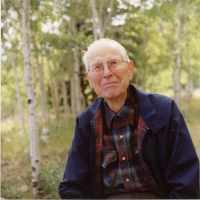
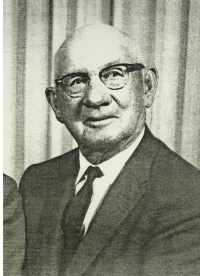
Junius Romney
(1878-1971)

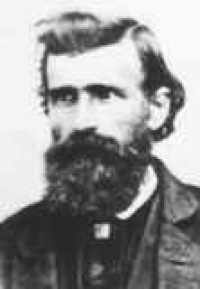
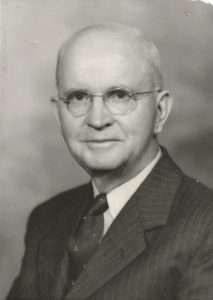
In his role as the young stake president of the Juarez Stake in Mexico, Junius Romney is the central figure in the last great Mormon exodus. It follows in the series of exoduses, which began in Kirtland, Ohio, and continued through Missouri and Nauvoo to the Great Basin. He, with many others, lost virtually all of their material possessions in that final exodus from Mexico in 1912.

Romney’s life exemplifies the lives of pioneer Latter-day Saints who made the desert blossom as a rose. Bom in 1878 in St. George, Utah, he moved with his family to Mexico in 1885 where they contributed to the founding of Colonia Juarez. This was one of nine Mormon colonies founded in the states of Chihuahua and Sonora.

He attended school in the Juarez Stake Academy, with some additional studying in Salt Lake City. Junius began his career as an educator, but later he became a successful businessman. He held several callings in the Church in the colonies before being called as president of the Juarez Stake when only 30 years of age. The last two years of his tenure as stake president were during the Mexican Revolution, As the religious leader of the colonists, he was also their de facto political leader. As such, he played a central role in the colonists’ struggles during the Revolution, which eventually led to the members of the entire stake evacuating their homes in the summer of 1912.

After the exodus, Junius’ family lived in El Paso,Texas, for several months, then moved to Los Angeles, California, before finally moving to Salt Lake City. He and his wife Gertrude raised a family in Salt Lake City of six children— three boys and three girls.

Junius was known for his sense of humor and respected for his integrity. He was a successful businessman, and a generous provider for his immediate family, his extended family, and others who were trying to find their way after the exodus from Mexico. Junius died in 1971 at the age of 93.

Happy
Happy
0 %
Sad
Sad
0 %
Excited
Excited
0 %
Sleepy
Sleepy
0 %
Angry
Angry
0 %
Surprise
Surprise
100 %
You May Also Like

SHIRTS, Peter

The road was to follow an old Indian trail on the west edge of the Black Ridge. When asked how the wagons would get across the deep canyon which barred the way, he replied, “We’ll leap it!” The 165 ft deep canyon crossing became “Peter’s Leap.” The stream became “Leap Creek.” A sturdy windlass was erected on top of the north canyon wall. The wagons coming from the north were stopped here. The cargo was lashed securely to the wagon box. The teams were unhitched and led down the winding 30 percent grade to the canyon bottom.
View Post

MITCHELL, James Jr. & Anne Hull

Up north in the Upper Snake River Valley, the virgin soil was bringing forth bounteous crops. This land could be had almost for the asking, so James took advantage of the pre-exemption rights of the Homestead Act and secured 360 acres of virgin soil just two miles north of Shelley, Idaho. So it was that in 1885, James came to Idaho.
View Post

SWEETEN, Colen Hagle

Finally, I heard his muffled voice calling from the bottom of the well. He said that the horse filled the entire hole. There was just about enough mud and water to cover the horse. He could not find anything of the man or the shovel.
View Post

BRINKERHOFF, Jesse: A Father’s Journey of Love

The flu epidemic of 1918 sometimes known as the Spanish Flu, reeked havoc across the world killing an estimated 100 million people, more than 500,000 in the US, and killed mostly strong healthy adults. Fear spread the country, along with the flu. Hospitals were full, health professionals died, Schools, churches, public buildings,etc, were closed, and people feared being around others. Little girls made up jump rope rhimes, and here is an example, "I had a little bird, it's name was Enza, I opened the window and in flu Enza.
View Post

GASKELL, Elizabeth: A Forgotten Pioneer

Mature, single women who were early converts and emigrants to Utah have received short shrift in Latter-day Saint History.Although the two ill-fated handcart companies of 1856 suffered most of the deaths, several of the wagon companies that were bringing up the rear, including the one in which Elizabeth traveled, were also caught in the early winter storms that swept the barren highlands of Wyoming in October and November.
View Post