HARMON, Appleton Milo: My Ancestor

0 1
Read Time:1 Minute, 54 Second

Submitted by John Freihofner, a student at Arrowhead Elementary School in Santa Clara, Utah.

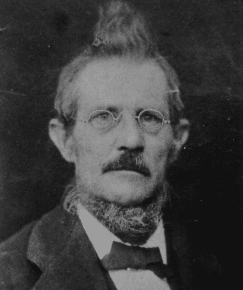
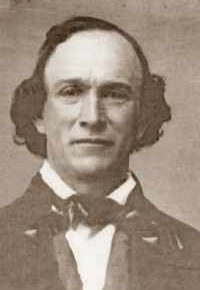
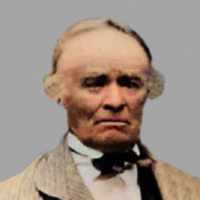
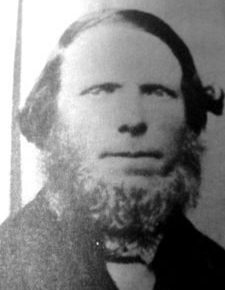
Appleton Milo Harmon (1820-1877)

I chose to research Appleton Milo Harmon because I was interested in the fact that as he was a pioneer crossing the plains he helped build an early version of the odometer. The “roadometer” was built in 1847 during the trek of Brigham Young’s vanguard company. It made it possible for the pioneers to count daily mileage by counting the number of wagon wheel 

Appleton Milo Harmon was born May 29, 1820 in Conneaut Pennsylvania. He was devoted to his religion and a leading pioneer in the immigration to Salt Lake City. He was a builder who constructed sawmills, a cotton gin, furniture, wagons and even helped build pony express roads. He was also a farmer and blacksmith. He was a successful missionary and led 200 people from England to Salt Lake City.

Appleton kept detailed journals of his trek west from 1850-1853. His journals were published in a book called Appleton Milo Harmon goes West. It was interesting and sad to read about his trek the cold hard winters, surviving sicknesses and burying his sister Sophronia on the Trek to Salt Lake City. I was even more surprised to read about fear of attack from the Indians called the Omhawas. In his journal he told a lot of wild stories, including one story of when the Omhawas attacked and killed many people and cut off their noses in revenge. It was cool to learn from his journals that my ancestor survived attacks from Native Americans as well as the Cholera epidemic.

In 1862 he was asked to settle in Southern Utah. He settled in Toquerville where he built a lumber mill farmed and made furniture. In 1869 Brigham Young asked him to help build a factory for producing cotton In Washington Utah and it is still there today.

He did all of that along with having 12 children to take care of. It has been a great experience learning about my ancestor and reading about his experiences makes me realize how easy my life is. Tonight I won’t have to worry about crossing the plains, freezing, or being attacked by Indians.

Happy
Happy
0 %
Sad
Sad
0 %
Excited
Excited
0 %
Sleepy
Sleepy
0 %
Angry
Angry
0 %
Surprise
Surprise
100 %
You May Also Like

RIDING, Christopher Lister: Tinsmith

Christopher's skills were needed in St. George because the temple was under construction there and he was the only sheet metal worker in the Dixie mission at that time. However, there was not enough business in St. George to provide him work, so he secured a little four-wheeled cart and an ox. He loaded the cart with tin ware and tools and visited all the towns in southern Utah, exchanging his ware for flour, potatoes, butter, cheese, etc. He made most of his wares from waste cans as it was difficult to ship in sheet tin. People saved empty cans and metal ware of all kinds for him. His store of wares consisted of buckets, milk pans, tin cups and plates, lamps, canteens, coffee pots, wash boards, etc. The ball on the St. George temple and the one on the St. George tabernacle are Christopher Riding's work, as is the metal work on all the public buildings erected before his death. The tin-covered sphere on the temple remained until October 25, 1994, when it was replaced with a fiberglass model as part of a renovation project. Christopher was a loyal member of the church although he was never active in public affairs due to the fact that his work kept him away a great deal of the time. He was a great reader, spending every evening in this way.
View Post

ALLEN, Elijah

After he was discharged from the Battalion, he worked at the San Gabriel Mission in California. He went gold hunting on the way to Utah with other battalion members. When he reached the Salt Lake Valley, he traded a sack of gold dust for 20 acres of land.
View Post

WRIGHT: John Pannell

In conversation with Bishop Maughan they were advised to try to find a suitable location on the Logan River, and accordingly set out again the 5th of June. They next formed a camp near the site of the old Brigham Young College and here they decided to remain. A survey of the land was immediately begun and the brethren cast lots for their locations. This was the beginning of our beautiful city of Logan, June 1859. Although John Pannell Wright was a member of the second group to locate on the site of Logan in June 1859, he is generally given credit by old historians as having been the father of our city. Apparently it was he who did the first surveying here and who designated the little settlement by the name of Logan. Apparently after Brother Wright and his son had surveyed a few blocks of land, which they did by only measuring with a tape or chain, there was a drawing or lottery for the purpose of acquiring home sites. ) They also helped build a bowery under which they held their meetings. They harvested their grain on Summit Creek (Smithfield). They often carried their guns in one hand and their shovels in the other. They succeeded in yielding good crops, as high as forty bushels of wheat to the acre. Mr. Wright left his tracks in the snow while cutting the last of the grain.
View Post

ALLEN, Andrew Lee

The family moved to Provo, where Andrew and his sons helped to build the Provo Fort. Andrew taught his sons to work and take care of their animals. The sons worked quite often as teamsters. Andrew was an excellent rope maker and knew how to make dyes from plants. He made tassels and decorations for his teams.
View Post

ALLEN, Elihu Moroni

About 1863 the Allen family settled in Huntsville, Weber, Utah where the last 7 children were born. Their first home in Huntsville was a two-story log house. Elihu made a lot of the furniture they used. He made chair frames from pine trees and made the seats from braided leather that he cured to a very soft pliable seat.
View Post

EAGER, Anna: Pioneer Child & Mother

Anna is born in Virgin, Utah but a a very early age moved to Eagar Arizona, then Snowflake, Az, then Morelos, Mexico Where she went to school. Forced out of Mexico, she moved with her family to Woodruff, Arizona, then later to Hurricane, Utah. She married, raised her family, and died there.
View Post

CARLISLE, Richard & Jane Field

Members of the family were baptized at various times in 1849 and 1850. Richard became the Presiding Elder of their branch. In 1851, on the “Good Ship Ellen,” they emigrated to America, except for their oldest son, Thomas, who came a year later. On their way up the Mississippi River, Jane died in St. Louis on 24 June 1851. She had done the washing for a woman afflicted with the dreaded cholera, so common among emigrants on that river. Jane caught the disease and died almost immediately. It must have been very difficult for Richard to manage his large family during the years following Jane’s death. First he had to get the whole family across the Plains, then provide a home for them in a new land. The bereft father and his motherless brood stayed to work in St. Louis during the remainder of the first year. The youngest son, Richard, hired out to a Mormon family and came west with them, the first of his own family to arrive in the Valley. The oldest son, Thomas, had by then joined the rest of the family in St. Louis.
View Post

REES, Thomas: Poor Welch Immigrant

Thomas and his family wanted to go to Utah with the saints, but he didn’t have the money to do so. Thus, their pioneer pilgrimage began on their destitute little farm in Wales with an effort to save money for the journey. It took until 1868 for them to save enough to send Brigham and one of his older sisters to Utah. They sent them off with instructions to save money and help the rest of the family to come. Brigham sailed to the states on the steamship Colorado. If his sister traveled on the same ship with him, it was Elizabeth because she is the only one to closely match name and age (5). The ship carried 600 saints bound for Utah, and was the last of the year. It departed Liverpool on 14 July, 1868 (6), and arrived at the Castle Garden Immigration center of New York on 7 August, 1868 (7) They traveled by train to Florence, Nebraska (another account says the train took him to Wyoming), then walked the last 800 miles from there to Utah because the rail hadn’t been completed to Ogden yet. Records record him arriving in Utah in 1869, so he must have been delayed en-route. Brigham would have been one of the last of the pioneers to walk to Utah before the Golden Spike was driven in Ogden.
View Post