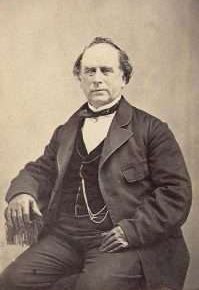
SNOW, Eliza Roxy: Zion’s Poetess

0 1
Read Time:2 Minute, 48 Second

This article originally appeared in Vol.50, No.1 (2003) of Pioneer Magazine.

by Janet Peterson

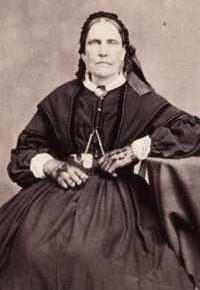
The Prophet Joseph Smith often referred to Eliza R. Snow as “Zion’s poetess.” When she joined the Church in 1835, she was already a nationally recognized poet. After her baptism, she redirected her writing talents to uplift the Saints and teach the doctrines of the gospel. Eliza Roxey Snow was born to a religious family on 21 January 1804, in Becket, Massachusetts. Her family was living in Mantua, Ohio, a town close to Kirtland when they learned of The Church of Jesus Christ of Latter-day Saints. Eliza’s response to the gospel message was “It was what my soul hungered for, but … I considered it a hoax—too good to be true/ 2 She introduced her brother Lorenzo, to whom she was especially close, to the Church. He later served as the fifth President of the Church.

Eliza taught school to Joseph and Emma’s children and boarded in their home in Kirtland. She contributed two hymns to the hymnal that Emma Smith compiled and published in 1835.

The Snow family moved to Missouri with the Saints and then were part of the forced exodus to Nauvoo* There Eliza again taught school in the Prophet’s home and wrote poetry and hymns that were published in Nauvoo journals.

Eliza was appointed secretary of the Relief Society at its organizational meeting on 17 March 1842. She was a strong and influential leader of women from that point until her death. When the Relief Society was reorganized in Utah in I860, Eliza was called as its second president. She assisted bishops in organizing Relief Societies in wards throughout the Territory, instructed the sisters, and oversaw such endeavors as the grain storage program, the silk enterprise, and ordinance work in the Endowment House.4 Seeking to improve medical care, she served as president of the Deseret Hospital.5 Until 1880 when separate presidencies were called, Eliza headed the Retrenchment and the Primary associations.

Eliza became a plural wife of the Prophet Joseph in 1842, and after his martyrdom was married to Brigham Young. She lived in the Lion House in Salt Lake City with the extensive Young family and continued to write poetry and hymns, such as “In Our Lovely Deseret,” “How Great the Wisdom and the Love,” and “Though Deepening Trials.”

Eliza’s dearest friend, Zina D. Huntington, also a plural wife of Joseph, had lost her mother and mourned deeply. When Zina asked the Prophet if she would know her mother in the world beyond, he “responded emphatically, ‘Yes, you will know your mother there.’”*5 In 1845, still grieving over Joseph’s death and contemplating his teachings, Eliza wrote her most beloved hymn, aO My Father” with the gold pencil Joseph had given her. The hymn was sung to many different tunes but is most familiar in its current setting by James McGranahan.

Eliza Roxcy Snow Smith Young died on 5 December 1887, in Salt Lake City.

In the current hymnal are ten of Eliza’s hymn texts:

  • “Awake, Ye Saints of God”
  • “Great Is the Lord”
  • “Though Deepening Trials”
  • “Again We Meet Around the Board” (lyricist)
  • “Behold the Great Redeemer Die” (lyricist)
  • “How Great the Wisdom and the Love”
  • *The Time Is Far Spent”
  • “Truth Reflects upon Our Senses”
  • “O My Father”
  • “In Our Lovely Deseret”
Happy
Happy
0 %
Sad
Sad
0 %
Excited
Excited
0 %
Sleepy
Sleepy
0 %
Angry
Angry
0 %
Surprise
Surprise
100 %
You May Also Like

ADAMS, Arza Madsen

A muggy evening added to Arza’s discomfort with the chills and fever. Malaria had driven him to bed for several days, even though he had much work to do on his farm located just north of the village of Carthage, Illinois. It was dusk when William and John Barnes, two non-Mormon acquaintances, knocked on the cabin door with devastating news: Joseph Smith and his brother Hyrum had just been murdered in Carthage. One of two survivors, Willard Richards, wrote a short letter describing the disaster and asked the Barnes brothers to deliver the letter to Arza Adams, one of the few Mormons living near Carthage. Although seriously ill, a surge of adrenaline permitted Arza to drag himself out of bed, saddle his horse, ride to Benjamin Leyland’s cabin and ask him to join in a dash to Nauvoo.
View Post

KENDALL, Elizabeth Clements

While the wagon train was stopped one day for a rest Elizabeth and her girlfriend had taken their knitting and gone down alongside the creek to set in the sun. They looked up from their chattering and laughter to see an Indian watching them. Then he disappeared. Upon their return to camp, the Indian was in consultation with Captain Zebriski. Then later the Captain reported to Elizabeth their conversation. The Indian, attracted to Elizabeth had said to the Captain, “Heap wino squaw, she knit socks, me want her.”
View Post

ANDREWS, Amos Betts

They were surrounded by an armed cavalry of vigilantes who asked for the leader of the group. Amos Andrews stepped forward. The leader of the vigilantes asked if they were Mormons and Andrews confirmed his question. The leader then told them to prepare to die. Andrews looked around and saw that they were out-numbered and out gunned. Andrews then requested if he'd be permitted to sing a song. He sang the whole song to "A Poor Wayfaring Man of Grief "then sang another song and another. Andrews wife, Keturah, was nursing an. 18 month old baby, the baby stopped nursing and joined its father in singing the song. Overwhelmed with emotion at seeing the baby do such a thing, a member of the mob lowered his rifle, and swore an oath saying, “They all can sing, even the child at the breast." The mob removed their hats and rode away. The story is an example that "the hymns of the righteous are a prayer unto me."
View Post

HULL, Thomas Martin

Submitted 2/1/17 by Mavanee Steele Spouse(s): Helene Frederikke Rasmussen Mother: Jane Price Roberts Father: Thomas Hull Birth: 17 Mar 1867, Franklin, Utah Territory Thomas Martin Hull was born 17 March 1867 in Franklin, Utah…
View Post

The Adventures of Nathan W. Adams

Much fanfare accompanied the completion of the transcontinental railroad at Promontory Point, Utah on May 10, 1869. Two weeks later Major John Wesley Powell and nine companions in four row boats left Green River, Wyoming, with almost no fanfare, to explore the Green and Colorado Rivers. It was a trip fraught with danger that only six of the men completed. Although not involved in running the river, my great uncle, Nathan Adams, would later share the adventures experienced by Powell’s second exploration crew as they mapped the Grand Canyon area during the 1870s. A hundred and forty years later only a few intrepid tourists visit Promontory Point each year, while tens of thousands of tourists, many of them from foreign countries, enjoy the marvelous scenery discovered by Powell and his colleagues.
View Post

HIOTT, John: An Overlooked Pioneer

As far as history is concerned he was a faceless cipher who passed through life leaving few tracks and no one to mark his grave. It is easy to overlook that John and thousands of other forgotten Utah pioneers like him were critical in settling the Intermountain West. They dug the irrigation ditches, herded the cattle, built the shelters, attended meetings, maintained the roads, cut fire wood, tended the ill, mostly followed orders, and buried the deceased without fanfare. The accomplishments of their famous leaders would not have been possible without the blood, sweet, and tears of humble people such as John Hiott.
View Post

PETERSON, Charles Sreeve

Mr. Powell, tried to persuade him to give up his faith or otherwise he would have to surrender his work position. He flatly told him no, as to deny his knowledge that he had received would be the greater sin. In his words, “I knew it would be a great sacrifice to me to give up my employment and the comfortable home which I appreciated so much, but to give up the principles which I had received and which I knew to be true would be a far greater sacrifice, and of the two I would choose the lesser … no position, wealth or earthly honor could move me from my convictions and purposes at that time…”
View Post