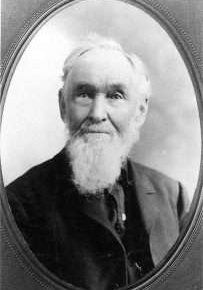
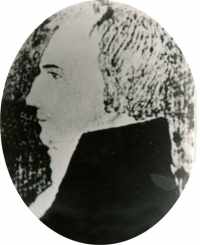
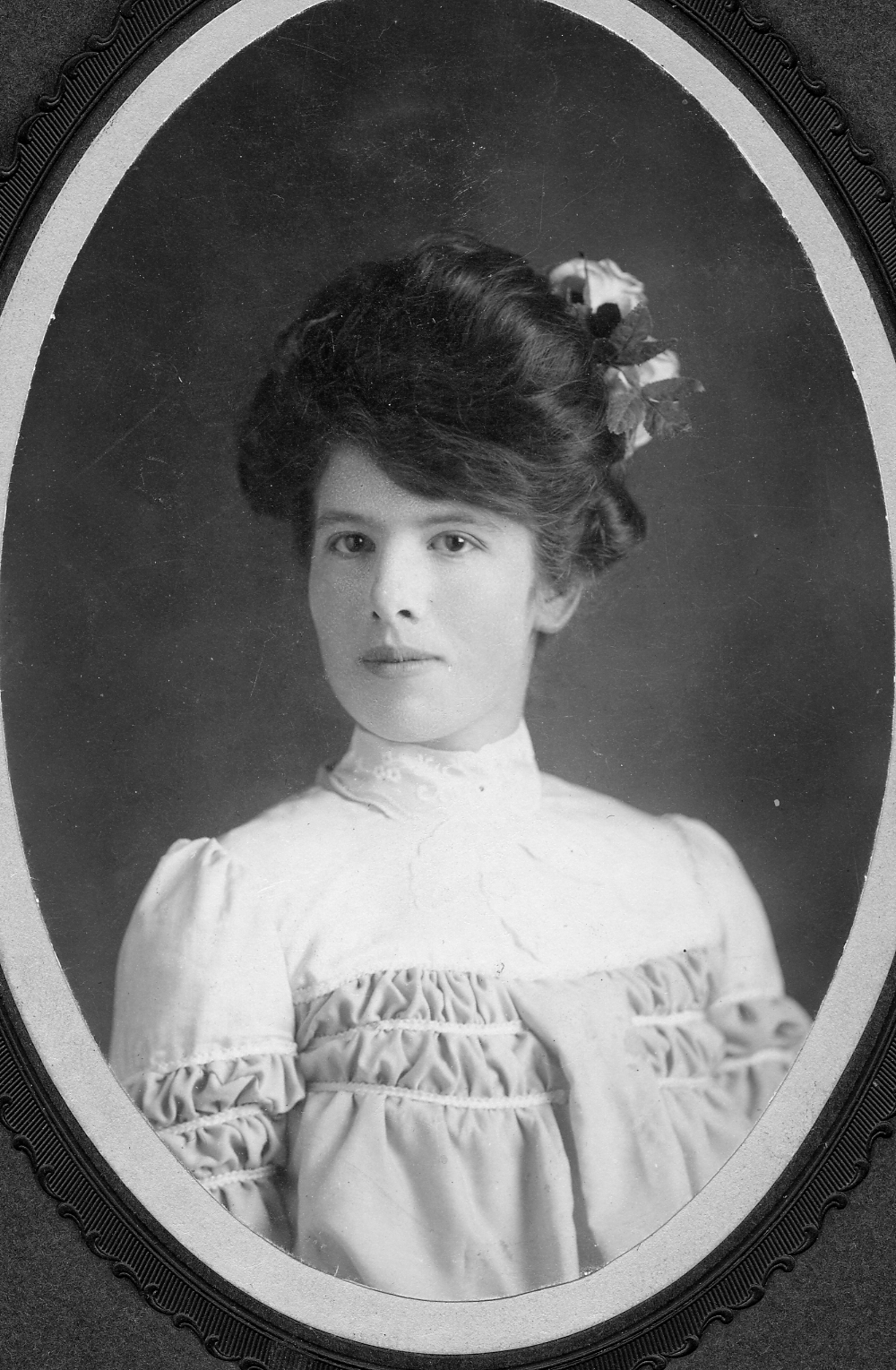
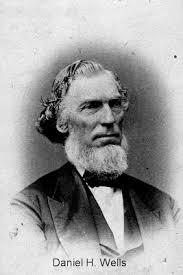
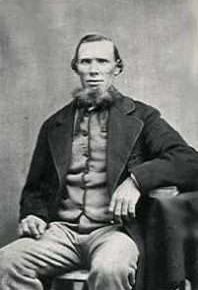
William Henry Adams, Jr.

In 1853 when the grasshoppers took the crops, he and his family subsisted on boiled thistles, mushrooms, or any kind of roots or segos. He apprenticed as a stone and brick mason with his father. They built an adobe house in Pleasant Grove, as well as many other buildings there.
0 1
Read Time:2 Minute, 16 Second

William Henry Adams Jr. came to Utah with his baby sister and parents when only three years old. During the time they were crossing the plains he was accidentally shot with a pepperbox pistol through both knees, the bullet lodging in the left knee. It was removed by Willard Richards with a knife. For a time it was feared he would never walk agam.

He Was a member of one of the first seven families to settle in Pleasant Grove. As a boy he tended cattle. As a teenager he camped nights and worked days to help widen the dugway at the Point of the Mountain between Salt Lake and Utah Valleys.

In 1853 when the grasshoppers took the crops, he and his family subsisted on boiled thistles, mushrooms, or any kind of roots or segos. He apprenticed as a stone and brick mason with his father. They built an adobe house in Pleasant Grove, as well as many other buildings there.

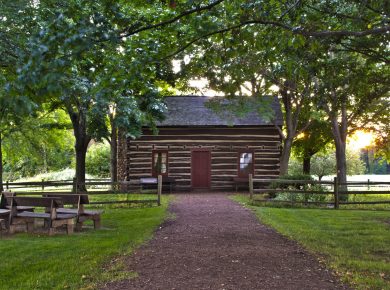
In 1867 he was called as a member of the cavalry to help guard the teams to and from Sanpete as people moved. He helped build a fort around Fountain Green. He was a veteran of the Black Hawk Indian War and was involved in many Indian fights and incipient Indian disturbances. He became one of the leading farmers of Fountain Green and was a director of the Fountain Green Co-op. After his marriage, he built a log house and later a brick home in north Fountain Green (Zion's Hill) that was used by at least five generations of the family. He also helped build a brick meetinghouse in Fountain Green.

He served a mission in 1880-1881 to the Southern States in Georgia where he organized a branch of twelve members and a Sunday School. He was released due to ill health. After returning, he was a Sunday School Superintendent for nineteen years. He also served as president of the Young Men.

William was an entertainer. He directed choirs, entertained on stage, called dances, played Jews harp and accordion and he and his wife led grand marches and danced all the dances of the time. He took an active part in Black Hawk encampment parties

speaking, singing or anything wanted.

He moved back to Pleasant Grove in 1900 where he was very active in the church.

He was sent on different home missions and was a traveling teacher. He became a good student of the Bible and was especially gifted in administering to the sick. He served forty years as a ward teacher. By occupation, he was a farmer and truck gardener in Pleasant Grove and for the last thirty years of his life, suffered with a severe cough.

Happy
Happy
0 %
Sad
Sad
0 %
Excited
Excited
0 %
Sleepy
Sleepy
0 %
Angry
Angry
0 %
Surprise
Surprise
100 %
You May Also Like

ALLSOP, Thomas Hill

STORY COPIED FROM FILES IN SUP LIBRARYWhen more people came to Sandy, Mr. Allsop sold some of his land. Later he donated land for the Church site and cemetary. He gave Sandy a big bowery where large parties could go and dance and have weenie roasts. The bowery, the reservoir and Allsop's Lane was known to all the people of Sandy and surrounding communities.
View Post

CUNNINGHAM, Elizabeth: True Grit

“My father was a miner by trade and being a man of weak constitution was badly adapted for such a laborious occupation. Consequently, this threw the management of affairs nearly entirely upon my mother, and to speak of her in [a] phrase, I cannot do it better than by saying she was a rustler in the greatest sense of the word.” Elizabeth was the foundation and matriarch of the family. She was the force that carried the Cunningham family from Scotland to Utah."
View Post

GLEASON, John Streator: The Martyrdom of the Prophet

“The scene through which I have been called to pass since I arrived in this place from the East has almost alienated me from my country. Almost one continual round of mobocracy by night and by day. When I contemplate the scene it almost makes me shudder, and my blood run cold in my veins. I have been an eye witness to almost the whole scene from the beginning. My life has been exposed—threatened from time to time. . . when they were filled with wrath …. About a week before the assassination of Joseph and Hyrum Smith I was arrested—marched to jail by a band of the desperate and could not even lay there in peace—was aroused about 12 o’clock by a rush of men into the yard and a loud rattleing [sic] and hallooing at the door of the jail. One of our men went down and opened the door, when they rushed up stairs and caroused about a while, and left us.”
View Post

TAYLOR, William & Elizabeth Patrick

After the surrender of the city, the Taylors returned to their home, a distance of eight miles. There they found that about 7,000 of the mob had camped for two nights at or near their place, turning their horses into the Taylor’s cornfield. The mob ate or destroyed about 300 bushels of potatoes, 75 geese, 100 chickens, several head of cattle, 40 head of hogs, 20 stands of bees; also, they had burned about one mile of rail fence in their campfires.
View Post

ANDERSON, Editha Morgan

Whatever else she was, Edith, like many other mature single Latter-day Saint Women, had internal strength and strong religious beliefs sufficient to tolerate an environment that was unsympathetic toward mature single women, as exemplified by Stout’s comments.Editha established a private school in her small log cabin that was located on 1st North and about 70 West in American Fork. It served as a bedroom, living room, and a tightly packed class room. The dwelling featured one door, one window, two beds, a wood stove, and a rest facility located out back of the cabin. Her rudimentary school attracted a dozen or so students, about the same number of youngsters as attended another school that met in a community-owned building that served as a place of worship and education.
View Post