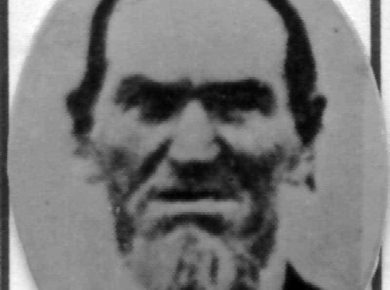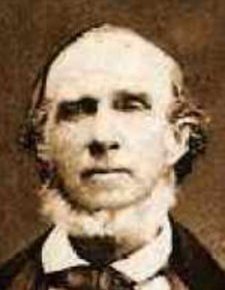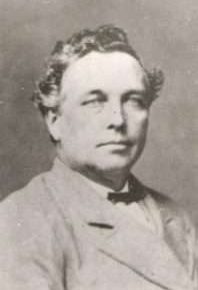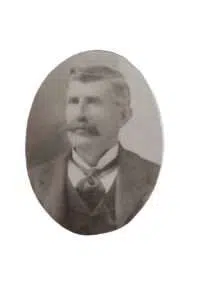
ALLEN, Andrew

WHILE WORKING AROUND A THRESHING MACHINE, ANDREW LOST HIS ARM IN THE GEARS, NEEDING AMPUTATION ABOVE THE ELBOW. IT WAS SAID OF ANDREW, HE COULD HARNESS A TEAM OR ANY OTHER WORK ON A FARM AS QUICKLY AS ANY MAN WITH TWO ARMS AND HANDS.
1 0
Read Time:1 Minute, 57 Second

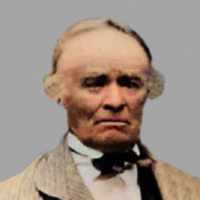
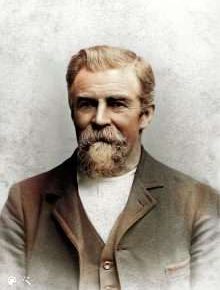
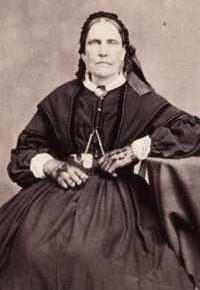
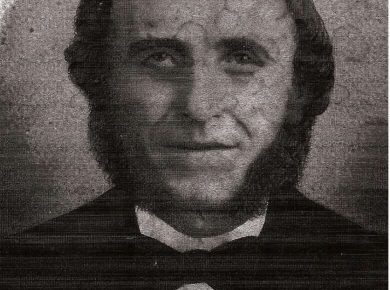
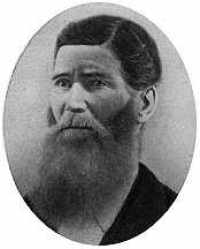
Andrew Allen was born on November 16, 1849, in Potowatamie County, Nebraska. He was the seventh child and the second son of Jude Allen and his wife, Mary Ann Nicholas. In 1852, his father and family joined the Benjamin Gardner company and started the long trek on foot and by ox team and wagon to cross the plains to Utah territory.

The children walked most of the way, driving the sheep and cattle. They were grateful when they reached Utah. They settled in Bountiful, then called Sessions Settlement. Here the family farmed and worked until 1866, when they moved to what they called Fort Box Elder in Box Elder County. Andrew was seventeen years old by then, and he helped build a two-room house and grew expert at farming.

While working around a threshing machine, Andrew lost his arm in the gears, needing amputation above the elbow. It was said of Andrew that he could harness a team or any other work on a farm as quickly as any man with two arms and hands.

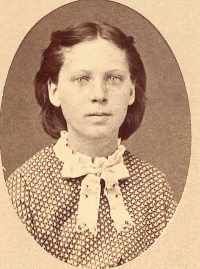
At the age of nineteen, Andrew met a lovely dark-haired girl by the name of Elizabeth Lasley. The daughter of John Wesley Lasley and his wife, Elizabeth White. They were married on February 11, 1868. There were eight children born into this union.

In 1882, Andrew filed homestead papers on land in the Rockland valley in Idaho. He had ridden there many times to gather stray cattle and wished to settle there.

The family of Andrew moved to Rockland, Idaho, where they quietly settled in and began farming or ranching. During his life in Rockland, Andrew served as county commissioner, and representative, served in the bishopric of his church for 20 years, was postmaster for ten years, was the first contracted mail carrier between American Falls, Idaho, and Rockland, and operated a general merchandise store as well as running two farms … Honest, charitable, and called “Uncle Andrew” by everyone in Rockland Valley.

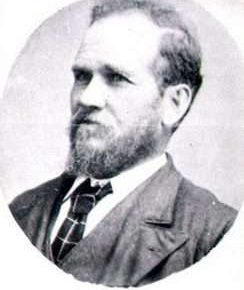
His first wife, Elizabeth, whom he married on February 11, 1868, in Salt Lake City, passed away on March 27, 1890, in Rockland. Later, as a county commissioner, he met Marintha Altheria Davis in Malad, Idaho. Marintha was born in Gilberton, Penn., of Welsh parents, Thomas John Davis and Elizabeth Williams.

Andrew and Marintha were married on January 6, 1892.

Happy
Happy
0 %
Sad
Sad
0 %
Excited
Excited
0 %
Sleepy
Sleepy
0 %
Angry
Angry
0 %
Surprise
Surprise
100 %
You May Also Like

WRIGHT: John Pannell

In conversation with Bishop Maughan they were advised to try to find a suitable location on the Logan River, and accordingly set out again the 5th of June. They next formed a camp near the site of the old Brigham Young College and here they decided to remain. A survey of the land was immediately begun and the brethren cast lots for their locations. This was the beginning of our beautiful city of Logan, June 1859. Although John Pannell Wright was a member of the second group to locate on the site of Logan in June 1859, he is generally given credit by old historians as having been the father of our city. Apparently it was he who did the first surveying here and who designated the little settlement by the name of Logan. Apparently after Brother Wright and his son had surveyed a few blocks of land, which they did by only measuring with a tape or chain, there was a drawing or lottery for the purpose of acquiring home sites. ) They also helped build a bowery under which they held their meetings. They harvested their grain on Summit Creek (Smithfield). They often carried their guns in one hand and their shovels in the other. They succeeded in yielding good crops, as high as forty bushels of wheat to the acre. Mr. Wright left his tracks in the snow while cutting the last of the grain.
View Post

CHAPMAN, Julia Ann

With the coming of spring, the brethren made a concerted drive to get all the Saints out of Kanesville. Other than for Julia’s health, Isaac was well equipped to travel. In the heat of the late spring, Julia gained some weight and felt pretty well. Deciding that they could safely make the trip, Isaac loaded the wagon
View Post

BLANCHARD, Amelia Jane Davis

The Davis family, being among the first settlers to Cache Valley, suffered untold privations and hardships. Amelia remembered the trials they had with the Indians, and how frightened she was. They would come to the door begging for food and no one dared to turn them away. As Ann H. fixed food for them, the Indians would play with the white children. When coming out of the house with food one day, Ann H. discovered the Indians had exposed her children to the black smallpox. The twins soon came down with the illness. The settlers were all so frightened of the deadly disease that a log shelter was hurriedly built a short distance north of the Logan Cemetery. The Davis family, including the stricken twins, moved there in isolation. Amelia told of rats, mice, and snakes so thick that the healthy children took turns with willows, brushing the snakes from the beds of the sick children. Their beds located on the floor were made with a straw tick. The weather was severe coming through the open cracks of the shelter. The family was badly neglected and almost starved to death. Remarkably, the twins recovered from the smallpox epidemic, but after being home only a short time, diphtheria struck, taking the lives of both twins, Henry and Catherine. Childhood days were very strenuous and hard. These early settlers had lots of troubles, yet they had some thrilling and good times too. Amelia often told stories of the exciting sleigh rides, dances and house parties they enjoyed. How she loved her church activities! Amelia's greatest desire was to do good for others and scatter sunshine wherever she went.
View Post

SHIRTS, Peter

The road was to follow an old Indian trail on the west edge of the Black Ridge. When asked how the wagons would get across the deep canyon which barred the way, he replied, “We’ll leap it!” The 165 ft deep canyon crossing became “Peter’s Leap.” The stream became “Leap Creek.” A sturdy windlass was erected on top of the north canyon wall. The wagons coming from the north were stopped here. The cargo was lashed securely to the wagon box. The teams were unhitched and led down the winding 30 percent grade to the canyon bottom.
View Post

TWITCHELL, Ephraim & Phoebe Melissa Knight

One day Branch President Ephraim Twitchell was traveling from Sacramento a long way by wagon. The last day of his journey he was traveling late, after dark. He did not stop because he was almost home. He was alone in his wagon, when suddenly there was a man sitting beside him on the spring seat. He just appeared from nowhere. He told Ephraim that he should take his family from San Juan Bautista and go to San Bernardino. Ephraim responded that they had not been in San Juan very long and that his children had their friends there. He noted that he did not think he could get them to go with him. The man beside him replied, "Yes, you can, and you must go to San Bernardino or you will lose them." When Ephraim turned to answer him he was not there. He had disappeared just as he had appeared -it seemed like just out of thin air. Ephraim knew the gospel very well and remembered their story in the Book of Mormon about the three Nephites. He thought this must be the answer-the messenger was one of the three Nephites. He then saw a beautiful new coat that the messenger had left on the spring-seat beside him. He thought the messenger had really been there-that he had not just imagined or fantasized. Ephraim went home and told his wife, Melissa. They talked about the move. They prayed about it for a couple of days. They knew they must go to San Bernardino, California. Every one of their children and one nephew, John Newton Twitchell, the oldest son of Jasper Twitchell went with them. Anciel Ephraim's oldest son came a year later.
View Post

ROBERTS, Levi

After travelling over the mountains one day we met with some of our brethren from the Valley. This was a time of rejoicing. Captain Brown who left us at Santa Fe with the sick which went by the way of Fort Kearney and a few brethren with him from the Valley, brought news that we were not to go to the Valley, and told us we had better stay another year in California. So the company divided right where we met each other; some went on to Winter Quarters; some to the Valley, and some turned back. Daniel Browett, Slater, Cox, Levi Roberts and myself turned back to Sacramento and went to work for Mr. Sutter who treated us very kindly. I sent a mule to my wife with Brother Harris, which she got…. We all went to work at the same place for Captain Sutter. We took the work of cutting a millrace. Brother Browett went [p.379] to work with the millwright, this was in September and later on in the fall, I and two others took sick with the bilious fever. We were so sick we couldn't help each other to a drink of water. We lay under some ties and had to crawl around with the sun to keep from making us chill…. Our appetites were very poor, and our food was flour, water and squash. Had it not been for the thoughts of my wife and family I could have died, but we all three recovered after awhile and went to work on the millrace again and worked all winter. Sometime in the winter two of the brethren who were working for Mr. Sutter in the mountains found gold in a tailrace they were making. Mr. Sutter let me see the first gold they found before sending it to San Francisco to get it tested. In May 1848 some of the brethren and myself made a trip in the mountains to try and find a road over (instead of going down Truckee River, as we had to cross it about 20 times) but when we got in the mountains we found so much snow we had to return, and on our way back I stopped at what we called the Mormon Island, where there was some of the brethren at work getting gold, Brother Sidney Willis and his brother; also Brother Hudson. I stayed here for a short time and got some gold.
View Post