0
0
 1
1
History of Robert and Sarah Darling Wiley
Sarah Darling was born in Liverpool, Lancaster, England. She was born to John Darling and Elizabeth Ann Youd Darling on 24 November 1814. She married Robert Wiley on 28 August 1832. They were married in the St. Peter’s Church, St. Peter’s Street, Liverpool, England. Being not of age, she had to get consent of her father to marry. (Marriage License No. 885) Their marriage was witnessed by her grandfather, Samuel Youd and her mother Ann Youd Darling.
One month after their marriage Robert and Sarah sailed with Robert’s family to the United States of America to settle in Newark, Licking County, Ohio. His parents were John and Elizabeth Lawton Wiley and he was born in York, York, England the 22 November 1809.
In Ohio the following children were born: Maria, on 3 October1833. This daughter died the same day of her birth. John Hirum was born 24 October 1834. He was four years old when he died, 17 March 1839. William was born 20 November 1837 and died 17 December 1837. William Darling Wiley was born 8 May 1839.
In 1840 Sarah, Robert and their son William returned to England where they settled at 22 Bitton Street, Liverpool, England. Ann Darling Wiley was born 23 November 1842. Then James Darling Wiley was born 1 January 1844. John Darling Wiley was born 14 February 1846 and died 26 August of that same year at Duchingfield Street, Liverpool, England.
After returning to England, Sarah went into business for herself. A section of a large market was reserved for her, where she sold bacon, cheese, lard and eggs. Her business grew and she saved quite a sum of money.
Missionaries of the Church of Jesus Christ of Latter Day Saint Church came to England and Robert Wiley was so impressed after he heard them teach that he was baptized at once. The date was 14 April 1842. Sarah did not see this new religion as Robert did. He kept waiting and hoping that she would see the beauty of this new religion as he did, but she could not be impressed, so he decided to return to America without her. His trip was delayed several times. He was very generous and gave his money he had saved to the poor that wished to go to America. He finally left taking the two older boys with him, leaving his wife and younger children in England.
When Robert arrived in the United States, he made plans to go on to Utah crossing the plains. He was made Captain of a company of ten in the Milo Andrus Company. He was 41 years of age. He arrived in Salk Lake City, Utah Territory in the Fall of 1850. He was a member of the first Brass Band organized in Salt Lake City.
Later Sarah decided to give up her business in Liverpool and join her family in Utah. Sarah had the means enough for a very comfortable trip across the plains. She had three teams and wagons fixed up for her trip. She brought many nice things from England. For herself she rode in a carriage across the plains. Sarah was 38 years of age and came in an unidentified company. Ann Darling, her ten year old daughter remembered the troubles with Indians and buffalo herds which caused the teams to stampede.
Sarah was very generous with her means and money, helping many poor in Utah. She made three trips across the ocean in the interest of her property. Her parents were Scottish people and never joined the church.
When she arrived in Utah she joined the LDS Church 14 September 1852 and was endowed and sealed to Robert 15 September 1852 in the Endowment House at Salt Lake City.
Robert was a mason by trade. During the 1850’s he was closely associated and labored in partnership with Elias Morris, the mason who resided for many years in the Fifteen Ward in Salt Lake city.
In December 1850 Robert volunteered to go with George A. Smith’s company to settle Iron County, Utah, arriving there 23 January 1851.
George A. Smith wrote the following:
“This colony numbering 120 men with their families left Salt Lake City the First Day of December 1850 for Parawon. We numbered 100 wagons, a number of carriages, and I assure you it was a sight to see this number of wagons wending among the hills and mountains with each wagon a smoking stove pipe sticking through the white canvas cover. It looked like a line of steamboats. The ground being at various depths covered with snow.”
Brother Smith wrote later:
“On January 27, 1851, twenty teams started hauling logs from the mountains and in January 30, 1851, the meeting house was three logs high.”
The next spring Robert raised his first potatoes. One Sunday, during the fall, he found some potatoes a sister had thrown out while fixing her family dinner. He carefully gathered them in his silk handkerchief and took them home. Carefully kept, and planted, and cared for, they made a crop the next summer.
At this time, (winter) his and other families had no bread for nearly three months, living principally on boiled wheat, since there was not flour mills near them to grind their wheat.
In 1851 George A. Smith appointed Robert Wiley conductor and choir president over the “English” Parowan choir. He was appointed to the first city council in Parowan. In the fall of 1853 he was elected a member of the Territorial Legislature from Iron County, under Governor Brigham Young.
Wiley was a sergeant in one of the companies of the Iron County Militia. According to Samuel Pollock and John D. Lee, Wiley was at the Mountain Meadows and attended the military council on Thursday, September 10. His exact roll during the massacre on the following day is unknown.
In the spring of 1853, Robert and his family moved to Cedar City, Iron County, Utah, and was one of the first families to settle there. While at Cedar City, their daughter Sarah Jane was born 23 June 1853. A son, Heber John was born 22 February 1858 and died 1 May 1860. At this place, Robert helped to make the first iron made in Utah. He walked a distance of more than a mile to his work either bare footed or his feet wrapped in sacks. Though he was raised up and spent the early part of his life in easy circumstances and when life got difficult he never regretted having joined the church. There was nothing outside the Latter Day Saint church for him. Wherever they lived Robert and Sarah were always members of the choir, for they loved music and liked to sing. They were always earnest workers in the church.
In 1859 the Robert Wiley family moved to Tokerville, Washington County, Utah. There he built the first adobe house to be erected in that town.
The family moved to Beaver City, Beaver County, Utah in the fall of 1860. There Robert held many positions of trust. In 1866, Robert Wiley and Samuel Edwards did the masonry work on the Beaver Stake Tabernacle. (mid 1860’s) He was on the first school board of Beaver City. He served in the choir under John Weston.
John Parry and Samuel Edwards, and Robert Wiley were the stonemasons who worked on the Parowan Rock Church, 1863.
Robert resided in Beaver City until the time of his death 30 June 1872 of pneumonia, at the age of 63. He died as he lived in full faith and fellowship of the gospel of Jesus Christ. He is buried in the Beaver Cemetery. During all these years of hardship, Sarah lived and labored with Robert in all things. She was a faithful and willing helpmate. She survived Robert by almost 10 years. She died 2 January 1892 in Circleville, Piute County, Utah. She was the mother of nine children. Six of her children died as children or babies.
The following children lived to have families of their own.
Ann Darling Wiley married Richard Palmer and then later married Hezekiah Simkins 11 February 1862
James Darling Wiley married Frances Gates
Sarah Jane Wiley married Charles Albert Dalton


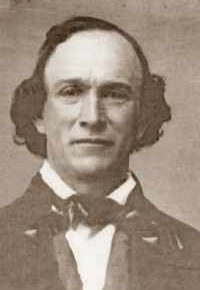
 Brother Joseph

 Pioneer John