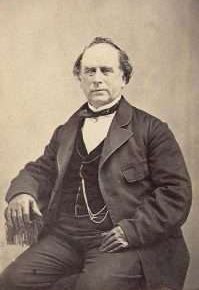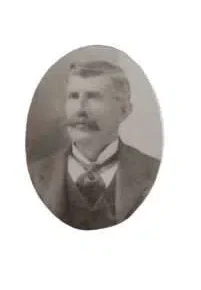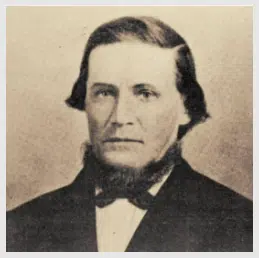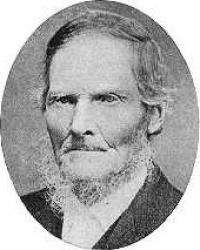
ASHTON, Thomas

Thomas took a very active part in the planning and construction of Lehi's first water ditch and was one of the city's first water masters, when no salary was attached to the office. He was also very active in planning and building Lehi's first bridge across the Jordon River.
0 1
Read Time:3 Minute, 9 Second
Thomas Ashton
(1813-1903)

Thomas Ashton‘s father, Joseph Ashton, by trade was a silversmith. Thomas only had one sister Eleanor, that was nine years his senior.

At the age of fifteen he apprenticed for six years to the trade of wheelwright, carriage builder, and ship carpenter. Upon completion of his apprenticeship he worked building the Liverpool and Leedee Railway that was under construction at that time.

Thomas married Mary Howard on 20 Nov 1836 in Prescott, England He and his wife Mary were the first baptized in St. Ellens, Lancashire, England. They were baptized by Samuel Cryer on 28 Jan 1841.

Later the same year (’41), they emigrated to America and made their home at Skunk River, Iowa. Mobs drove them away and they went to Nauvoo. Thomas returned to Skunk River to sell his property, but the mob had possession and compelled him to sign a deed to the property. The family’s move to Nauvoo was after the death of the Prophet Joseph Smith.

Prior to their move to Nauvoo Thomas worked on the Nauvoo Temple. Also, he assisted with the building of the Mormon boat, the “Maid of Iowa.” The family took part in all the events of the trying times until the final expulsion. He worked in the wagon shops where the wagons were made for the trip westward. He assisted in the last defense of Nauvoo against the mob, and helped to work the cannon that was made from a steamboat shaft.

Thomas and family left Nauvoo in Feb 1846 at the final expulsion, traveled to Winter Quarters, living through the events that happened there until Brigham Young in 1849, ask them to move back east of the Missouri River to Council Bluffs due to the lack of means enough to go to the Valley and threat of Indian trouble. At Council Bluffs they raised crops until the spring of 1851, when the family moved to Salt Lake City and on to Lehi, Utah.

The same year (1849), Thomas built a log house about five miles north of Kanesville, Council Bluff. His family consisted of his wife Mary and two children, Joseph and Mary Ann. He left them in the care of John Mills while he went down the river to search for work. Mary, his wife, took with ague. She was sick about three weeks, gave birth to a baby girl, Elizabeth Eleanor on 13 Aug 1849, became more seriously ill and died, 26 Aug, 1849. She was buried at Kanesville Iowa. Brother Mills wrote to Thomas, her husband, of her illness, but he did not get home until after she was buried. She was a good woman and was loved by all who knew her. Elizabeth Eleanor died 5 Oct 1849 and was buried on the coffin of her mother

On 25 Sept 1849, Thomas married Sarah E. Mills. She died 3 September, 1850, leaving one son John Mills Ashton.

On 17 Feb 1851, he married Arminta Miranda Adelia Lawrence, at Council Bluffs, Pottawattamie, Iowa. They crossed the plains together and had eleven children at Lehi, Utah.

Thomas was ordained a Priest by Theodore Curtis, Jan, 1841 and a Seventy at Nauvoo in 1844 and a High Priest by Daniel S. Thomas, 22 Aug 1875 at Lehi.

Thomas took a very active part in the planning and construction of Lehi’s first water ditch and was one of the city’s first water masters, when no salary was attached to the office. He was also very active in planning and building Lehi’s first bridge across the Jordon River. He was six times elected a member of the Lehi City Council. He lived to a grand old age of eighty-nine years, two months and fifteen days

Happy
Happy
0 %
Sad
Sad
100 %
Excited
Excited
0 %
Sleepy
Sleepy
0 %
Angry
Angry
0 %
Surprise
Surprise
0 %
You May Also Like

SMOOT, Doug: Modern-day Pioneer of Technology

After completing 42 years at BYU, Doug now (2008) is a principal in Combustion Resources Co., continuing his work in energy, fossil fuels and combustion A member of several professional organizations, he has published approximately 200 technical articles, eight invited review articles, and four books on combustion. He received the first Governor’s Medal for Science and Technology in Utah in 1987. Two of his books (written with others) have been translated into Chinese. An internationally recognized authority in energy, combustion, and fossil fuels, Doug has consulted with over 100 organizations in the U.S., Mexico, China, Japan, India, Egypt and several European countries.
View Post

WALKER, John

This article originally appeared in the Mar/Apr 1980 issue of Pioneer Magazine THE JOHN WALKER FAMILY—EARLY CHURCH STALWARTS by Rowland P. Corry The following is about John Walker, my great…
View Post

ORR, Robert Ustain: A Short Biography

Robert Orr was quite the character on the stage, taking mostly comedy roles. Adept at showing the humorous side of life, he was a good pantomime and had plenty of chances to use his talent. When they were able to have a stage curtain made, he was in charge of running the curtain up and down and kept the coal-oil lamps all clean and filled. The first play they put on was called "Ten Nights in a Bar Room", which Robert had a part. This play was a favorite for many years and they played it at the opening of each season. They also took their plays over to Camp Floyd, Eureka and Tooele.
View Post

JEPPSEN, Niels Andersen

The day after their wedding they walked to their farm in North Ward (now named Harper Ward). She carried a basket with her dishes in one hand, while with the other hand she helped Niels carry a large box which contained their worldly goods. A large stove kettle was fastened to the box, while suspended on a stick, which he placed across his shoulder with a sheet with quilts wrapped inside.
View Post

THOMSON Jr., Moses

Combined with the guarding that was surely required of Moses, we also learn from George Thomson’s biography that “Moses pushed and pulled on a handcart with a sick man in it for many days. Their rations got slimmer . . . When they got to the Sweetwater [River] near Devil’s Gate, Moses died with seven others the same night. . . . they were buried in shallow graves and covered with snow. This tragedy was a terrible blow to George and he did not get over it for years.”
View Post

NIELSEN, Ane: A Self Sufficient Pioneer

Ane was a hard worker. She had to work more like a man than a woman. She did a lot of work in the fields and with the animals. When anyone in the family needed help or advice on the farm, they would ask her. She could fix a broken harness as well as any man. She had quite a few sheep that her boys would care for. She would shear her sheep, then wash the wool and spin it into yarn. Following this preparation, she would weave it into beautiful cloth.
View Post

JACKSON, Elizabeth Horrocks: Handcart Pioneer of 1856

“It will be readily perceived that under such adverse circumstances I had become despondent. I was six or seven thousand miles from my native land, in a wild, rocky, mountain country, in a destitute condition, the ground covered with snow, the waters covered with ice, and I with three fatherless children with scarcely nothing to protect them from the merciless storms. When I retired to bed that night, being the 27th of October, I had a stunning revelation. In my dream, my husband stood by me and said, 'Cheer up, Elizabeth, deliverance is at hand'. The dream was fulfilled.”
View Post

ALLEN, Andrew

WHILE WORKING AROUND A THRESHING MACHINE, ANDREW LOST HIS ARM IN THE GEARS, NEEDING AMPUTATION ABOVE THE ELBOW. IT WAS SAID OF ANDREW, HE COULD HARNESS A TEAM OR ANY OTHER WORK ON A FARM AS QUICKLY AS ANY MAN WITH TWO ARMS AND HANDS.
View Post

James Henry Rollins, Faithful Pioneer

The San Bernardino colonizers were called back to Utah by Brigham Young when Johnson’s Army threatened. Henry and his family heeded the call, leaving behind still another home. In Utah, they settled in Minersville where he opened a lead mine and served as postmaster. He spent most of his life there serving faithfully in the church as a Bishop and in other callings well into his 80’s. He spent his last years in Lyman Wyoming to be near his children, where he passed away February 7, 1899.
View Post