 0
0
 1
1

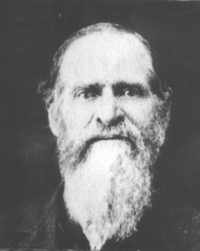
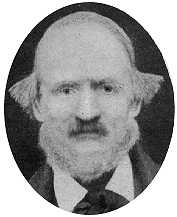
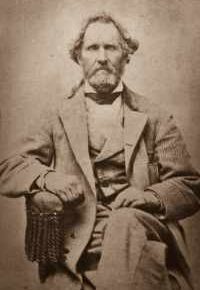
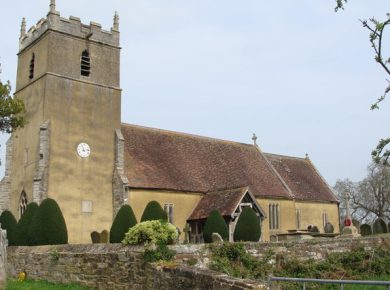
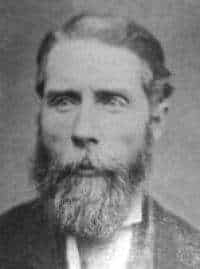
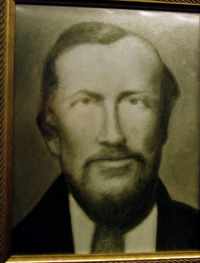
Thomas Hill Allsop was born in 1835 at Cheddleton, England. He joined the LDS Church Jan, 21, 1856 and came to Utah in 1857 with his wife, step-daughter and sister-in-law. They had their own outfit of two ox teams and all their supplies. When they arrived here they were sent to Provo by Brigham Young. Later, Thomas was sent to help guard Johnston’s Army. He stayed in Provo to help settle it. He built a large vineyard and orchard while there, then left it for those who were to follow.
From Provo, he moved to South Jordan. There, they lived in a dugout, where he taught school. Later, he made enough adobes to build rough houses for nearly all the Families around there.
Nine years later, they moved to West Jordan and from there to Midvale, where they lived for 2 years. While there he planted five hundred grape vines. They had started to grow nicely when the grasshoppers came and destroyed all but about 5 vines.
Then they moved to Sandy, where he took up a homestead of 240 acres. This was before the railroad came through and there were very few people in Sandy at that time. His homestead extended from the Alta road on the south to the Lindell farm on the north, and from the street in front of the Sandy Ward House to the County Road on the east.
Thomas was a very ambitious man, worked very hard to maintain his family and to the progress of the community. Very few men of his time accomplished so much. Yet, he was always_ trying to do something for the good of the people and for his country. He spent all he made in improving and developing them for he was always thinking of the future. He brought the first shade and fruit trees into Sandy. He planted many trees around his homestead, including a large apple orchard.
He was a surveyor for the government. He, with three other men, John Hardcastle, Thomas Goff, and Isaac Whithers brought the water from Little Cottonwood Creek to Sandy. The old settlers along the ditch thought they owned the water and were not going to let these men have any water to spread out on the benches. This brought a lawsuit against these four men, and Thomas Allsop went to work at the smelter to make money to fight this lawsuit.
While working at the smelter, he lost his right arm in an accident. He was a man to win,and finally won the lawsuit and they were able to bring the water down into Sandy. He built a reservoir above his orchard, where the water was stored. It was piped from there to the smelter for use there. It was also used by many of the people. This reservoir was used for pleasure also. In the summertime, boating and swimming was poplar. People from all the surrounding towns came to Allsop Grove for celebrations and pleasure. There was at one time a bowery, where folks could picnic. To reach Allsop Grove one would need to travel up Locust Street. It was heavily shaded with locust trees and a very secluded, beautiful lane. For generations it was also referred to as “Lover’s Lane”.
In the winter time, the reservoir was frozen over & besides the young folks using parts of it for skating, they cut huge blocks of ice and stored in an ice-house Mr. Allsop built, to store and supply the people with ice during the summer.
He also started a fish hatchery and planted some mulberry trees because he said there would be a big demand for silk in the future. He put some silkworms in his mulberry trees and intended to make progress in these lines.
At this time, the Manifesto was issued prohibiting the practice of polygamy, of which he practiced, having two wives. He would not desert his families, so he was taken to jail. While in jail, his fish and silk worms died for lack of care. When he got out of jail, he went to England as a home fireside missionary for six months and to gather genealogy.
When he returned to Sandy, his youngest wife left for a time, so he could stay. While she was away, he was thrown from a wagon and almost killed. He was taken to a hospital and cared for. During this time, his young wife had lost a child and was lonesome, so she went back to her folks. Thomas was not well, but he feared the authorities would put him back in jail, so when his wife returned, he had to get out in the middle of the night and leave home. A small boy took him to the train at Woods Cross, and from there he went to Logan. At Logan he worked in the temple, using a crutch with his only arm. Later, he worked in the Salt Lake Temple where he did much work.
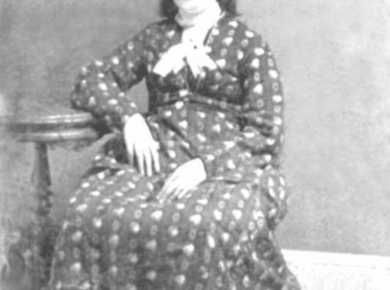
Thomas Allsop’s first wife was Elizabeth Mollart. To them were born the Following children: Sarah Ann, Emma Olive, Mollart Thomas, Joseph Henry, Albert George, Fannie Maria, and Henrietta. She died Aug. 30, 1895. His second wife was Mary Elizabeth Roberts. Their children were: Harriet Elizabeth, William, Mary Elizabeth, Samuel Francis, David Arthur, Laura Minetta, Olive Ann and Ruby Exile.
It is interesting to note that the second wife Mary Elizabeth had left home to visit with her sister in Eastern Utah. She was expecting a baby, but because of the polygamy situation, she had left home so Thomas would not have to return to jail. She had a trying time when she had the baby, and as she was in fact in exile, she named the baby, Ruby Exile. When Thomas heard of her distress, he packed his wagon with hot rocks and drove out to bring Mary and the new baby home. However, the baby died enroute and was buried on the trail.
Thomas had varied church assignments during his life. While in Utah, he was the ward clerk for Bishop Gardner and Bishop Stewart of Draper; also Bishop Rollins of South Cottonwood, Bishop Phillips of Union and Bennion.
Before the trains came to Sandy, he used to walk to Salt Lake to attend meetings and to business. He travelled to these various places mentioned above for twenty years to settle his tithing.
He was very ambitious and always doing something that would benefit those around him. He did much to help build up Sandy. He spent his money for things to build and beautify. He was very intelligent and talented and well-educated for his day. He taught school and music. He could play six different instruments, including the violin, piano, and organ, all of which he was an able teacher.
When more people came to Sandy, Mr. Allsop sold some of his land. Later he donated land for the Church site and cemetery. He gave Sandy a big bowery where large parties could go and dance and have weenie roasts. The bowery, the reservoir and Allsop’s Lane was known to all the people of Sandy and surrounding communities.
When Thomas Hill Allsop died he left a great posterity. They continue to honor him as a great pioneer, builder, missionary, teacher,


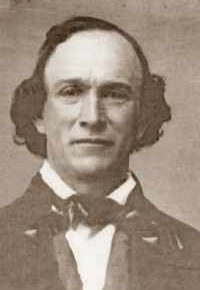
 Brother Joseph