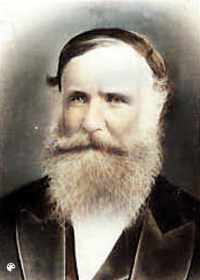
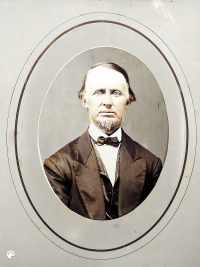
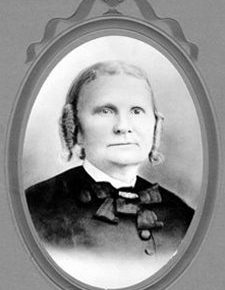
ASHBY, Nathaniel

The Ashbys were seaman and ship wrights until after the War of 1812. Nathaniel however, was apprenticed to a shoemaker at an early age to learn the shoemaking trade. He became expert in the making of fine shoes and started his own business.
0 1
Read Time:3 Minute, 14 Second

Nathaniel Ashby‘s parents were Benjamin and Mary Young Ashby. The Ashbys were seaman and shipwrights until after the War of 1812. Nathaniel however, was apprenticed to a shoemaker at an early age to learn the shoemaking trade. He became expert in the making of fine shoes and started his own business.

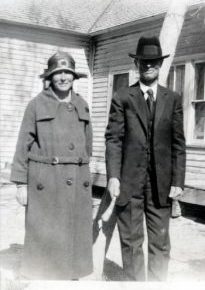
Nathaniel and Susan Ashby

On 30 Nov. 1826, Nathaniel married Susan Hammond of Marblehead, Mass. The couple soon owned besides their shoe manufacturing business, several houses which they rented.

When Erastus Snow came as a missionary to Salem, the Ashbys were converted to the L.D.S. Church and were baptized in 1841.They planned to move to Nauvoo and gave money to Elder Snow to build a house and help toward the construction of the Nauvoo Temple.

In Oct. 1843 they left Salem for Nauvoo traveling by train and boat. Erastus Snow had built a large duplex brick house, one half of which was to be occupied by the Ashbys.

In 1844 Nathaniel was called to the Eastern states as a missionary and a delegate to support Joseph Smith as a candidate for President. After the martyrdom of Joseph and Hiram Smith he and the others were called home.

The Ashbys had lived in Nauvoo three years when the Saints were driven out. In August, 1846 they started westward to Winter Quarters with three wagons, one driven by Nathaniel, one by son Ben, and the other by John Hill. Nathaniel was in poor health and after a few weeks of traveling, camp was made a few miles from Bonaparte, Iowa to wait until he was feeling better. Instead he grew worse and died at age 41. He was buried along the trail in a coffin built from boards purchased from a nearby sawmill.

Nathaniel and Susan Ashby were parents of 12 children, one of which died as a baby.

The following sons were also Utah pioneers:

Benjamin, Born 19 Dec. 1828 – Died 19 Nov.1907; Married (1) Ann Chester – 14 children

(2) Mary Jane Dyer 1 child.

Ben drove a wagon from Nauvoo to Winter Quarters then on to the Salt Lake Valley. He was called on a mission to England in April, 1853, and was released in March, 1857 nearly four years later. He was one of the men in charge of the first handcart company to cross the plains. Ben went to Echo Canyon with his company to keep out Johnston’s Army and to Sanpete for the trouble with the Blackhawk Indians. He settled with his family, first in Spanish Fork and then in Salt Lake City. He helped in building the Salt Lake Temple. In later years he worked in the Temple and was also a Stake Patriarch.

Nathaniel: Born 25 May 1835, Died 18 March 1882 Married: (1) Mary Virginia Garr 10 children; (2) Martha Ann Truman 6 Children

Nathaniel drove a wagon from Winter Quarters to the Salt Lake Valley for a Brother Haven. He lived with his mother until her death in 1851. He participated in the Echo Canyon campaign in 1857 under Col. Robert T. Burton. After his first marriage the Ashbys were called on a colonization mission to Southern Utah and moved to St. George where they made their home. Nathaniel served as a bishop in the St. George 4th Ward. He married his second wife in 1870. In 1881 he was called on a mission to the Sandwich (Hawaiian) Islands. He was accompanied by his wife Martha and son, Benjamin. Because of ill health, Nathaniel started home to the U.S. in 1882 but died on the Pacific Ocean of consumption. He was brought home to St. George for burial.

The other three sons were small boys when they came to Utah. Richard Born 26 Dec. 1836

William Hardin Born 16 July 1839 John Jefford Born 9 Dec. 1845

Happy
Happy
0 %
Sad
Sad
0 %
Excited
Excited
0 %
Sleepy
Sleepy
0 %
Angry
Angry
0 %
Surprise
Surprise
100 %
You May Also Like

WOOD, George Lymer: An Incident in the Life

"The usual method of disposing of the dead was to weight the bodies and dump them overboard. When others and I asked the privilege of removing our dead and burying them on land, the Captain was hateful and mean about it. All of my dear ones except Samuel's wife I had to perform this last earthly service for. Others of the party had sustained like losses, and were as anxious as I to bury them as decently as possible. The Captain at last agreed to wait and we hired a Negro to help dig a trench big enough to put them in all together. We removed the dead from the boat and began our heart¬breaking task, but had it only partly done when the boat whistle blew and the boat began to get underway. All ran hastily back except the Negro, one woman and myself. She and I stood at the grave site of our dead and watched them go. What bitterness of spirit I experienced only God knows. Was this what I had come to America, the home of the brave, for? Here I was with two strangers standing beside the open grave of a group of strangers. Our common interests were all lying before us or fast receding from sight, subject to the whim of a heartless thing in human form. "Surges of emotion swept over me, sorrow, anger, love, fear, and despair, but my nearest duty was to protect these rapidly decomposing dear forms of mine from the ravages of wild beasts, heat, and other elements. Perhaps I had been blessed and spared to perform this last service. If! were dead with them our bodies would rot together. So I urged on my companions the need for work. I felt responsible for seeing this thing through.
View Post

ARMSTRONG, Thomas Kirk

Thomas Kirk Armstrong was instrumental in developing the Utah territory with his team and wagon, his sawmill work, and in the sheep business at a location about seven miles east of Park City, Utah. He also maintained a dipping vat that all sheepmen used to dip their sheep in. They used a solution of tobacco and sulphur
View Post

REES, Thomas: Poor Welch Immigrant

Thomas and his family wanted to go to Utah with the saints, but he didn’t have the money to do so. Thus, their pioneer pilgrimage began on their destitute little farm in Wales with an effort to save money for the journey. It took until 1868 for them to save enough to send Brigham and one of his older sisters to Utah. They sent them off with instructions to save money and help the rest of the family to come. Brigham sailed to the states on the steamship Colorado. If his sister traveled on the same ship with him, it was Elizabeth because she is the only one to closely match name and age (5). The ship carried 600 saints bound for Utah, and was the last of the year. It departed Liverpool on 14 July, 1868 (6), and arrived at the Castle Garden Immigration center of New York on 7 August, 1868 (7) They traveled by train to Florence, Nebraska (another account says the train took him to Wyoming), then walked the last 800 miles from there to Utah because the rail hadn’t been completed to Ogden yet. Records record him arriving in Utah in 1869, so he must have been delayed en-route. Brigham would have been one of the last of the pioneers to walk to Utah before the Golden Spike was driven in Ogden.
View Post

BELLISON, James Thomas and Louisa

Before many days, an incident occurred which tells a lot about James' attitude toward draft animals. His granddaughter, Pearl Allen Read, tells of the company coming to a bog of mud in the trail which caused many wagons to get stuck. As each team came to the bog, the Captain standing there would join the drivers in whipping the animals to get them through.When it was his turn, James forbade the Captain. "These are my animals and no whip is to be used on them." Although James' team pulled through the bog successfully, the Captain was angry and thereafter continued to find fault with this independent member of his company.James Thomas' life-long insistence that his animals be treated well was admired by those who knew him and was learned and perpetuated by his children throughout their lives.
View Post

GLEASON, John Streator: The Martyrdom of the Prophet

“The scene through which I have been called to pass since I arrived in this place from the East has almost alienated me from my country. Almost one continual round of mobocracy by night and by day. When I contemplate the scene it almost makes me shudder, and my blood run cold in my veins. I have been an eye witness to almost the whole scene from the beginning. My life has been exposed—threatened from time to time. . . when they were filled with wrath …. About a week before the assassination of Joseph and Hyrum Smith I was arrested—marched to jail by a band of the desperate and could not even lay there in peace—was aroused about 12 o’clock by a rush of men into the yard and a loud rattleing [sic] and hallooing at the door of the jail. One of our men went down and opened the door, when they rushed up stairs and caroused about a while, and left us.”
View Post

ALLEN, Andrew Lee

The family moved to Provo, where Andrew and his sons helped to build the Provo Fort. Andrew taught his sons to work and take care of their animals. The sons worked quite often as teamsters. Andrew was an excellent rope maker and knew how to make dyes from plants. He made tassels and decorations for his teams.
View Post

ALLEN, Joseph

Joseph was one of the Pioneer teamsters who went east to assist immigrants to come to Utah. He was also engaged in the freighting business. He hauled freight from Corinne, Box Elder, Utah to Montana and Idaho.
View Post

WASDEN, James Brooks

Early day settler and pioneer of Northern Wyoming; Built the first house in Penrose, WY; Bridge builder in Yellowstone National Park; Met U.S. President Teddy Roosevelt; Lacked formal education however, excelled as a scriptorian and a prolific reader.
View Post