0
0
 1
1
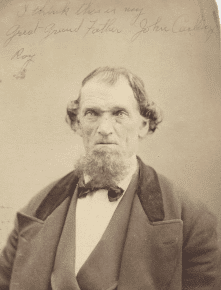
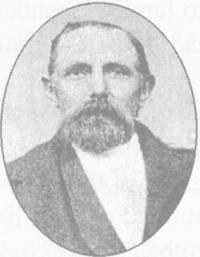
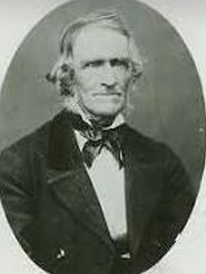
The Armstrongs were a small border clan, who in the 1800’s lived primarily in Northumberland on the English side of the Scottish border. They had lived in this area for generation after generation, but it was a hard life, and Canada looked promising. In 1855, Francis Armstrong, who had been born in Plainmiller, Haltwhistle, Northumberland, on October 3, 1839, arrived with his parents and brothers and sisters in Mt. Hope, Ontario, Canada.
Life was better in Canada, but Frank (Francis) at age 18 wanted to strike out on his own. His family vigorously opposed his leaving; but he felt for some reason an almost irresistible attraction to Missouri in the United States. In mid-June, 1858 Francis and two companions mounted their horses and headed for frontier Missouri with only a horse, the clothing they were wearing, a spare shirt, a warm coat, a hat, a wool blanket, an old gun and no money.
Arriving in Missouri, they heard only two topics discussed: slavery and Mormons. Mormons were continually derided and had been driven out of Missouri, but hundreds still passed through on their way west. Frank determined to stay in Richmond while his companions pushed on to Kansas City. He obtained employment at a sawmill and soon became a friend of David Whitmer. From David Whitmer and from Mormons passing through, he had learned much about the Church of Jesus Christ of Latter-day Saints and about the small Church of Christ David had by then established.
As he entered his third summer in Richmond, now at age 21, he bought and carefully read the Book of Mormon. He listened carefully to all that was said, both pro and con, and gradually began to develop a conviction that the Book of Mormon was true and that Joseph Smith was a prophet. He approached David Whitmer and asked him if he had truly seen the gold plates and an angel, if he had heard the voice of the Lord, and if his testimony in the Book of Mormon was true. David Whitmer responded by pointing to the sun in the sky and by saying that, just as sure as yonder sun lights the day, he did see and handle the plates and that, as sure as he lived, he saw an angel and heard the voice of God declare them to be ancient records now translated by the gift and power of the Lord.
Francis at length obtained that testimony in writing; and, with his own testimony burning bright, he decided to be baptized and leave for the west immediately. Fortunately, he was able to travel with a small wagon train (three wagons) commanded by Captain Duncan. On September 16, 1861, they rode out of the mouth of Parley’s Canyon and entered the valley.
Soon after his arrival, Frank met Brigham Young who suggested he obtain employment at a lumber mill in Mill Creek Canyon. As the saw mill closed for the winter, he walked over to Parley’s Canyon and obtained work at Brigham Young’s flour mill, where he soon was placed in charge of the rolling mill machinery.
At this mill he met Robert Siddoway, who with his three small children had crossed the plains in Captain Daniel Robinson’s hand cart company, the ninth of ten such companies. Frank was asked to room and board with the family. He soon fell in love with Robert’s eldest daughter, Isabella, and eventually, when she was older, they married.
From this humble beginning began the rise of one of Utah’s greatest entrepreneurs of his day or any other day. He obtained his own saw mill, then a lumber company, then a construction company. As the years went by, he purchased a flour mill, several huge ranches, and developed sugar companies, banks, savings and loan operations, railroads, transfer companies, insurance companies, and eventually electric street cars (the second in the world) and the supporting electricity production company.
Despite unparalleled success in business, he felt a deep civic responsibility. In 1877 he won election to the Salt Lake City School Board, and he soon thereafter was elected to the city council. After an intervening term as select man for the Salt Lake County Courts, he was again elected to the city council. He was elected mayor in 1886 and took great strides in ameliorating Mormon-Gentile tension. (He had also served presidents John Taylor and Wilford Woodruff as agent in the divestiture of church properties as mandated by the Edmunds-Tucker Act.) He was elected again on a fusion ticket, half of which candidates were from the People’s Party (Mormon) and half from the Liberal Party (Gentile). He was never intimidated in his public office and personally enforced the law with great courage and at great risk.
While he served as mayor, he offered the top floors of his mansion on Seventh East and First South (which currently stands as a bed and breakfast), for the security of church general authorities during the polygamy persecution. After the Manifesto in 1890, calm was re-secured, and the last months of his term were peaceful and quiet.
Subsequently, he served as Chairman of the Salt Lake County Commission, having been instrumental in the financing and construction of the City and County Building. He had helped finance the construction of the Salt Lake Temple and served as an ordained worker in both the old Endowment House and the new Salt Lake Temple. On June 15, 1899, he died of stomach cancer, not yet 60 years of age.
He was, without doubt, Salt Lake City’s (and Utah’s) most outstanding businessman and financier, and he was a political leader of equal stature. Even at the young age of 59, he left an estate second only to that of Brigham Young, but all of his wealth, prestige, and power were insignificant in his eyes in comparison to his family and his testimony of the Gospel of Jesus Christ.
ARMSTRONG FAMILY GENERATIONS
Francis Armstrong
- Born 3 October 1839 Plainmiller, Northumberland, England
- Died 15 June 1899 Salt Lake City, Utah
Isabel Siddoway
- Born 28 November 1849 Sunderland, County Durham, England
- Married 10 December 1864 Endowment House, Salt Lake City, Utah
- Died 11 December 1930 Salt Lake City, Utah
Children: (Spouses)
Elizabeth Dawson Armstrong `William S. Bean Salt Lake City, Utah
- Born 18 November 1865
Francis Siddoway Armstrong
- Born 26 November 1867
William Francis Armstrong
- Born 19 March 1870
Isabelle Armstrong
- Born 8 December 1872
*Mary Hannah Armstrong
- Born 3 August 1875
Emma Louise Armstrong
- Born 20 February 1878
Florence Grace Armstrong
- Born 14 August 1880
Sarah Ethel Armstrong
- Born 13 March 1883
Hazel Kirk Armstrong
- Born 20 December 1885
Irene Lenoire Armstrong
- Born 10 March 1889
Robert Lee Armstrong
- Born 20 August 1893
Mary Hannah Armstrong Madsen
- Born 3 August 1875
[ADDITIONAL DATA ON CHILDREN IN ORIGINAL FILE]


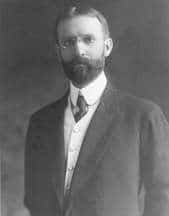
 Brother Joseph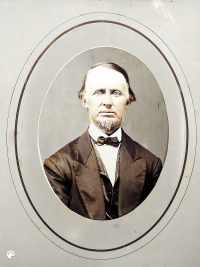
 Pioneer John