0
0
 1
1
Martyr
Edmund Durfee was born in Rhode Island, 3, October 1788. He was baptized by Simeon Carter in Ruggles Township now Ashland Co., Ohio, May 1831. He had been a Methodist. He was ordained an Elder by Simeon Carter and Solomon Hancock and accompanied Elder Brackenbury on a mission to Chautauqua Co., New York in December 1831. Elder Brackenbury died while on his mission from the effects of poison administered to him by his opposers who afterwards boasted that Mormon Elders had not enough faith to stand poison.
In the spring of 1832 Elder Durfee with nine others went up to Jackson Co. to put in grain and build houses and returned the same season.
He took another mission to the state of New York in the fall. In May 1833 he moved to Kirtland, Ohio. He was one of the Twenty Four Elders who laid the cornerstone of the Kirtland Temple.
He moved to Caldwell Co., Missouri, in 1837 and settled on log creek. In 1838 he was expelled from the State of Missouri with the Saints and settled in Yelrome, Hancock Co., Illinois.
He was at Morley’s Settlement, when the mobs began frightening the members of the Church. On Wednesday, the 10 September 1845, a mob attacked this settlement, turned the people out of doors, set fire to the buildings, and threatened instant death to men, women, and children.
They all ran to a settlement nearby called Green Plains. Their homes, shops and everything was burned to the ground.
While the people were partaking of the hospitalities of the people in Green Plains, the mob attacked there. On the night of the 26 of November 1845 Jabez Durfee, Edmund Durfee’s son, was very restless. He would lie down, then get up and look around, and then lay down again. About midnight he got up and when he looked out of the window, he saw the hay stack was on fire. He called his father. The men all went out to put out the fire. The mob told them to go back. Edmund Durfee hesitated and pleaded for them to allow him to put out the fire and the mob shot him down. They took his body and set it up against some hay and three or four of the mob shot him to make sure he was dead.
After his death the mob boasted that they fired at Durfee on a bet of a gallon of whiskey and that they killed him and won.
The following was found in the Church Historian’s Office:
Nauvoo, November 19, 1845. Murder and Arson Edmund Durfee Shot,—– Two houses burned. As may be seen by the affidavits below, it falls to our painful lot to chronicle two more outrages upon the lives and rights of the Latter Day Saints since they have been using all diligence to secure their crops, buildings, and wagons to leave next spring.
Mr. Durfee was one of the most industrious, inoffensive, and good men as could be found. His house was burned in September. He had moved to Nauvoo and went on Saturday for a load of grain and was shot dead in cold blood at midnight while striving with others to save property from the flames by an armed mob. The person who murdered Edmund Durfee was discharged without even an examination.
From FamilySearch.org:
Edmund Durfee was one of only a handful of Saints to die as a martyr in Illinois. He was murdered in November of 1845 by a mob that had already burned his home in September. It was rumored that the man who shot him won two gallons of whiskey for the deed. Whether or not that is true, the details of Edmund’s death are not nearly as fascinating as the details of his life. It is a fact that Edmund died true to the faith. More importantly, Edmund lived true to the faith.
As did five generations of Durfees before him, Edmund spent his childhood in Rhode Island. His father died when Edmund was in his early teens, so Edmund moved with his grandparents to New York. Nearly a decade later, Edmund married Magdalena Pickle and proceeded to father 12 of his 13 children. The family eventually settled on a farm which produced a great deal of maple syrup. However, by trade, Edmund was a carpenter and a millwright. When new lands were opened on the frontier, Edmund felt the opportunity was too good to pass up. He took his family and moved to Ohio in June of 1830.
Edmund was baptized into the Church on May 15th, 1831. The 42-year-old convert was soon ordained to be an Elder, and that December Edmund was asked to proclaim the gospel on a mission to New York with Elder Joseph Brackenbury. Many believed on their words—though, shockingly, Edmund’s companion was poisoned (and died!) by antagonists of the Church. Upon his return, Edmund was sent to Jackson County, Missouri to build up the newly revealed “Center Stake of Zion.” He loaded up his carpentry tools, his farming implements, and some seed grain, then he headed west. There, Edmund was part of group of 12 men who participated in laying the foundation for a home dedicated to the gathering of the 12 tribes of Israel. That fall, Edmund served yet another mission to New York.
In 1833, Edmund participated in laying the cornerstones of the Kirtland Temple. During the next three years, Edmund assisted in the construction of the temple—he also added a thirteenth child to his family. Edmund and Magdalena were privileged to attend the dedication of the Kirtland Temple on March 27, 1836. Within the year, however, Edmund and his family were on the move—as were most of the Church members living in Kirtland. They headed for Caldwell County, Missouri. There they worked to perfect the Saints—though there were persecutions from without and dissensions from within. In fact, Edmund’s settlement was the site of a Church tribunal where several leaders were “rejected” for their misappropriations of Church funds. During the winter of 1838–39, Edmund assisted many poor and weary Saints who were driven from their homes. He made numerous trips to Illinois. He finally took his own family to Illinois in April. There they built a home in the Morley Settlement.
Though the Nauvoo Temple had not even been started, Edmund was eager to participate in the ordinances to redeem the dead. In some of the earliest organized genealogy efforts of this family (and perhaps even this dispensation), Edmund and Magdalena were baptized in behalf of their deceased parents in November of 1840! The following spring, the cornerstones of the temple were laid, and the construction was begun. Because of his carpentry skills, Edmund again helped build the temple.
Over the next few years, Edmund continued to serve in the Church. He was on a Stake High Council, housed visiting Apostles, and supplied foodstuffs to the Saints in Nauvoo. Indeed, Edmund was trying to bring in the harvest when the mob attacked that November night. Edmund’s life since joining The Church of Jesus Christ of Latter-day Saints had been spent proclaiming the gospel, perfecting the Saints, and redeeming the dead. His violent death could not detract from his virtuous life. In the words of the Nauvoo Neighbor (a paper edited by John Taylor), “Mr. Durfee was one of the most industrious, inoffensive, and good men that could be found.” Edmund’s body was laid to rest in the Old Nauvoo Burial Gound.
On January 21, 1846, just weeks before she had to cross the icy Mississippi River, Magdalena received her endowment in the Nauvoo Temple and was sealed (by proxy) to Edmund for time and all eternity.
(Compiled by Rhonda Seamons in June 2003. Updated in May 2014.)


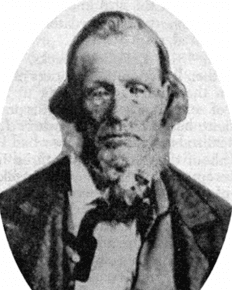
 Brother Joseph
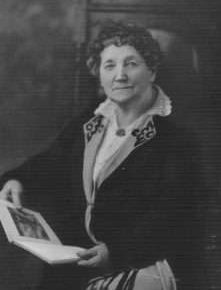

 Pioneer John