 0
0
 1
1

(1813-1903)
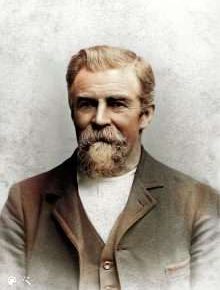
Thomas Ashton‘s father, Joseph Ashton, by trade was a silversmith. Thomas only had one sister Eleanor, that was nine years his senior.
At the age of fifteen he apprenticed for six years to the trade of wheelwright, carriage builder, and ship carpenter. Upon completion of his apprenticeship he worked building the Liverpool and Leedee Railway that was under construction at that time.
Thomas married Mary Howard on 20 Nov 1836 in Prescott, England He and his wife Mary were the first baptized in St. Ellens, Lancashire, England. They were baptized by Samuel Cryer on 28 Jan 1841.
Later the same year (’41), they emigrated to America and made their home at Skunk River, Iowa. Mobs drove them away and they went to Nauvoo. Thomas returned to Skunk River to sell his property, but the mob had possession and compelled him to sign a deed to the property. The family’s move to Nauvoo was after the death of the Prophet Joseph Smith.
Prior to their move to Nauvoo Thomas worked on the Nauvoo Temple. Also, he assisted with the building of the Mormon boat, the “Maid of Iowa.” The family took part in all the events of the trying times until the final expulsion. He worked in the wagon shops where the wagons were made for the trip westward. He assisted in the last defense of Nauvoo against the mob, and helped to work the cannon that was made from a steamboat shaft.
Thomas and family left Nauvoo in Feb 1846 at the final expulsion, traveled to Winter Quarters, living through the events that happened there until Brigham Young in 1849, ask them to move back east of the Missouri River to Council Bluffs due to the lack of means enough to go to the Valley and threat of Indian trouble. At Council Bluffs they raised crops until the spring of 1851, when the family moved to Salt Lake City and on to Lehi, Utah.
The same year (1849), Thomas built a log house about five miles north of Kanesville, Council Bluff. His family consisted of his wife Mary and two children, Joseph and Mary Ann. He left them in the care of John Mills while he went down the river to search for work. Mary, his wife, took with ague. She was sick about three weeks, gave birth to a baby girl, Elizabeth Eleanor on 13 Aug 1849, became more seriously ill and died, 26 Aug, 1849. She was buried at Kanesville Iowa. Brother Mills wrote to Thomas, her husband, of her illness, but he did not get home until after she was buried. She was a good woman and was loved by all who knew her. Elizabeth Eleanor died 5 Oct 1849 and was buried on the coffin of her mother
On 25 Sept 1849, Thomas married Sarah E. Mills. She died 3 September, 1850, leaving one son John Mills Ashton.
On 17 Feb 1851, he married Arminta Miranda Adelia Lawrence, at Council Bluffs, Pottawattamie, Iowa. They crossed the plains together and had eleven children at Lehi, Utah.
Thomas was ordained a Priest by Theodore Curtis, Jan, 1841 and a Seventy at Nauvoo in 1844 and a High Priest by Daniel S. Thomas, 22 Aug 1875 at Lehi.
Thomas took a very active part in the planning and construction of Lehi’s first water ditch and was one of the city’s first water masters, when no salary was attached to the office. He was also very active in planning and building Lehi’s first bridge across the Jordon River. He was six times elected a member of the Lehi City Council. He lived to a grand old age of eighty-nine years, two months and fifteen days


 Brother Joseph