 0
0
 1
1
This article originally appeared in the May-June 1970 edition of Pioneer Magazine.
by Ferdie D. Peterson
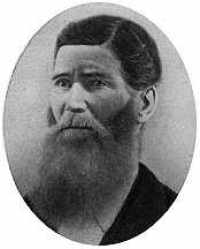
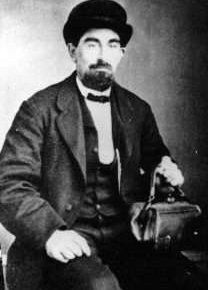
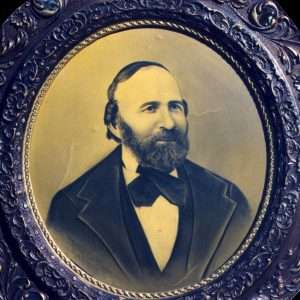
Jens Peter Andersen was born in Gammelstrup, Denmark, the 4th of January, 1826. His father was a farmer and lived in several small communities in the central part of Denmark.

(1826-1910)
Jens was the tenth of eleven children, but only four of them lived to maturity. Six died in infancy before they were two years old. The seventh lived to be ten. This was rather common that many of the children died young.
Jens served an apprenticeship when he was a youth to learn the trade of a miller, and he worked in Denmark both as a miller and as a farmer. At the age of 26, he married Mary Jacobsen, who was 18 at the time. The following year they were blessed with a baby girl. They joined the Church a few months after they were married and decided to go to America in December, 1853. On the voyage the baby became ill, died, and was buried at sea.
The record doesn’t show where they landed in America, or what they did for the first seven or eight months, but it can be assumed that they made preparations to cross the plains.
They came to Utah in Captain Olson’s Company arriving in Salt Lake City in October 2, 1854. They had been here only a few months when Mary died.
Grandpa met with a serious accident while living here. He was helping build an irrigation canal and a landslide came in on him and completely buried him. His life was saved by the fast work of his comrades with the pick and shovel. However, his hip had been crushed and it was necessary for him to use crutches for the next two years. He never fully recovered from the accident and was lame the rest of his life.
He married Rebecca Swensen, the widow of John Swensen, on February 23,1855. She had one daughter, Emma, at the time they were married. While living in Salt Lake City, a son was born to them, whom they named James Peter.
In 1856, they moved to Ephraim in central Utah. Here they built a home, bought a farm, and acquired three more children, two girls and a boy. After living there for about six years, he was asked by the Church to move south to Sevier Valley and help settle that area. After selling their home and other property, grandpa used the money to buy a new outfit to help in making the move.
Just at this time, Brigham Young asked him to donate this new outfit to the Church to be used by the Saints in coming to Utah. This he did.
It was probably in the spring of 1863 that they left Ephraim with furniture and supplies, and a load of logs to help in building a new home. Grandpa and his son, James Peter, made the adobes from which their new home was constructed. It was the first home to be built in Glenwood, a small community in east-central Sevier Valley. It consisted of only one large room and was used by the Church for meeting until a more suitable place of worship could be constructed.
Apostle Orson Hyde and his wife and other Church authorities who came to Glenwood were entertained in this home. Elder Hyde was the district president for this area and helped in organizing the church in the various communities that were being established in the area.
Grandpa again engaged in the business of farming. We don’t know what other industries were operating in Glenwood at this time, but a few years later it was reported that Glenwood was self sustaining. They had a grist mill, a sawmill, a tannery, where they tanned leather and made shoes, a furniture shop, where they made all the furniture that was used in Glenwood and much of what was used in the surrounding communities, and a cording mill, where wool was corded, spun into yarn and woven into cloth. Glenwood was evidently a thriving community at the time.
In 1865, trouble with the Black Hawk Indians spread throughout the state and Brigham Young advised the settlers to move north to the more populated areas where they could better protect themselves from the Indians. Three settlers were killed near Glenwood. Because of the Indian trouble, most of the people left Sevier Valley in 1866. A few years later, after a treaty was signed with the Indians, many of the settlers returned. Grandpa moved back to Ephraim where he lived the rest of his life.
He again took up the business of farming. He helped construct the fort at Ephraim for protection from the Indians, and he acted as a guard during the Blackhawk War. He also helped herd the cattle and horses during this same conflict.
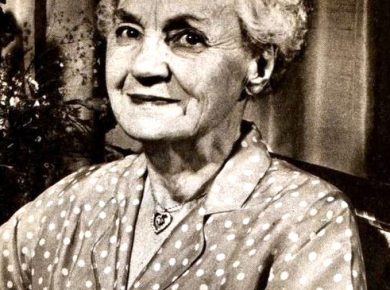
We will now go back to Denmark to tell you about Maria Jensen, who was to become Grandpa’s third wife. She was born in Denmark and was the oldest of nine children. At the age of sixteen, she married a neighbor, Peter Petersen. They joined the Church and became the parents of four children while living in Denmark. In 1866 they came to America and met Maria’s parents at Wyoming, Nebraska. They had come to America the previous year. Together, they crossed the plains in the Lowry Company, arriving at Salt Lake City, October 22, 1866. This was the last company to come across the plains the full distance from the Missouri River to the Salt Lake valley by ox team. The railroad was being built west from Omaha at this time and the next year the Pioneers came part of the way by rail. Cholera broke out in the Company on the plains of Wyoming and Maria’s youngest son and husband died of this dreaded disease and were buried there. Maria and her three remaining children and her parents and their younger children settled in Ephraim. Here Maria met Jens Andersen.
After returning to Ephraim from Glenwood, Jen’s wife, Rebecca, had become ill and Maria was hired to help take care of her and the children. Rebecca died November 24, 1866. It was Rebecca’s dying request that Maria marry Jens and help raise the children. Jens and Maria were married December 5, 1866. At the time of their marriage, Jens had four children and his stepdaughter, Emma; Maria had three children. Together they became parents of eight more children. My mother was the youngest child in this large family. She was born when her father was 59 and her mother 42.
Shortly after they were married, Jens and Maria went to the Endowment House in Salt Lake City and took out their endowments and were sealed to each other for time only. Jens was then sealed to his first wife and had their daughter sealed to them. They had Rebecca sealed to her first husband and her children sealed to them. Maria was sealed to her first husband and all her children were sealed to them. Although Grandpa raised 16 children, he wasn’t sealed to any of them. He was only sealed to his first wife and their baby which was buried at sea. This thought disturbed him in his later years.
After a long and useful life, Grandpa died December 11, 1910 at Ephraim at the age of 85.


 Brother Joseph

 Pioneer John