0
0
 1
1

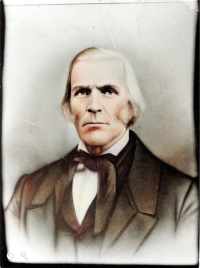
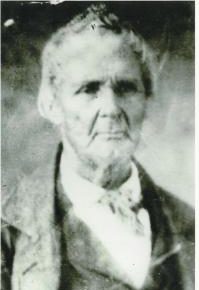
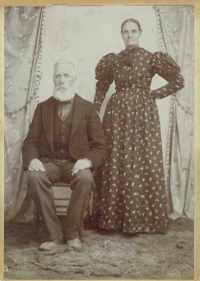
For many years a prominent citizen, both of Salt Lake and Springville, Jacob Houtz made a record as an enterprising and successful man of business, a founder and promoter of various industries. He was born near Selin’s Grove, Union county, Pennsylvania, October 12, 1814, and his boyhood and early manhood were passed in the same locality. His parents were prosperous, owning a fine farm on the banks of the Susquehanna river, and their son received as good an education as the time and place could afford. When not at school he helped his father upon the farm.
Jacob was but seven years old when his mother, Elizabeth Zellir Houtz passed from earth, but he found a good friend in Catherine Zellir, his mother’s sister, who became his father’s second wife. He remained at the old homestead until his own marriage, in January, 1840. The maiden name of his wife was Lydia Mace.
In September, 1844, he became a Latter-day Saint, and at Nauvoo, about two years later, was ordained to the office of a Seventy. Accompanying his people into the wilderness, Mr. Houtz found himself, at the opening of the year 1847, at Council Bluffs and in May of that year he joined the emigration that was being organized near Winter Quarters to follow the Pioneers across the great plains. He was outfitted with two wagons, two ox-teams and a sufficiency of food and clothing for himself and family. They traveled in Daniel Spencer’s hundred, and arrived in Salt Lake valley on the 23rd of September. The Houtzes settled first at Salt Lake City, where the head of the family became a Bishop’s counselor, first to Bishop William Hickenlooper, and afterwards to Bishop Elijah F. Sheets, of the Eighth Ward, holding the latter position until he moved from Salt Lake to Springville.
Meantime, in September, 1852, he was called with Elder Orson Spencer upon a mission to the kingdom of Prussia. They arrived at Hamburg on the 22nd of November, and three days later reached Berlin. Mr. Houtz writes:
‘‘Our passports having been presented to the government officials, we were in due time required to appear at police headquarters, where we were closely scrutinized and thoroughly questioned as to our business, our religion and the causes that brought us to that country. The court, determining that the Gospel as taught by the Latter-day Saints would not be permitted in Prussia, made an order prohibiting its introduction and commanding us to leave Berlin and the kingdom by seven o’clock next morning, and not return, on pain of transportation. We applied to the American legation at Berlin (Messrs. Bernard anil Fay) for such relief as they could give us, but were informed that the laws of Prussia were absolute, the religion national, and that wisdom would dictate obedience to the order. Consequently we returned to Liverpool, reporting to President Samuel Richards, of the British Mission, the unfavorable treatment we had received. We were advised by him to return to America, and lay the matter before Apostle Orson Pratt, then editing “The Seer” at Washington, D. C. We did so, and Brother Pratt advised our return to Utah.”
While yet in the East Elder Houtz visited his birthplace, where he enjoyed a brief stay among his relatives, one of whom, his widowed sister, Mrs. Catherine Boyer, he converted, aud she, with six small children, accompanied him to Utah. He arrived home in September, 1853.
Since 1851 he had been interested in business at Springville, where he had taken up a farm and built a grist mill on Spring Creek, about a mile north of the village. In the spring of 1854 he began at that place the erection of a second flouring mill, and in 1855 completed one of the best mills in the Territory. In 1863, in partnership with William J. Stewart and William Bringhurst, he began the erection of a cotton factory, which was completed in 18GG-7 at a cost of about eighteen thousand dollars. In the spring of 18G8 Mr. Houtz made Springville his permanent home. During the Walker, Blackhawk and other Indian wars he rendered material aid to the fighting frontiersmen in the way of supplies, equipment and other necessaries.- In 18G9 ho fulfilled a mission to the States.
Forty years of his active life were passed in milling, manufacturing, merchandising and farming, but after the year 188S, he followed the more quiet and peaceful labors of fruit and farm culture. His wife Lydia died that year. He had two other wives, and his children in all number fourteen. His death occurred at Springville, December 11, 1896. He was the father of Mrs. Mary E. Snow, wife of the late President Lorenzo Snow, and others of his descendants are well known citizens of the commonwealth.
This article is from History of Utah, Vol.4, by Orson F. Whitney


 Brother Joseph