HUNTINGTON, William D.: Raised from the dead by Joseph Smith?

“Joseph you are too late. William has been dead for five minutes.”
0 1
Read Time:1 Minute, 52 Second

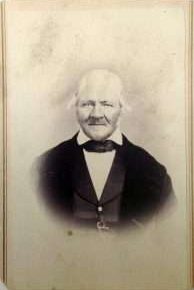
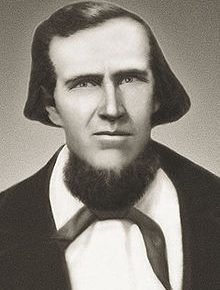
William Huntington while a young man lived with the Prophet Joseph Smith and was a great favorite of the prophet.  He took suddenly and violently ill while the prophet was away from home.  The Prophet Joseph’s wife Emma sent word for him to hasten home, for William was lying at the point of death.  When the prophet reached home his wife met him at the gate and said, “Joseph you are too late.  William has been dead for five minutes.”

The prophet rushed into the house, placed his hands upon the dead man’s head, and commanded the spirit to return to his body that he again become a living soul.  No sooner had the prophet removed his hands from his head, than he showed signs of life.  The prophet raised him up in bed and ask his wife Emma to bring a bowl of bread and milk.

He fed him part of it and then told William to feed himself, which he did.  He had been unable to take any nourishment for several days.  The prophet asked for the sick man’s clothes, he dressed him, and helped him out on the floor and over to a chair.  He then placed his hands upon William’s head and told him he would live to be an old man.  He would go the valleys of the mountains and pain would never again enter his body in any way, shape, or form, and when he died it would be suddenly.

This prophecy and promise was fulfilled to the very letter.  LeGrand knew this man very well in Springville, Utah.  He was postmaster there and LeGrand, then just a boy would go for the mail and talk to him almost every day.

The night Brother Huntington died, he went to bed feeling fine, along about three o’clock his wife found him cold in death.  He had died without a struggle.  While he was alive he bore his testimony many times that he had never felt any pain since the prophet administered to him.

William was also the one that helped prepare the body of the prophet and also helped bury him.

Here is another account of this incident.

Note:  Retyped by Monica Durfee Anderson, Granddaughter, 2013

Happy
Happy
50 %
Sad
Sad
50 %
Excited
Excited
0 %
Sleepy
Sleepy
0 %
Angry
Angry
0 %
Surprise
Surprise
0 %
You May Also Like

RIGBY, William Frederick Littlewood: A Great Pioneer Colonizer

Strangely, it was the arrival of Johnson’s Army and the establishment of Camp Floyd that enabled William and other pioneers to begin a move to prosperity. The building of the camp with Government money gave support to scores of laborers and mechanics. The soldiers with their paychecks were also liberal in their spending. William was able to buy oxen, a wagon, and new clothing with his higher earnings.
View Post

BRIGGS, Thomas

Bountiful Pioneer At their December meeting the South Davis Chapter eulogized the pioneer life of Thomas Briggs, which was presented by Bruce Briggs, a second great-grandson. Thomas Briggs emigrated to…
View Post

ARMSTRONG, Thomas Kirk

Thomas Kirk Armstrong was instrumental in developing the Utah territory with his team and wagon, his sawmill work, and in the sheep business at a location about seven miles east of Park City, Utah. He also maintained a dipping vat that all sheepmen used to dip their sheep in. They used a solution of tobacco and sulphur
View Post

Daniel Rapalyea Allen

Daniel Rapalyea Allen operated flour mills in Flushing, New York, St. Louis, Kanesville and Perryville, Iowa, West Jordan, American Fork Canyon along with a saw mill, and American Fork City (600 North 150 East, just south of current Star Mill). The mills in the latter two locations were owned by him. Following several floods which destroyed the canyon mills and associated bridges, he returned to West Jordan.
View Post

RIDING, Christopher Lister: Tinsmith

Christopher's skills were needed in St. George because the temple was under construction there and he was the only sheet metal worker in the Dixie mission at that time. However, there was not enough business in St. George to provide him work, so he secured a little four-wheeled cart and an ox. He loaded the cart with tin ware and tools and visited all the towns in southern Utah, exchanging his ware for flour, potatoes, butter, cheese, etc. He made most of his wares from waste cans as it was difficult to ship in sheet tin. People saved empty cans and metal ware of all kinds for him. His store of wares consisted of buckets, milk pans, tin cups and plates, lamps, canteens, coffee pots, wash boards, etc. The ball on the St. George temple and the one on the St. George tabernacle are Christopher Riding's work, as is the metal work on all the public buildings erected before his death. The tin-covered sphere on the temple remained until October 25, 1994, when it was replaced with a fiberglass model as part of a renovation project. Christopher was a loyal member of the church although he was never active in public affairs due to the fact that his work kept him away a great deal of the time. He was a great reader, spending every evening in this way.
View Post