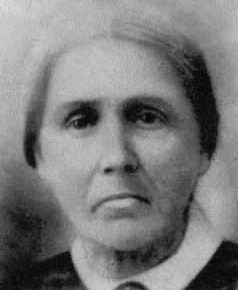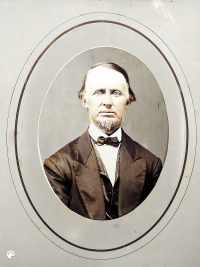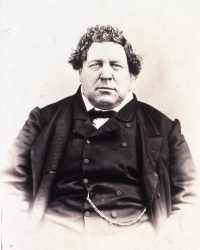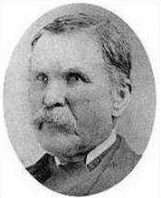
MITCHELL, John Henry

He would kill a pig, put it in a barrel and then rub salt on it. It had to be par-boiled before eating because it was so salty. But the salt helped preserve the meat all summer.
0 1
Read Time:4 Minute, 48 Second
John Henry Mitchell
(1870-1950)

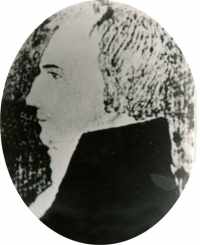
John Henry Mitchell or Jack as he was sometimes called was born on 1 February 1870 in Hooper, Weber, Utah.  He came to Shelley, Idaho with his parents James and Anne Hull Mitchell when he was a young boy.  His family settled on ground located 2 miles north of Shelley.  At this time, there were no ditches, canals and only sagebrush.  His parents had taken out pre-exemption homestead rights and had settled on 360 acres of land.  There was much work to be done.  First, they had to build a cabin because they had been sleeping in tents until a two-room log cabin could be built.  They worked long days and nights building corrals and planting fruit trees and bushes.  John and his brothers helped their father James build the Cedar Point Canal along with many other ditches and canals.  This was done with teams of horses and shovels.  (There is a DUP monument located by the Shelley Stake Center honoring these hard-working pioneers.)

John Henry knew only hard work and more hard work.  Helping his father farm and prove up on the 360 acres with only horses was a full-time job.

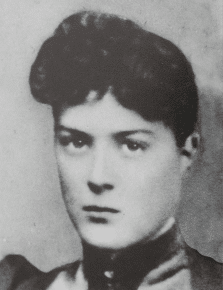
I do not know the circumstances of how my grandfather John Henry met my grandmother, Elizabeth Ann Hull, but they had the same grandparents (Thomas Hull and Mary Benson).  They were both born in Hooper, Weber, Utah so it is likely because of their being related to each other they probably grew up together and visited each other’s homes.   At the time of their marriage on 2 March 1896 in Blackfoot, Bingham, Idaho, my grandmother already had one son named Lorenzo Lowery. I do not know if she was ever married to Lorenzo’s father.  Anyway, my grandfather John Henry acquired a ready-made family.

Following a process that as each child became of marriageable age, the homestead became 40 acres less as the son or daughter would be given a sod shack and a team of horses to begin their life with their new mate.  So it was that John Henry was given 40 acres of land. He built a two-story home and started farming.  He was very stern and strict.  He worked long, hard days farming and taking care of his family.

He would kill a pig, put it in a barrel, and then rub salt on it.  It had to be par-boiled before eating because it was so salty.  But the salt helped preserve the meat all summer.

John Henry smoked and used to roll his own cigarettes out of brown paper sacks.  Underneath the old pot-bellied stove was where he would throw his cigarette butts.

John Henry, his father and his brothers had to go to the lava rocks to obtain cedarwood for burning in their stoves.  This was a never-ending job.  They would be gone days at a time with the horses and wagons or sleigh in the wintertime.  This wood burned clean and hot.

He had four horses to farm with.  These horses could also be hitched to the wagon to go into the town of Shelley for groceries and in the winter they would be hitched to a sleigh.

Grandpa had an old spud planter pulled by a team of horses.  Grandma would sit on the back of the planter to make sure that only one spud set would go into the hole.

They had a big orchard and every morning Grandma would gather the windfalls and make delicious applesauce and other goodies.  The red plum tree fruit was gathered, smashed and put in a wooden keg to make red wine.  They used a red siphon hose to get the wine out of the keg.

In 1926 John Henry bought a brand new Model T Ford.  This was before the Great Depression hit.  After the depression, he didn’t have enough money to buy gas so the car sat for a long time until he sold it to his neighbor for $6.  However, grandpa was not a good driver and many times he ran into a fence or a ditch.

Grandma was a hard worker always cleaning, cooking, sewing, and helping grandpa on the farm.  She always had homemade bread with sugar on it which she would give to her grandchildren when they came to visit.  She suffered from asthma and later on in life she lost her eyesight to cataracts.

John Henry and Elizabeth eventually sold their farm to their son, Floyd, and moved into a large two-story red brick home in Shelley.  Times were very tough and many times, they had no food to eat.  They were very poor and lived on nothing.

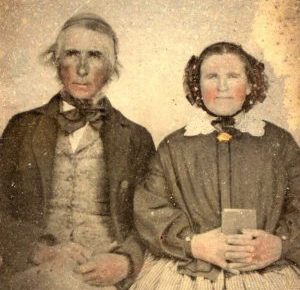
I remember many times going to visit and my grandpa would always get out the checkers.  That is how I learned to play checkers.  My grandma would always give me bread with butter and sugar. It seems to me as I look back that I never really saw my grandma as a young woman.  She was always old because she had worked so hard all her life.  Even all the pictures I have of her depict her as an old person.

John Henry Mitchell died on 8 August 1950 in Shelley, Bingham, Idaho, and is buried in the Shelley Hillcrest Cemetery.  Elizabeth Ann Hull died on 28 June 1964 in Shelley, Bingham, Idaho, and is buried in the Shelley Hillcrest Cemetery also.

Together they raised eight children and when their daughter, Nellie Viola died in childbirth, they helped raise her four children.

Their children are as follows:  Lorenzo (Lowery), Evelyn Mary, William John, Edith Jane, Nellie Viola, Roland, Emmett, and Floyd.

Happy
Happy
0 %
Sad
Sad
0 %
Excited
Excited
0 %
Sleepy
Sleepy
0 %
Angry
Angry
0 %
Surprise
Surprise
100 %
You May Also Like

JENSEN, Jens and Dorthea: Nearly Pioneers

Most pioneer stories involve building religious faith through hardships and challenges, but some early migrants to Utah don’t fit this mold. Some were disappointed by life in Utah and returned to their place of origin. Others moved on seeking greener pastures elsewhere. Still others remained in Utah but became disaffected with the dominant religion. Some became Jack Mormons, others became vocal critics of the LDS Church, and still others joined a different church. Jens Christen Jensen and his wife Dorthea were cases of the latter.
View Post

AVERETT, Elisha – A Pioneer and His Fife

HE WOULD MAGNIFY HIS MASONARY GIFTS AND TALENTS. ORSON HYDE CALLED ELISHA TO SETTLE DIXIE AND HIS FAMILY ANSWERED THE CALL AND WOULD CONTINUE TO FOLLOW & MOVE WHERE HE WAS NEEDED…. ELISHA AND TWIN ELIJAH WORKED IN CONSTRUCTING ST. GEORGE, MANTI, AND SALT LAKE TEMPLES AND WERE ALSO INSTRUMENTAL IN BUILDING COVE FORT, KANAB FORT, DIXIE COTTON MILL (IN WASHINGTON, UT.), PIPE SPRING FORT,ARIZONA, HEBER TABERNACLE, AND MANY OTHER HISTORICAL SITES.
View Post

ORR, Robert Ustain: A Short Biography

Robert Orr was quite the character on the stage, taking mostly comedy roles. Adept at showing the humorous side of life, he was a good pantomime and had plenty of chances to use his talent. When they were able to have a stage curtain made, he was in charge of running the curtain up and down and kept the coal-oil lamps all clean and filled. The first play they put on was called "Ten Nights in a Bar Room", which Robert had a part. This play was a favorite for many years and they played it at the opening of each season. They also took their plays over to Camp Floyd, Eureka and Tooele.
View Post

BARLOW, James and Ann Crompton

Ann Crompton Barlow was an English Mormon Emigrant, who felt the desire to bring her three youngest children, John (17), Jane (15) & Joseph Smith (7), to the Utah Territory to gather in "Zion" with the Saints. She was a widow, with meager means, thus was chosen to use the Perpetual Emigration Fund by the leaders of the Manchester Branch.
View Post

HASKELL: George Niles

President Young told the men; "There would be no death from fighting befall you, if you keep the Lords Commandments. "There shall be no fighting except with wild beasts." The wild beasts turned out to be wild bulls of which there were several injuries and mules gored. The Battalion shot over twenty bulls before they quit charging the men, mules, and horses. George Niles Haskell enlisted at the age of 49. They journeyed on to Winter Quarters where he took his wife, one girl and a son and proceeded on to Kegs Creek, where he left them with friends and acquaintance. Malinda had married prior to this time. The men then left for Fort Leavenworth where they received their gear and proceeded toward Mexico. The family was to await the return of George Niles Haskell and the military pay from the Army was used to help to support them. President Young made arrangements with the Army and Govt. to remain here on Indian Land for the duration. George was Private #46 of Company B. Many of the Mormons traveled to the Missouri River with the enlisted men. He had enlisted for a year, 16 July 1846 to 16 July 1847.
View Post

FERRELL, Maggie Anna: A life history

At Pueblo they laid over for a day and a half to wait for another train to come through the mountains. The mountains were so steep that the only way to get the trains up over them was to put one engine on front and the other on back (one to push and one to pull) up the steep hills and then to hold them back as they went down the steep grades. Maggie was very frightened of the mountains and very homesick. When they were on the high ridges where Maggie could look down into the canyons she was very sure that they would fall down into them. The high mountains did not look very beautiful to the little fifteen year old from the low rolling hills of the Bluegrass country of Kentucky, and Tennessee and Illinois. She was very thankful when they reached Salt Lake City and the long trip was over.
View Post

GREEN, Robert Kenyon: Biography (1806-1884)

Winter in Ponca CampOn July 1st, 1846 a ferry was completed to cross the Missouri River. On the western side, a place called ‘Cold Spring Camp’ was established on recommendation of Bishop George Miller. It was late in the year, and the Green family pioneers had been delayed by heavy rains. They waited for instructions to either press on to the Rocky Mountains or find a place to spend the winter. Companies organized by Brigham Young and Heber C. Kimball at the Cold Springs Camp combined with Bishop Miller's Company and became the advance party for the church.
View Post

TAYLOR, William & Elizabeth Patrick

After the surrender of the city, the Taylors returned to their home, a distance of eight miles. There they found that about 7,000 of the mob had camped for two nights at or near their place, turning their horses into the Taylor’s cornfield. The mob ate or destroyed about 300 bushels of potatoes, 75 geese, 100 chickens, several head of cattle, 40 head of hogs, 20 stands of bees; also, they had burned about one mile of rail fence in their campfires.
View Post