CHAPMAN, Julia Ann

With the coming of spring, the brethren made a concerted drive to get all the Saints out of Kanesville. Other than for Julia’s health, Isaac was well equipped to travel. In the heat of the late spring, Julia gained some weight and felt pretty well. Deciding that they could safely make the trip, Isaac loaded the wagon
0 1
Read Time:4 Minute, 11 Second

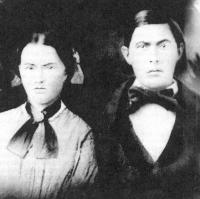
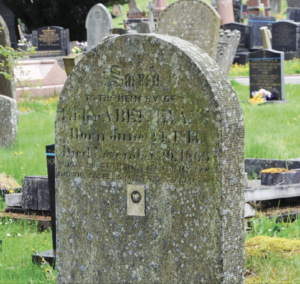
Julia Ann Chapman was born on August 20, 1825, in Eugene, Vermilion County, Indiana, to Isaac Benjamin Chapman and Solona Brown Chapman. She married Isaac Lee and had three daughters: Mariette, born in 1846, Elizabeth Ann, born November 20, 1848; and Eliza Ann, born December 20, 1850.
Isaac helped build the Nauvoo Temple. He was a member of the Nauvoo Martial Bank. He started west with his father’s family in 1849, but his wife, Julia Ann, became ill on the trail, which delayed his return. She died July 10, 1852, at Loops Fork, leaving him with three small daughters. He arrived in Utah in 1852 (the same year Isaac Moroni Chapman arrived in the valley with his three remaining sisters).

When Isaac Lee was forced to pull his wagon out of Brother Benson’s train because of his wife’s illness, he camped for a few days to allow her to recover. Even though she was rested and had fresh meat, she remained weak. Her cough was sometimes violent.

Having concluded that they could not make the trip West that summer, they turned back and, by easy stages, made their way to Loup’s Fork. With good milk and the tender care of the sisters living there, Julia partially recovered. Feeling that his wife, during the winter, might have a better chance to recover back in Kanesville, Isaac made a bed for her in the wagon box. Slowly and carefully, he returned to Missouri.

While they were dismantling the houses at Winter Quarters, Isaac got a place there for temporary shelter. Immediately, Isaac set about finding a home. He was an experienced sawmill man. He found employment immediately.

Leaving Julia in the hands of a few women still living in Winter Quarters, he began looking for a more personal place to live. He was unwilling to take her into Kanesville, for it was often ravaged by malaria and cholera. Finally, he found a farm on the east bench above the river, which had been abandoned by one of the Saints leaving for the West. He moved onto this farm, hauled one of the log houses from Winter Quarters, and set it up in a protected ravine filled with trees and shrubs. Here, Julia felt more at home.

Realizing that Julia was pregnant again, they both did everything possible to strengthen her for the ordeal. The baby came on a chilly night on November 19, 1850. For a time, whether Julia would make it was touch and go. The baby was farmed out to a big, healthy Scandinavian woman who nursed it along with her own child. As the spring came, Julia ate dandelion greens, drank milk, and lay stripped to the skin in a protected place until her body was tanned like leather. During this summer, Isaac raised a crop on the land he occupied. Although she was not well, Julia lived comfortably through the winter of 1851, doing as little as possible, allowing her body to heal.

With the coming of spring, the brethren made a concerted drive to get all the Saints out of Kanesville. Other than for Julia’s health, Isaac was well equipped to travel. In the late spring heat, Julia gained some weight and felt pretty well. Deciding that they could safely make the trip, Isaac loaded the wagon, making a special bed for his wife. At first, she did very well, cheerful that they could finally go West and be with their relatives. But as the trip continued, the strain began to tell. Some mornings, she was unable to get up. When they crossed Loup’s Fork, they again pulled out of the line, getting one of the elders who lived at the Fork, Isaac and he administered to her. She seemed to relax and feel better, but she lapsed into her last long sleep during the night.

After they buried her, Isaac was so grief-stricken that he sat for days, staring in front of him, felled by his tragedy.

James Walsh came to his fire one evening and said,

“I have seen many tragedies along the trail, and I respect your grief. Now you owe your little ones an even greater responsibility than before. Now you must be both a father and a mother to them. Crying tears of anguish over your lost wife is right and proper, but you must never allow your grief to immobilize you. What would Julia want you to do? You have begun a great quest, which she was too weak to finish. Now you must finish it for her.”

Out in the night, Isaac walked for hours, asking why? Why? But with the coming of midnight, a peace enveloped him like a cloud. His beliefs taught him that although her body was dead, she was still alive and would wait for him. He must not fail her. The following day, July 10, 1852, he gathered a bunch of wildflowers and placed them at the base of the rude plank marker. They yoked up the oxen and started West.

Happy
Happy
0 %
Sad
Sad
0 %
Excited
Excited
0 %
Sleepy
Sleepy
0 %
Angry
Angry
0 %
Surprise
Surprise
100 %
You May Also Like

FREESTONE, Thomas and Ann Fall: Perseverance!

Their journey across the plains was an arduous one, but late in 1853 they arrived in American Fork. One year later the family moved to “Mountainville” (later named Alpine) where they lived in the fort for protection against the Indians, while they began to re-establish their affairs. Exerting all their efforts, they partially overcame their hunger by eating roots, pigweed and wild onions, and beat back enough crickets to raise a full crop of grain. In spite of their many trials the hardy family hung on to their testimonies and endured.
View Post

WOOLSEY, Jacob C. & son Joseph H. : 1848 Pioneers

Jacob C. Woolsey is the "brother-in-law who dug Abigail Lee's grave" at the "9th or Last Crossing of the Sweetwater" on 2 Sep 1848. Abigail Schaeffer is the widow of the above Joseph Woolsey and eight of her twelve children joined the Church and came to Utah! She was married to John D. Lee "for her protection and for convenience of traveling."
View Post

ALLEN, Alanson David

His father, Albern, and oldest brother, Rufus, were with the Mormon Battalion on their march to California. They were released on July 16, 1847 and went to Utah. Alanson stayed with his family at Winter Quarters. He was seventeen at the time. Realizing their need for winter supplies, he went back to Eastern Missouri and bought and harvested crops and brought them back to his family at Winter Quarters.
View Post

REES, Thomas: Poor Welch Immigrant

Thomas and his family wanted to go to Utah with the saints, but he didn’t have the money to do so. Thus, their pioneer pilgrimage began on their destitute little farm in Wales with an effort to save money for the journey. It took until 1868 for them to save enough to send Brigham and one of his older sisters to Utah. They sent them off with instructions to save money and help the rest of the family to come. Brigham sailed to the states on the steamship Colorado. If his sister traveled on the same ship with him, it was Elizabeth because she is the only one to closely match name and age (5). The ship carried 600 saints bound for Utah, and was the last of the year. It departed Liverpool on 14 July, 1868 (6), and arrived at the Castle Garden Immigration center of New York on 7 August, 1868 (7) They traveled by train to Florence, Nebraska (another account says the train took him to Wyoming), then walked the last 800 miles from there to Utah because the rail hadn’t been completed to Ogden yet. Records record him arriving in Utah in 1869, so he must have been delayed en-route. Brigham would have been one of the last of the pioneers to walk to Utah before the Golden Spike was driven in Ogden.
View Post

SAVAGE, David Leonard: Indian Peacekeeper

In twenty minutes, he was decked out in war paint and feathers and riding through Cedar Fort giving his terrifying war cries and soon the mountains rang with the death call of these desperate people. They were on the war path for sure, assembling their forces they hid in a ravine near Lehi. When the stage coach passed, the driver and all the passengers were massacred.
View Post

AVERETT, Elisha – A Pioneer and His Fife

HE WOULD MAGNIFY HIS MASONARY GIFTS AND TALENTS. ORSON HYDE CALLED ELISHA TO SETTLE DIXIE AND HIS FAMILY ANSWERED THE CALL AND WOULD CONTINUE TO FOLLOW & MOVE WHERE HE WAS NEEDED…. ELISHA AND TWIN ELIJAH WORKED IN CONSTRUCTING ST. GEORGE, MANTI, AND SALT LAKE TEMPLES AND WERE ALSO INSTRUMENTAL IN BUILDING COVE FORT, KANAB FORT, DIXIE COTTON MILL (IN WASHINGTON, UT.), PIPE SPRING FORT,ARIZONA, HEBER TABERNACLE, AND MANY OTHER HISTORICAL SITES.
View Post

HATCH, Meltiar

Submitted by Will Allphin, Chapter member.  This information came from:  The Hatch Genealogical Society, Prominent Men of Utah, Family histories. Meltiar Hatch was born in Farmerville, New York, July 15,…
View Post

ALLEN, Albern

A court-martial was held by the officers and priests, and without being heard in their own defense, the brethren were sentenced to be shot on Friday morning on the public square in Far West, in the presence of their wives and families. At this unprecedented action General Doniphan objected, saying he would have nothing to do with such cold-blooded actions, and he would draw off his brigade from the army. This probably saved the lives of the prisoners, as the sentence was changed and the prisoners were taken to Independence, Jackson County (3).”
View Post