RICHAN, John

0 1
Read Time:3 Minute, 21 Second
Date of Birth
24/Dec/1799
Place of Birth
Sunderland, Durham, England UK
Date of Death
21/Sep/1878
Place of Death
Pleasant Grove, Utah, Utah USA
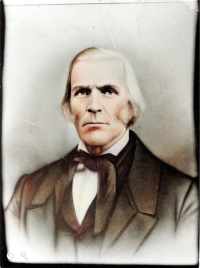
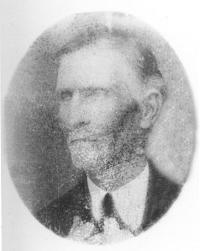
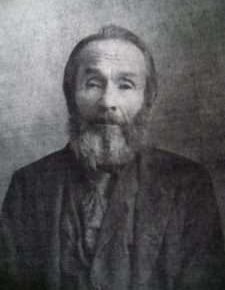
John Richan, a Pioneer Tinsmith John Richan was born on 24 December 1799 in Sunderland, Durham, England. At the age of twelve he was indentured as an apprentice to learn the art of a tinsmith.

A tinsmith, sometimes known as a tinner, tinman, tinplate worker is a person who builds and repairs things made of tin or other light metals. A tinsmith will fabricate cold metal items like candle holders, pitchers, forks and spoons that won’t rust. John, as an apprentice, receive a fair education and along the way learned about music. He also became a voice music teacher. At the age of seventeen he became a journeyman tinsmith.

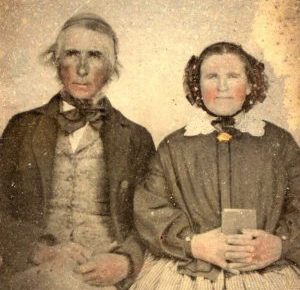
John married Mary Ann Henderson in 1832. Mary Ann and her baby boy died during childbirth. John then married Margaret Rayne Wardell in 1838. They had two girls and the three boys who became tinners like their father.

Elders from the Church of Jesus Christ of Latter-day Saints met and taught the Richan family in London, England. John was 51 years old, Margaret (41), Canute (13), Caroline (8) when they were baptized in 1851. Bordecia had died earlier and William and Frederick were three and two years old.

The Richan family were active in the church for many years with a desire but they did not have the money to migrate to Zion in the United States of America. Sadly, Canute died in 1859. The Richan family decided to participated in the Perpetual Emigration Fund (PEF). Because of finances, they sent their oldest child Caroline (20) in 1863 to Utah to earn money to help the rest of the family.

Next William (17) came to Salt Lake City in 1864 and established his own tin shop. In order to open a shop William had to purchase tinplate sheets from iron rolling mills in the eastern United States and have the sheets shipped to his shop. Finally, John, Margaret and Frederick came to New York City by ship in 1866.

They continued to travel by train to Wyoming, Nebraska and joined an ox-train company of 375 Saints led by Capt. William Henry Chipman. The Company, while camped near the Platte Bridge, Indians stole about 100 head of cattle. Without the cattle to pull the wagons the Company was stranded.

Another wagon train led by Capt. Arza Hinckley stopped and rescued them by providing 40 sacks of flour and enough cattle to pull the wagons. The family finally arrived in Salt Lake City in Sep. 1866. John and Frederick went to work in William’s tin shop in Salt Lake City for a time.

John then moved to Pleasant Grove, Utah where he opened his own tin shop. Frederick worked with William in Salt Lake City for a while longer then bought a farm and went into farming. William later moved his business to American Fork, Utah and opened a tin shop there.

John and Margaret were sealed in the Endowment House in Salt Lake City on 1 November 1868. John was now 68 years old and Margaret was 58. John continued to work as a tinsmith until he was quite old. He served as the music chorister in the Pleasant Grove Ward until his death in 1878.

One of his joys was teaching music to children. Rose Brown Hayes (a music student of John when she was 8 years old wrote)

“It seemed his greatest delight was to tone down and train into harmony the croaking voices of young children”.

John Richan died on 21 September 1878 in Pleasant Grove, Utah at the age of 79. Margaret died fifteen years later on August 26, 1893, at the age of 83. They are both buried in the Pleasant Grove City Cemetery, Pleasant Grove, Utah. John and Margaret were valiant and faithful pioneers.

Compiled by Daniel K Adams, third great maternal grandson of John Richan

Happy
Happy
0 %
Sad
Sad
0 %
Excited
Excited
0 %
Sleepy
Sleepy
0 %
Angry
Angry
0 %
Surprise
Surprise
100 %
You May Also Like

ORR, Robert Ustain: A Short Biography

Robert Orr was quite the character on the stage, taking mostly comedy roles. Adept at showing the humorous side of life, he was a good pantomime and had plenty of chances to use his talent. When they were able to have a stage curtain made, he was in charge of running the curtain up and down and kept the coal-oil lamps all clean and filled. The first play they put on was called "Ten Nights in a Bar Room", which Robert had a part. This play was a favorite for many years and they played it at the opening of each season. They also took their plays over to Camp Floyd, Eureka and Tooele.
View Post

GREEN, Robert Kenyon: Biography (1806-1884)

Winter in Ponca CampOn July 1st, 1846 a ferry was completed to cross the Missouri River. On the western side, a place called ‘Cold Spring Camp’ was established on recommendation of Bishop George Miller. It was late in the year, and the Green family pioneers had been delayed by heavy rains. They waited for instructions to either press on to the Rocky Mountains or find a place to spend the winter. Companies organized by Brigham Young and Heber C. Kimball at the Cold Springs Camp combined with Bishop Miller's Company and became the advance party for the church.
View Post

POND, Stillman Pond

On February 2nd 1846 the migration west began. Stillman and his family remained in Nauvoo until after the battle of Nauvoo in September 1846 when they were driven at the point of a bayonet across the river. Tribulations and hardships were many as the winter set in early and the Mormon refugees were without the proper food, clothing and shelter. The camp was ravaged by malaria, cholera, and consumption. The Pond family fell victim of all of these diseases. Stillman’s wife, Maria, became consumptive and all the children were afflicted with malaria. Snow fell early on the plains of Iowa and along the way Stillman and Maria buried their son Lowell Anson in September of 1846 on the plains of Iowa. Maria’s body wracked with pain and bowed down with grief for the loss of her son; was unable to walk and was confined to her bed in the back of the wagon with the fever of malaria. In this condition she gave birth to twin boys Joseph and J. Hyrum, the later part of September and the twins died a few days later and were also buried along the trail in Iowa.
View Post

ALLEN, Elihu Moroni

About 1863 the Allen family settled in Huntsville, Weber, Utah where the last 7 children were born. Their first home in Huntsville was a two-story log house. Elihu made a lot of the furniture they used. He made chair frames from pine trees and made the seats from braided leather that he cured to a very soft pliable seat.
View Post

KILLIAN, Captain John

When the Elders administered to me, Brother Killian being mouth, I was in bed. He poured the oil on my forehead and I jumped right out of bed and put on my clothes. On hearing that Robbins was going to Quincy in the morning, I walked up to his house, three-quarters of a mile, and went with him in his carriage to Quincy, remained all day and returned with him at night.”
View Post

STEPHENS, Evan

This article originally appeared in Vol.50, No.1 (2003) of Pioneer Magazine. by Janet Peterson Evan Stephens‘s philosophy of Mormon music, “that which breathes optimism and not pessimism, “1 permeates the…
View Post

ROBERTS, Levi

After travelling over the mountains one day we met with some of our brethren from the Valley. This was a time of rejoicing. Captain Brown who left us at Santa Fe with the sick which went by the way of Fort Kearney and a few brethren with him from the Valley, brought news that we were not to go to the Valley, and told us we had better stay another year in California. So the company divided right where we met each other; some went on to Winter Quarters; some to the Valley, and some turned back. Daniel Browett, Slater, Cox, Levi Roberts and myself turned back to Sacramento and went to work for Mr. Sutter who treated us very kindly. I sent a mule to my wife with Brother Harris, which she got…. We all went to work at the same place for Captain Sutter. We took the work of cutting a millrace. Brother Browett went [p.379] to work with the millwright, this was in September and later on in the fall, I and two others took sick with the bilious fever. We were so sick we couldn't help each other to a drink of water. We lay under some ties and had to crawl around with the sun to keep from making us chill…. Our appetites were very poor, and our food was flour, water and squash. Had it not been for the thoughts of my wife and family I could have died, but we all three recovered after awhile and went to work on the millrace again and worked all winter. Sometime in the winter two of the brethren who were working for Mr. Sutter in the mountains found gold in a tailrace they were making. Mr. Sutter let me see the first gold they found before sending it to San Francisco to get it tested. In May 1848 some of the brethren and myself made a trip in the mountains to try and find a road over (instead of going down Truckee River, as we had to cross it about 20 times) but when we got in the mountains we found so much snow we had to return, and on our way back I stopped at what we called the Mormon Island, where there was some of the brethren at work getting gold, Brother Sidney Willis and his brother; also Brother Hudson. I stayed here for a short time and got some gold.
View Post

HINTON, James Maurice: Life Story

I herded those sheep through what they call the Bear Hole. I’d start them through the East side and it would take them ten days to go through. I herded sheep four years for Wilts Imlay on Kolob in the summer and on the Arizona Strip in winter. The wages were $40 a month and board. I’ve got more to show for those four years than any other time in my life.
View Post