STAINES, William Carter

0 1
Read Time:1 Minute, 34 Second

The following article first appeared in Vol. 60 No.2 of Pioneer Magazine

by Ronald W. Andersen

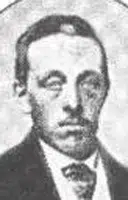
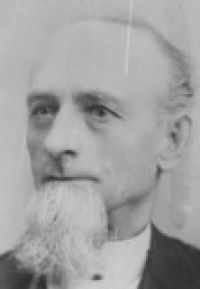
During the first years of his residence here, William Carter Staines engaged in various avocations. As an expert gardener, Staines not only cultivated fruits and flowers upon his own premises, but superintended at one time the gardens and orchards of President Brigham Young. He also had a farm of 300 acres in Davis County.

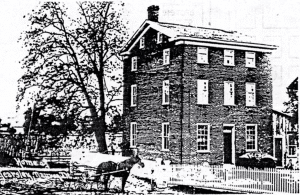
Staines was 36 years of age when he married Lillias Thompson Lyon on October 30, 1854, and began building his impressive home a block north of where the Utah Jazz play their basketball games. Negotiations for the settlement of the Utah War took place there between new Governor Alfred Cummings and replaced Governor Brigham Young. Sir Richard Burton, author of City of the Saints, was entertained there in 1860 and portrayed Staines as a Horatio Alger–like character, a poor man who became rich in America through effort.

Thomas L. Kane also spent time there. The home was later sold to William Jennings, Utah’s first Mormon millionaire, owner of the Eagle Emporium on Main Street. Jennings made extensive additions to the home in the 1870s and named it Devereaux House, after the area of England where he grew up.

Staines’s connection with the Deseret Agricultural and Mining Society began when it was incorporated in January 1856. His interest and success in fruit culture is partly indicated by the fact that on one occasion, September 18, 1857, he had upon his table from his own orchards six kinds of peaches, some of them measuring nearly 10 inches in circumference; also grapes of his own raising.

As a purveyor of fruits and vegetables, Staines was well known in the city, and in 1857 was a partner with David Candland in Candland’s saloon (restaurant) on Main Street, just south of the Council House.

Happy
Happy
0 %
Sad
Sad
0 %
Excited
Excited
0 %
Sleepy
Sleepy
0 %
Angry
Angry
0 %
Surprise
Surprise
100 %
You May Also Like

ALLEN, Albern

A court-martial was held by the officers and priests, and without being heard in their own defense, the brethren were sentenced to be shot on Friday morning on the public square in Far West, in the presence of their wives and families. At this unprecedented action General Doniphan objected, saying he would have nothing to do with such cold-blooded actions, and he would draw off his brigade from the army. This probably saved the lives of the prisoners, as the sentence was changed and the prisoners were taken to Independence, Jackson County (3).”
View Post

ASH, Alma

This article originally appeared in the July/August 1983 issue of Pioneer Magazine by Steven R. Sorensen, City Creek Chapter British Convert’s Pioneer Spirit Waits 24 Years to be Fulfilled Alma…
View Post

WOOLSEY, Abigail Shaeffer

John D. Lee had been ill with a heavy fever, probably the 'rocky mountain fever' and he was just starting to mend when Abigail, "Momma", came down with that same "rocky mountain fever", and soon went into a coma. Lee called for a stop here on the Sweetwater, where her family gathered around her and her daughters desperately tried to care for her. But to no avail. Abigail opened her eyes, looked lovingly on her worried, sad family and then died around midnight on the third of September 1848.
View Post

ALLEY, George H.

It is not difficult, then, to see this young man fitting perfectly into the scene, when, on April 3, 1860, the riders of the Pony Express began their mad, daring dash between St. Joseph, Missouri and Sacramento, California. He was ideally equipped for this adventure. His career as a "Pony Rider" began when he signed in at the Salt Lake City Station located on the east side of Main Street between First and Second South Streets.
View Post

ALLEN, Joseph Stewart: Blessings For Those Who Serve

"I simply cannot go on any farther; my feet are too sore." They sought out a fallen log (tree) and there sat down to rest. There, too, they knelt down to pray. They prayed for some shoes out there in that raw, bleak country away from stores or from any town where shoes could be bought if they had the money to buy them. They must have had great faith for after sitting there awhile longer to rest they rose to go on and saw there beside the log a pair of shoes. "They were surely meant for you, Brother Allen," said his companion. "They would not do for me at all. They are too small." So Joseph put on the shoes which fit perfectly and they traveled on.
View Post

YEARSLEY Sr., David Dutton: Giving His All

The Yearsleys made their way through the bitter cold winter weather to Winter Quarters. The hardships were so extreme that some entire families were buried along the way. “Thus, from day to day, slowly and wearily traveling, went the exiled Saints across the undulating surface of snow-covered Iowa. The Roads were very bad, the weather cold and stormy, and the streams, now frozen, now swollen by spring freshets, almost and at times quite impassable. Again and again they were obliged to double teams on the heavily loaded wagons, to drag them through deep streams and miry marshes on their line of travel. Some days three or four miles would be the extent of their journey. Many a halt was made, at times for weeks (5).”
View Post

ROBERTS, Levi

After travelling over the mountains one day we met with some of our brethren from the Valley. This was a time of rejoicing. Captain Brown who left us at Santa Fe with the sick which went by the way of Fort Kearney and a few brethren with him from the Valley, brought news that we were not to go to the Valley, and told us we had better stay another year in California. So the company divided right where we met each other; some went on to Winter Quarters; some to the Valley, and some turned back. Daniel Browett, Slater, Cox, Levi Roberts and myself turned back to Sacramento and went to work for Mr. Sutter who treated us very kindly. I sent a mule to my wife with Brother Harris, which she got…. We all went to work at the same place for Captain Sutter. We took the work of cutting a millrace. Brother Browett went [p.379] to work with the millwright, this was in September and later on in the fall, I and two others took sick with the bilious fever. We were so sick we couldn't help each other to a drink of water. We lay under some ties and had to crawl around with the sun to keep from making us chill…. Our appetites were very poor, and our food was flour, water and squash. Had it not been for the thoughts of my wife and family I could have died, but we all three recovered after awhile and went to work on the millrace again and worked all winter. Sometime in the winter two of the brethren who were working for Mr. Sutter in the mountains found gold in a tailrace they were making. Mr. Sutter let me see the first gold they found before sending it to San Francisco to get it tested. In May 1848 some of the brethren and myself made a trip in the mountains to try and find a road over (instead of going down Truckee River, as we had to cross it about 20 times) but when we got in the mountains we found so much snow we had to return, and on our way back I stopped at what we called the Mormon Island, where there was some of the brethren at work getting gold, Brother Sidney Willis and his brother; also Brother Hudson. I stayed here for a short time and got some gold.
View Post

WOOD, William Sr.

He was with the body of the Saints on their western movement when the call came for 500 of their gallant men to volunteer to fight in defense of the Government against Mexico. He enlisted in the Mormon Battalion July 16th 1846, marching with the company from Council Bluff, Iowa over a trackless plain where foot of man had never trod. On that perilous journey he helped to make roads, dig wells, and suffered untold agonies from hunger and thirst while marching on the desert day after day in the blazing sun. He was discharged at San Diego, California on July 16 1877.
View Post