PRATT, Helaman

0 1
Read Time:4 Minute, 11 Second
Submitted by Tony Tidwell, Great-Grandson,
From Histories by Bertha Pratt and Janae Olson
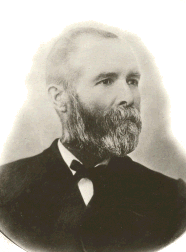
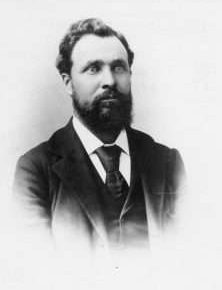
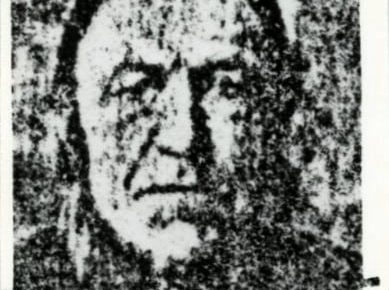
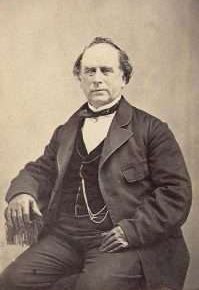
Helaman Pratt, was born May 31, 1846 at Mount Pisgah, Iowa, the oldest child of Parley P. Pratt and Mary Wood Pratt.  The Pratt family spent the summer and winter of 1846-47 in Winter Quarters.  In the summer of 1847 they left for the Salt Lake Valley, arriving in October, 1847 when Helaman was 17 months Old.

Helaman was two weeks short of eleven years old when his father was killed in Arkansas in 1857 so as the oldest of four young children, he had to assume great responsibilities at a young age.

At age 22 Helaman was called to go south to help settle the Muddy Mission in southern Nevada.  Brigham Young said,

“Helaman, I want you to get married and take your wife with you.”

Helaman went that evening to see his fiancée to tell her of his call.  She felt she could not endure the hardships at a new colony so she told him to go alone and she would wait for his return.  He told her that if she would not go with him, she need not wait for him.

On the trip they stayed at the home of a Southern gentlemen named Elijah Billingsley.  His youngest daughter, Victoria, was a sweet seventeen-year-old girl. Helaman courted and married her; they became parents of 8 children.

The Moapa Indians, who had few firearms, were interested in those of the white men.  Under urging from the Indians white men demonstrated their guns.  A crow was spied sitting on a tree limb.  Helaman took his pistol and fired with little aiming.  The Indians went to see the results and came back with the dead crow and the head that Helaman had shot off.

This created a legend of Helaman’s marksmanship and provided him with profound respect.    Helaman, however, realized it was more good luck than good marksmanship so he would not shoot again in the presences of the Indians.

Helaman was kind to the Indians but would not be imposed upon by them.  Once when two young Indians were taken in the act of stealing grain, they were locked in the school house directly across the road from Helaman’s home.  Knowing other Indians would come looking for the two young men, Helaman, determined to have justice.  He stationed himself in the doorway to the school with pistol in hand, his wife stood in the home doorway armed with a shotgun as other white men stood by.

The Indians rode up, the chief jumped off his horse, grabbed Helaman by the collar and Indians with him took aim with their arrows.  White men with Helaman aimed their guns at the Indians.  Without much agitation, Helaman, through an interpreter, talked and reasoned with the Indians.  The two young men were released with a promise from the chief that the whites would not be bothered by stealing again.  From that day the Indians considered Helaman their friend.

On President Young’s advice Helaman married Dora Johanna Dorothy Wilcken on April 20, 1874.  Shortly thereafter Helaman, Erastus Snow and Brigham Young, Jr. were assigned by Brigham Young to explore for a site in Mexico that could become a refuge for Saints. A site was chosen in northern Mexico in the state of Chihuahua.

Helaman was called as president of the Mexico Mission where he served from 1884 to 1887.  Despite having malaria with frequent chills and fever, he worked hard in his calling.  Upon his release, he was set apart by President John Taylor to help colonize Saints in Mexico.  Helaman helped  acquire land, secure titles, water rights and to build canals and ditches.  President Taylor told Helaman he was called until death released him, he was to become a Mexican citizen and to be active in government.  He accepted these conditions.

In addition to malaria, Helaman had stomach and heart problems.  He became confined to bed and called his children to his side so that he might give them advise before he died.  He uttered a few words then seemed to pass away; after several minutes his eyelids quivered and his lips moved.  “I’m all right,” he said, “My spirit left my body and was in the upper part of the room when I was met by Erastus Snow, my dear friend.  Brother Snow said,

‘Brother Helaman, go back and take up your body.  Your mission is not yet complete.”

Helaman replied, “Brother Snow, my stomach and heart are completely worn out.  I cannot go on,” Brother Snow Said, “You still have a great work to perform.  Go back and take up your body and your stomach and heart will be made whole.”  Helaman soon recovered his strength and was a well man.  He lived 16 years longer, served as stake president of the Juarez Stake and had three more sons.  Helaman died in Colonia Dublin, Mexico after being ill for four hours, on November 26, 1909 at age 63.

Happy
Happy
0 %
Sad
Sad
0 %
Excited
Excited
0 %
Sleepy
Sleepy
0 %
Angry
Angry
0 %
Surprise
Surprise
100 %
You May Also Like

ATKIN, Thomas

Mary became seriously ill with a "rupture" in her side. The doctors could do nothing to help her. Thomas, watching her suffer, resolved he would be more devoted in serving the Lord, if only the prayers and desires of his heart and those of his children regarding his beloved wife would be granted. Eventually, Mary was healed. He did not forget the resolution and promise he had made with the Lord and commenced in earnest to inquire of his spiritual advisors.
View Post

BLANCHARD, Amelia Jane Davis

The Davis family, being among the first settlers to Cache Valley, suffered untold privations and hardships. Amelia remembered the trials they had with the Indians, and how frightened she was. They would come to the door begging for food and no one dared to turn them away. As Ann H. fixed food for them, the Indians would play with the white children. When coming out of the house with food one day, Ann H. discovered the Indians had exposed her children to the black smallpox. The twins soon came down with the illness. The settlers were all so frightened of the deadly disease that a log shelter was hurriedly built a short distance north of the Logan Cemetery. The Davis family, including the stricken twins, moved there in isolation. Amelia told of rats, mice, and snakes so thick that the healthy children took turns with willows, brushing the snakes from the beds of the sick children. Their beds located on the floor were made with a straw tick. The weather was severe coming through the open cracks of the shelter. The family was badly neglected and almost starved to death. Remarkably, the twins recovered from the smallpox epidemic, but after being home only a short time, diphtheria struck, taking the lives of both twins, Henry and Catherine. Childhood days were very strenuous and hard. These early settlers had lots of troubles, yet they had some thrilling and good times too. Amelia often told stories of the exciting sleigh rides, dances and house parties they enjoyed. How she loved her church activities! Amelia's greatest desire was to do good for others and scatter sunshine wherever she went.
View Post

William Henry Adams, Sr.

William Henry Adams, Sr., was one of the first three settlers of Pleasant Grove on July 19, 1850 with Philo T. Farnsworth and John Mercer. He scouted the area along Provo River and came back with his report of straight logs for houses, and rocks for foundations. He surveyed the town site with these two assisting and set his own stakes for forty acres.
View Post

CARLISLE, Richard & Jane Field

Members of the family were baptized at various times in 1849 and 1850. Richard became the Presiding Elder of their branch. In 1851, on the “Good Ship Ellen,” they emigrated to America, except for their oldest son, Thomas, who came a year later. On their way up the Mississippi River, Jane died in St. Louis on 24 June 1851. She had done the washing for a woman afflicted with the dreaded cholera, so common among emigrants on that river. Jane caught the disease and died almost immediately. It must have been very difficult for Richard to manage his large family during the years following Jane’s death. First he had to get the whole family across the Plains, then provide a home for them in a new land. The bereft father and his motherless brood stayed to work in St. Louis during the remainder of the first year. The youngest son, Richard, hired out to a Mormon family and came west with them, the first of his own family to arrive in the Valley. The oldest son, Thomas, had by then joined the rest of the family in St. Louis.
View Post

YEARSLEY Sr., David Dutton: Giving His All

The Yearsleys made their way through the bitter cold winter weather to Winter Quarters. The hardships were so extreme that some entire families were buried along the way. “Thus, from day to day, slowly and wearily traveling, went the exiled Saints across the undulating surface of snow-covered Iowa. The Roads were very bad, the weather cold and stormy, and the streams, now frozen, now swollen by spring freshets, almost and at times quite impassable. Again and again they were obliged to double teams on the heavily loaded wagons, to drag them through deep streams and miry marshes on their line of travel. Some days three or four miles would be the extent of their journey. Many a halt was made, at times for weeks (5).”
View Post

ALLEN, Andrew

WHILE WORKING AROUND A THRESHING MACHINE, ANDREW LOST HIS ARM IN THE GEARS, NEEDING AMPUTATION ABOVE THE ELBOW. IT WAS SAID OF ANDREW, HE COULD HARNESS A TEAM OR ANY OTHER WORK ON A FARM AS QUICKLY AS ANY MAN WITH TWO ARMS AND HANDS.
View Post

WARNICK, Anders Peter: Stalked by Cholera in 1866

From 1863 to 1875 cholera swept through Europe. The Austro-Prussian War in 1866 accelerated its spread. That fateful year 250 thousand people died from the lethal disease in Prussia and Austria, 90 thousand perished in Russia, and 113 thousand succumbed the next year in Italy. Hungary, Holland, and Belgium were similarly hard hit by the disease. Little wonder, then, that the virulent bacteria made its way on board the ship that the Anders Peter Warnick family boarded in Hamburg, Germany on June 1, 1866.
View Post

MITCHELL, James Jr. & Anne Hull

Up north in the Upper Snake River Valley, the virgin soil was bringing forth bounteous crops. This land could be had almost for the asking, so James took advantage of the pre-exemption rights of the Homestead Act and secured 360 acres of virgin soil just two miles north of Shelley, Idaho. So it was that in 1885, James came to Idaho.
View Post