HARRIS, Silas: YOU WILL NOT HAVE TO FIRE A GUN

0 1
Read Time:2 Minute, 6 Second

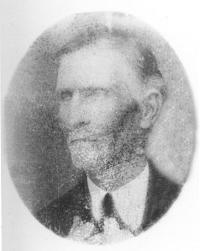
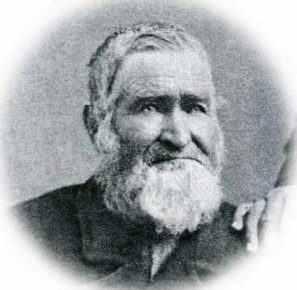
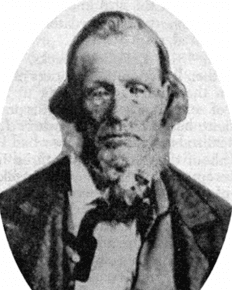
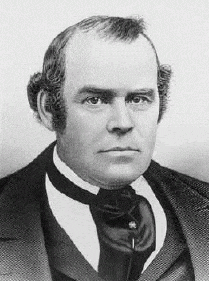
Silas Harris was born in Lawrence County, Indiana, on October 14, 1824.  He was the son of Moses and Fanny Smith Harris.  He was baptized a member of the CHurch of Jesus Christ of Latter-day Saints at Far West Missouri when he was 14 years old.  When he was 22 years of age his family headed West for the Salt Lake Valley.  When the company arrived at Council Bluffs, Silas tells  us in his own words what happened next. 

“Two or three days before our arrival at Council Bluffs, the news reached us that a battalion of our people had been called by the government to join the U.S. Army to fight Mexico, which country was threatening some of our territory.

Without any serious thought on the subject, I said I was going. The saying uttered lightly, proved prophetic. 

I joined Company B under Captain Jesse Hunter and was with the Battalion sharing its fortunes until disbanded at Los Angeles in 1847.  

At Fort Leavenworth I was taken sick with mumps. Rather than go on the sick list in the hands of an unfriendly doctor, I marched in the ranks, taking such care of myself as I could under the circumstances, and taking the advice of my Uncle William Hawk. 

I did not recover until the Battalion reached Santa Fe. Much of the time during the march I acted as teamster. 

Before we left for our long journey, President Brigham Young promised the Battalion boys, that if they would be faithful and not unnecessarily destroy property belonging to others as they passed through, and not destroy life, they would not have to fire a gun. This promise was realized by our Mormon boys.”

Silas returned to Utah in 1848.  He went on to marry and have a large family.  He served as a church leader.  He establish Zion wherever he went.   His faith to follow the counsel and guidance of a living Prophet is a testimony that the Lord will bless us when we obey.  

Silas remained faithful to the Church and to the prophet Brigham Young. He learned, as we all must, the significance of what the Lord meant when He said, “What I the Lord have spoken, I have spoken, and I excuse not myself; and though the heavens and the earth pass away, my word shall not pass away, but shall all be fulfilled, whether by mine own voice or by the voice of my servants, it is the same.”  (Doctrine and Covenants 1:38)

Happy
Happy
0 %
Sad
Sad
0 %
Excited
Excited
0 %
Sleepy
Sleepy
0 %
Angry
Angry
0 %
Surprise
Surprise
100 %
You May Also Like

MOLEN, Jesse: The Life and Struggles

Upon arrival in Salt Lake City they had very little food or other provisions. They were required to subsist on plant roots to supplement the little other food they had. The next year they experienced the cricket infestation and lost most of their crop. The rigors of the struggle to travel west plus chills and other conditions had taken their toll on Jess’s health.
View Post

HIGGINS, Nelson: Through it All

Prior to leaving Nauvoo, Daniel Allen, Nelson Higgins, and Samuel Shepherd were called as a committee to sell properties belonging to the saints in the Bear Creek area. They were successful in collecting a good deal of money for the saints, but when they returned, the mobs had hit Nauvoo and the exodus had already begun (4). This is the first thread we find that ties the families of Nelson Higgins and Daniel Allen in their dedicated struggle for survival. Their relationship must have been a close one because Daniel’s daughter, Diantha, married Nelson’s son, Alfred. We know Daniel was one of the last three families to leave Nauvoo, so there is a good possibility that the other two wagons were those of Nelson & Samuel. Also, Daniel went to Manti to set up a tannery in 1854, and the two children were married in 1858, so their friendship must have lasted a lifetime.
View Post

William Henry Adams, Sr.

William Henry Adams, Sr., was one of the first three settlers of Pleasant Grove on July 19, 1850 with Philo T. Farnsworth and John Mercer. He scouted the area along Provo River and came back with his report of straight logs for houses, and rocks for foundations. He surveyed the town site with these two assisting and set his own stakes for forty acres.
View Post

ALLEN, Jude

In May 1845, the company turned west from their northwestern trek and moved across western Iowa to Fort Vermillion, a French trading post in the present south-eastern part of South Dakota. This group of Mormons was probably the first Anglo American settlers in South Dakota. Jude and the others in the company spent the next ten months hunting buffalo, herding cattle, putting up log cabins, raising vegetables and putting up hay.
View Post

KARTCHNER, William Decatur: Man of Steel, True to the Faith

The only time for any kind of play was at night, and on one occasion in the Spring of 1836 he stayed at play until after nine p.m. When he went to the house the doors were locked so he had to sleep in the hay in the stable. In the morning he went with the other hands to breakfast and to his surprise Mr. Miles, the old boss had prepared a large whip which he used on William’s back so unmercifully that it raised a solid scab half the length of his back. His cries were heard by all the neighbors, and then he was sent to work without breakfast. His oldest brother, Peter, came from the western country to visit him. Upon hearing his grievances, they laid a plan for William to run away and go with Peter. William had saved up five dollars and asked Peter if that was enough to bear his expenses. Peter told him that he could go without a cent.
View Post