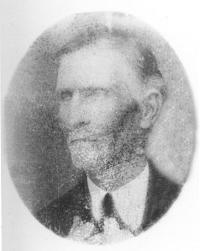
BURT, William

0 1
Read Time:4 Minute, 10 Second
ANCESTOR STORIES OF WILLIAM BURT, A MASTER PLASTERER
Submitted by F. Alan Turner
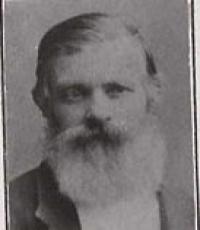
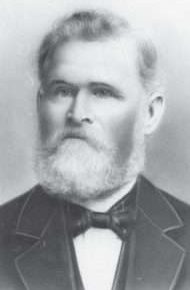
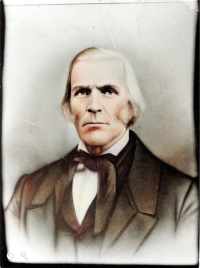
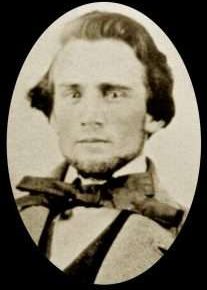
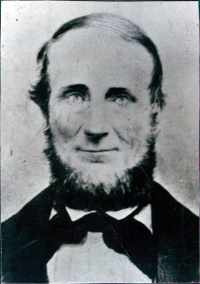
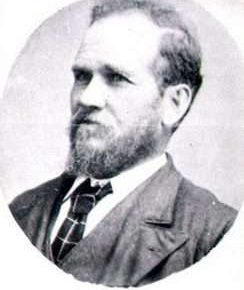
William Burt, my 4th great grandfather did much of the decorative plastering on the Manti Temple.  But the interesting story about him is that in 1864 in the middle of building the Salt Lake Theatre in Salt Lake City, the building was at a point where they were ready to run the ornamental plastering cornice where the walls and the ceiling meet. 
The building superintendent mentioned there was a need for an ornamental plaster, but commented that he did not know of anyone who could do that kind of skilled work.  A man who was working on that job commented that he knew of a man who had “just come over from the old country” who could do that. The construction supervisor told him to “go get him”. 
When he was summoned, they found out that he was a master plasterer as is indicated in the book Temples of the Most High”, so he could easily accomplish what they wanted.  He was given the job of running 120 feet or ornamental cornice where he would put the plaster into his mold, then place it up against the ceiling until it would adhere and hold fast. 
He would then repeat the process and continue doing so until the job was finished.  He ran the entire cornice in one day which was an outstanding feat for that time.  He was thereby given $100.00 for his work as well as $20.00 for his assistant. That would have been an outstanding wage for one days work, but they paid him for being a true artisan.
In 1884 he moved to Provo to plaster on the Brigham Young Academy as well as the state hospital.  While there he plastered many other buildings.
In 1885 he went to Manti where he was the head plasterer over the ornamental plastering work in the Manti Temple.  One may still see a small portion of his work, however, most of it has been demolished during the various remodeling stages that have taken place since then.
Williams’s son John Burt was also a plasterer, having been taught the trade by his father.  Both William and John did ornamental and normal plastering on the Manti Temple. We now go into a direct answer to a promise made by President Brigham Young during the ground breaking that no one would be killed working on the Manti Temple.
Louisa Love, my grandmother, told me this story during the 1950’s:  

Their family home in Manti was just down from the Temple Hill.  Children in those days were not very different from young people today.  She recalled that when her father left for the day to work on the temple that she and her sister were given chores to do.  As is typical for many little girls they wanted to play more than they wanted to do the chores or work that had been assigned to them.

About noon time they would see their father coming down off the temple hill for his noon lunch.  When they saw him coming, one sister would quickly grab a broom and start to sweep the house, while the other sister would quickly grab the dirty dishes remaining on the table and place them in a large dish pan.  She would then throw them under the bed just before her father would enter the house.  So, to her father it looked as though the two girls had been working the entire morning, and the work assigned had been done.

One day John Burt, a son of William Burt, was plastering on the temple about 90 feet above the ground when a man working next to him stepped off a plank which caused the scaffolding to tip.  Immediately John jumped to the scaffolding below him which would have been about 3 to 4 feet. The plank broke and he went right on through falling 84 feet to the ground into an area of large and small stones called “The Rock Chipping Area” or just called “The Rock Chippings”. 

Workers rushed over to him to discover that he was hurt, but had no broken bones and was still alive.  After 10 days resting and recovering, he was back working on the temple as a direct fulfillment to President Young’s promise.

William taught the Gospel as well as many timely lessons to his children.  One was never to speak against the leaders of the church.  He also loved singing the church hymns and was often participating in the ward choirs.  He loved to read good books especially about the lives and works of the church leaders.  Following these many a varied plastering assignments, William moved  to Salt Lake, when on 28 August 1902 he suffered a stroke and passed away shortly thereafter.

Happy
Happy
0 %
Sad
Sad
0 %
Excited
Excited
0 %
Sleepy
Sleepy
0 %
Angry
Angry
0 %
Surprise
Surprise
100 %
You May Also Like

BAGLEY, Edward Alma

Alma was seven years old when his family, along with the S.M. Blavis Company of Saints, left Mormon Grove on June 18, 1855. This was the start of their long trek across the plains, by ox team. Just two days later, on the 20th of June, Alma’s mother, Julia Ann, died of cholera. She got up that morning, cooked breakfast for her family, and before sundown she had died and was buried by the side of the trail along with others. Seventy-five years later, when Alma was eighty two, he described his feelings the day his mother died. He said that the wolves howled and the mourning doves mourned, and then he cried just like he did when he was a seven year old boy.
View Post

ARMSTRONG, Francis

From this humble beginning began the rise of one of Utah's greatest entrepreneurs of his day or any other day. He obtained his own saw mill, then a lumber company, then a construction company. As the years went by, he purchased a flour mill, several huge ranches, and developed sugar companies, banks, savings and loan operations, railroads, transfer companies, insurance companies, and eventually electric street cars (the second in the world) and the supporting electricity production company.
View Post

Elihu Marcellus Allen

Elihu and his family experienced severe persecution while living in Missouri because of their religion. Elihu executed an affidavit on 18 May 1839 in Quincy, Adams, Illinois itemizing a bill of damages against the State of Missouri for $1,000 for property lost and expenses incurred during the expulsion.
View Post

Hyrum Woolsey To Utah – 1848 –

Hyrum Woolsey was closely associated with his brother-in-law John D. Lee, who married two younger sisters of Hyrum Woolsey, Agatha Ann Woolsey and Rachel Andora Woolsey. Hyrum Woolsey worked with John D. Lee as a laborer and as a teamster.
View Post

The Life Story Of Albert Clements And Ada Winchell

Taking the baby's hand from covering his mouth he asked eagerly – "Was President Rigdon there in his place and did he take up the reigns of government and start the good work speeding on with new force & vigor?" "Why do you ask a thing like that, Albert?" Ada questioned, with a look and in a tone that would indicate she almost felt it sacrilege for her husband to have given utterance to such thoughts. "Yes," she continued, "Sidney Rigdon was at the meeting, but he was no better prepared to take the leadership among our people than this baby of ours is.
View Post

POND, Stillman Pond

On February 2nd 1846 the migration west began. Stillman and his family remained in Nauvoo until after the battle of Nauvoo in September 1846 when they were driven at the point of a bayonet across the river. Tribulations and hardships were many as the winter set in early and the Mormon refugees were without the proper food, clothing and shelter. The camp was ravaged by malaria, cholera, and consumption. The Pond family fell victim of all of these diseases. Stillman’s wife, Maria, became consumptive and all the children were afflicted with malaria. Snow fell early on the plains of Iowa and along the way Stillman and Maria buried their son Lowell Anson in September of 1846 on the plains of Iowa. Maria’s body wracked with pain and bowed down with grief for the loss of her son; was unable to walk and was confined to her bed in the back of the wagon with the fever of malaria. In this condition she gave birth to twin boys Joseph and J. Hyrum, the later part of September and the twins died a few days later and were also buried along the trail in Iowa.
View Post

COOLEY, Andrew Wood: A pioneer devoted to family

December 25, 1885. I wish I could have had the privilege of spending Christmas with you at home, but it is our lot to spend it apart. I hope you have spent it in a different way from what I have. We had a good dinner. The warden did the best he could to make the prisoners happy, but when a man’s liberty is gone, he can’t be happy when he has a family at home. I have thought of home the whole day long and so I do every day. I shall never be a happy man if I cannot enjoy the society of those that are my own flesh and blood which my family is. Things look dark to me, but I must hope for the best. God is at the helm
View Post

History of Robert Wiley and Sarah Darling Wiley

Later Sarah decided to give up her business in Liverpool and join her family in Utah. Sarah had the means enough for a very comfortable trip across the plains. She had three teams and wagons fixed up for her trip. She brought many nice things from England. For herself she rode in a carriage across the plains.
View Post

YOUNG, John Ray: Experiences

John R's mother was ill and stayed in Winter Quarters, but John R and his brother Franklin W ( 8 ) left soon after the advanced party, in the Jedediah M Grant Company. In his book John R. states that they were no ones responsibility, but everyones chore boys. It is heart renching to me to picture a sick mother sending a 10 year old son on a 1000 mile treck through wild country with an 8 year old in tow. One morning when they were camped on Hams Fork near Ft Bridger, in what is now Wyoming, a cow was sick and would not get up. John was left behind to try to get her up and bring her to the next camp site. It is terrible to think of the fear he felt as the last dust settled from the wagons as they faded from view. While tending the cow he saw an Indian across the river, and he decided to leave the cow and head for camp. The next morning several men returned to the previous camp site, and found that the cow had been butchered by Soux Indians 'on the war path after Shoshones', This band raided Ft Bridger, but left the Mormon train alone except for one sick cow.
View Post