 0
0
 1
1
From Whitney’s History of Utah, Vol. 4

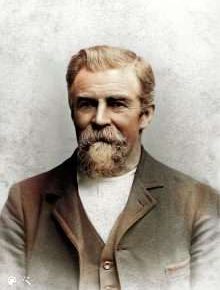
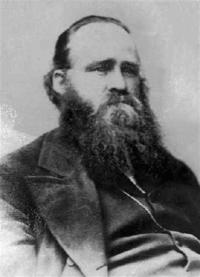
THE name of this noted man—Apostle and Pioneer—is inseparably interwoven with the early history of Utah and other parts of the West. An industrious colonizer, an eloquent orator, and a leader of more than ordinary ability, he was with the Mormon Church and people from the days of Kirtland until long after the settlement of Salt Lake Valley. He performed many missions, and passed through some thrilling experiences during the anti-Mormon troubles in Missouri.
Loved and trusted by the Prophet Joseph Smith, whose affection he warmly returned, and whose confidence he merited, he was likewise a staunch and able supporter of President Brigham Young in all the toils and trials of the exodus from Illinois and the exploration and colonization of the western wilderness. At the time of his death he was still a resident of Utah, though no longer a member of the Mormon community.
Amasa M. Lyman was the third son of Roswell Lyman and his wife Martha Mason, and was born in Lyman township, Grafton county, New Hampshire, March 30, 1813. He was less than two years old when,his father, in order to mend his fortune, started for the West. He never returned, and is supposed to have died near New Orleans, six years after his departure from home. Amasa’s eldest brother, Mason, was indentured to a New Hampshire farmer. His elder brother Elijah died in infancy. Himself, his younger brother Elias and his sister Ruth remained with their mother until she re-married, when Amasa was placed in charge of his grandfather, Perez Mason, with whom he lived until he was eleven years of age. At that time the old gentleman went to reside with his eldest son, Perley Mason, and his grandson, accompanying him, remained at his uncle’s home during the next seven years.
Amasa was about eighteen when his mind became thoughtful upon the subject of religion, and he remained in that condition, though not uniting himself with any church, until the spring of 1832, when he heard the Gospel preached by Lyman E. Johnson and Orson Pratt. This was his first acquaintance with Mormonism. He was baptized by Elder Johnson on April 27th of that year and confirmed by Elder Pratt the day following.
Soon after, on account of the ill-feeling that arose in his uncle’s household over his conversion to the unpopular faith, he resolved to leave and go to the West. Accordingly, on the 7th of May, 1832, he bade adieu to the family and started upon a journey of seven hundred miles. He had but a few dollars in cash, and after this means was exhausted, mostly in traveling by stage and canal, he walked some distance to Palmyra, Wayne county, New York, where he found employment with Mr. Thomas Lacky. This was the man who bought the farm of Martin Harris when he sold it to raise money with which to publish the Book of Mormon.
After working for Mr. Lacky about two weeks and receiving four and a half dollars in wages, Amasa continued his journey by way of Buffalo, Lake Erie and Cleveland, to Hiram, Portage county, Ohio, where he arrived on the 5th of June. There he was kindly received and entertained by Father John Johnson, whose son Lyman had baptized him.
It was at Father Johnson’s house that the Prophet Joseph Smith and Elder Sidney Rigdon were staying when they were brutally mobbed on the night of March 25th of that year. The Prophet was now absent on a visit to Missouri, but he returned to reside at Johnson’s about the 1st of July, and it was there and then that young Lyman first met him. The latter, having entered the employ of Father Johnson, continued working for him until some time in August, when the Prophet said to him, “Brother Amasa, the Lord requires your labors in the vineyard.”
He at once replied, “I will go,” though up to that time he had had no experience as a preacher.
He was ordained an Elder under the hands of the Prophet and Elder Frederick G. Williams on the 23rd of August, and next day he and Zerubbabel Snow (ordained an Elder at the same time) started upon their first mission. They labored in Southern Ohio and in Cabell county, Virginia, until spring, baptizing about forty souls.
From Kirtland, Ohio, March 21st, 1833, Elder Lyman started upon his second mission, having as his companion Elder William F. Cahoon. He traveled in the State of New York for about eight months, and saw one hundred souls added to the Church. He then set out for Kirtland, but on the way met Elders Lyman E Johnson, Orson Pratt and John Murdock in Erie county, Pennsylvania, where a conference was held and Elder Lyman ordained a High Priest under the hands of Lyman E. Johnson and Orson Pratt. He next proceeded to Livingston county, New York, where he labored until early in 1834, when, in company with Alva L. Tippetts, he visited his native State, but was soon recalled to Kirtland and enrolled as a member of Zion’s Camp.
The two sons of Father John Tanner, of Warren county, New York,—John J. and Nathan—accompanied him to Ohio. There he turned over to the Prophet money and teams contributed by Father Tanner and others for the expedition to Missouri. His connection with Zion’s Camp extended until the disbandment in Clay county, Missouri, where he assisted in taking a census of the Latter-day Saints in that section. He then returned to Kirtland, arriving there May 26, 1835, having, on the way, in company with Elder Heman T. Hyde, preached, baptized, and raised up a branch in Madison county, Illinois.
During the three weeks that he remained at the Church headquarters, Elder Lyman married his first wife, Louisa Maria Tanner, daughter of Father John Tanner, previously mentioned; the same who was afterwards cruelly maltreated by the mob in Missouri.
The marriage was solemnized by Elder Seymour Brunson. Five days later the young husband was again in the mission field, mostly in the State of New York, where he labored with success. He was now a member of the first quorum of Seventy, having been ordained about the time of his marriage, by Joseph Smith, Oliver Cowdery and Sidney Rigdon. The following winter he spent at Kirtland, attending the Temple school, and in the spring again labored in New York State, where he performed the ceremony of marriage uniting his brother-in-law and fellow missionary Nathan Tanner, to Miss Rachel Smith.
Now came a short mission to Erie county, Pennsylvania, and then his removal to Missouri.
Amasa M. Lyman set out for the new gathering place at Far West in the autumn of 1837. He and his family were accompanied by Nathan Tanner and household, and Mr. Jared Randall, who had been engaged to provide the means of transportation. Arriving in Caldwell county, Missouri, Mr. Lyman left his family there while he sought and found employment at Fort Leavenworth, where he worked through the winter. In the spring he did a job of work on the courthouse in Chariton county, and then rejoined his family.
When the difficulties arose that eventuated in the expulsion of his people from Missouri, he took the field and was in the very thick of the trouble. Early in October, 1838, he was deputed by the authorities at Far West to find a way to the beleaguered Saints at Dewitt, Carroll county, who were surrounded by mobs in such a way as to preclude any approach to them by ordinary routes, in consequence of which little or nothing could be learned of them. Selecting James Dunn as his companion, and disguising himself in such a manner as to completely conceal his identity, he went forth upon his dangerous errand. The two reached Dewitt in safety, but found the place almost deserted, the inhabitants having fled to Far West. They took dinner with some of the mobbers and departed, but on the way home were intercepted by armed and mounted Missourians and made prisoners.
Their captors required them to take charge of a cannon they were transporting to Daviess county for service against the Mormons, and on this cannon they were permitted to ride. At the end of four days they were liberated, but were compelled to take the back track, not being allowed to rejoin their friends, then only even miles away. By a circuitous route they finally reached Far West.
Mr. Lyman was now given charge of a squad of ten men, whose duty it was to spy out the enemy and discover their designs. He was near Crooked river, engaged in this service, when the battle at that place was fought. He was one of the defenders of Far West, and after the betrayal of the Prophet and his brethren by Colonel Hinckle, and the surrender of the city, he was also singled out as a prisoner and condemned with others to be shot next morning, the execution of which murderous sentence was defeated by General Doniphan.
Mr. Lyman was allowed five minutes to bid adieu to his weeping wife and prattling babe and was then conducted with his fellow prisoners to Jackson county, and subsequently confined in chains at Richmond, in Ray county. On November 24th he was discharged and made his way back to Far West.
The Sabbath after his release he met Colonel Hinckle, the traitor, who proposed to him, now that the Prophet was in trouble, from which he stated he would not escape, that they join and go to the South and build up a church for themselves.
Lyman spurned the base proposition. About this time he was elected a justice of the peace, and did much clerical work for his brethren when they were compelled by the mob to convey their lands, purchased from the government, to pay the expenses of the war waged against them. Though suffering much from sickness at this time, he was closely watched by the mob commander, Captain Bogart, and his emissaries. In March, 1839, he rejoined his family at Quincy, Illinois, they having preceded him out of Missouri.
During the spring he was engaged with others in earnest but futile attempts to rescue Parley P. Pratt and his fellow prisoners from captivity. The following winter he resided with his friend Justus Morse in McDonough county, Illinois, where his eldest son, Francis M. Lyman, the present Apostle, was born, January 12, 1840.
Early in the spring of that year he built a cabin on what was known as the ‘Half-breed Tract” in Lee county, Iowa, and having housed his family therein, went to work boating wood on the Mississippi.
A year later he moved to Nauvoo, and shortly afterward went upon a mission of several months into Northern Illinois, in company with Charles Shumway. A mission to Indiana, with Peter Haws, to secure means for the building of the Nauvoo Temple and the Nauvoo House, was followed by a similar errand to Tennessee in the summer of 1842, when he had as his companions Horace K. Whitney, Adam Lightner and subsequently Lyman Wight.
Amasa M. Lyman was ordained an Apostle, August 20, 1842, and on the 10th of September he started, in company with George A. Smith, on a mission into Southern Illinois. He was afterwards joined by Brigham Young and Heber C. Kimball. The following winter, under the direction of the Prophet, he moved to Henderson county, where he superintended the survey of a new townsite and began to build, remaining there until the summer of 1843. When the Prophet was kidnapped by the Missourians.
Apostle Lyman participated in the movement that resulted in his rescue. Another mission followed, this time to Indiana, where he labored until the spring of 1844, and then repaired to Nauvoo.
At the April Conference of the Church he was commissioned to labor with Elder G. J. Adams in the cities of Cincinnati and Boston. Parting (for the last time) with the Prophet, who warmly grasped his hand, exhorted him to practice the principles he had taught him, and gave him a fervent “God bless you,” he went forth upon his mission.
He was at Cincinnati in July, when he received the news of the double murder in Carthage Jail.
The Twelve Apostles having been acknowledged as the presiding council of the Church, in lieu of the First Presidency, dissolved, Apostle Lyman, as one of that council, continued to play an active part in public affairs. He was in the exodus of 1846. and was one of the Pioneers who accompanied President Young to the Rocky Mountains in 1847.
At Fort Laramie, early in June, he with Thomas Woolsey, John H. Tippetts and Roswell Stevens, was sent horse-back to Pueblo, to lead thence to Salt Lake valley a company of Latter-day Saints en route from the State of Mississippi. Owing to this duty, which was promptly performed, he did not reach the valley until three days after the main body of .the Pioneers. He helped to explore the region, to lay off the city, and otherwise participated in the initial labors of the original settlers. He returned with President Young and others to the Missouri River the same season. The next year he, with his family, came to Salt Lake valley, in charge of a subdivision of the general emigration led by President Young in person.

Not long after his second arrival here Apostle Lyman was appointed upon a mission to California, from which he returned in September, 1850. Six months later he and Apostle Charles C. Rich headed the famous San Bernardino colony, so named from a ranch purchased by them in Southern California, upon which in the following autumn they settled. The purpose was to found an outfitting post, similar to Kanesville on the Missouri, in order to facilitate Mormon emigration from the West. The settlement of San Bernardino was continued until the year 1858, when, owing to the trouble between Utah and the General Government, it was deemed best to break it up and have the colonists return to their former homes. This was done.
During the years 1860, 1861 and 1862 Apostle Lyman was presiding with Apostle Rich over the European Mission. Returning thence he spent the remainder of his days in Utah, his home being at Fillmore in Millard County. He was the husband of eight wives, and the father of thirty-seven children—twenty-two sons and fifteen daughters.
His eventual separation from the Church—an event deeply deplored by the whole Mormon community—was due to his persistent preaching of a doctrine condemned by the general authorities; a doctrine involving a virtual repudiation of the atonement of the Savior. He was excommunicated May 12, 1870, and died at his home in Fillmore, February 4, 1877.


 Brother Joseph


 Pioneer John