0
0
 1
1
Submitted by Tony Tidwell, Great-Grandson,
From Histories by Bertha Pratt and Janae Olson
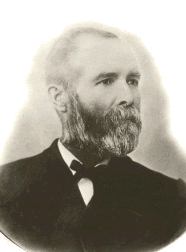 Helaman Pratt, was born May 31, 1846 at Mount Pisgah, Iowa, the oldest child of Parley P. Pratt and Mary Wood Pratt. The Pratt family spent the summer and winter of 1846-47 in Winter Quarters. In the summer of 1847 they left for the Salt Lake Valley, arriving in October, 1847 when Helaman was 17 months Old.
Helaman was two weeks short of eleven years old when his father was killed in Arkansas in 1857 so as the oldest of four young children, he had to assume great responsibilities at a young age.
At age 22 Helaman was called to go south to help settle the Muddy Mission in southern Nevada. Brigham Young said,
“Helaman, I want you to get married and take your wife with you.”
Helaman went that evening to see his fiancée to tell her of his call. She felt she could not endure the hardships at a new colony so she told him to go alone and she would wait for his return. He told her that if she would not go with him, she need not wait for him.
On the trip they stayed at the home of a Southern gentlemen named Elijah Billingsley. His youngest daughter, Victoria, was a sweet seventeen-year-old girl. Helaman courted and married her; they became parents of 8 children.
The Moapa Indians, who had few firearms, were interested in those of the white men. Under urging from the Indians white men demonstrated their guns. A crow was spied sitting on a tree limb. Helaman took his pistol and fired with little aiming. The Indians went to see the results and came back with the dead crow and the head that Helaman had shot off.
This created a legend of Helaman’s marksmanship and provided him with profound respect. Helaman, however, realized it was more good luck than good marksmanship so he would not shoot again in the presences of the Indians.
Helaman was kind to the Indians but would not be imposed upon by them. Once when two young Indians were taken in the act of stealing grain, they were locked in the school house directly across the road from Helaman’s home. Knowing other Indians would come looking for the two young men, Helaman, determined to have justice. He stationed himself in the doorway to the school with pistol in hand, his wife stood in the home doorway armed with a shotgun as other white men stood by.
The Indians rode up, the chief jumped off his horse, grabbed Helaman by the collar and Indians with him took aim with their arrows. White men with Helaman aimed their guns at the Indians. Without much agitation, Helaman, through an interpreter, talked and reasoned with the Indians. The two young men were released with a promise from the chief that the whites would not be bothered by stealing again. From that day the Indians considered Helaman their friend.
On President Young’s advice Helaman married Dora Johanna Dorothy Wilcken on April 20, 1874. Shortly thereafter Helaman, Erastus Snow and Brigham Young, Jr. were assigned by Brigham Young to explore for a site in Mexico that could become a refuge for Saints. A site was chosen in northern Mexico in the state of Chihuahua.
Helaman was called as president of the Mexico Mission where he served from 1884 to 1887. Despite having malaria with frequent chills and fever, he worked hard in his calling. Upon his release, he was set apart by President John Taylor to help colonize Saints in Mexico. Helaman helped acquire land, secure titles, water rights and to build canals and ditches. President Taylor told Helaman he was called until death released him, he was to become a Mexican citizen and to be active in government. He accepted these conditions.
In addition to malaria, Helaman had stomach and heart problems. He became confined to bed and called his children to his side so that he might give them advise before he died. He uttered a few words then seemed to pass away; after several minutes his eyelids quivered and his lips moved. “I’m all right,” he said, “My spirit left my body and was in the upper part of the room when I was met by Erastus Snow, my dear friend. Brother Snow said,
‘Brother Helaman, go back and take up your body. Your mission is not yet complete.”
Helaman replied, “Brother Snow, my stomach and heart are completely worn out. I cannot go on,” Brother Snow Said, “You still have a great work to perform. Go back and take up your body and your stomach and heart will be made whole.” Helaman soon recovered his strength and was a well man. He lived 16 years longer, served as stake president of the Juarez Stake and had three more sons. Helaman died in Colonia Dublin, Mexico after being ill for four hours, on November 26, 1909 at age 63.


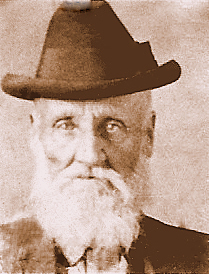
 Brother Joseph