ORR, Robert Ustain: A Short Biography

Robert Orr was quite the character on the stage, taking mostly comedy roles. Adept at showing the humorous side of life, he was a good pantomime and had plenty of chances to use his talent. When they were able to have a stage curtain made, he was in charge of running the curtain up and down and kept the coal-oil lamps all clean and filled. The first play they put on was called "Ten Nights in a Bar Room", which Robert had a part. This play was a favorite for many years and they played it at the opening of each season. They also took their plays over to Camp Floyd, Eureka and Tooele.
0 1
Read Time:2 Minute, 12 Second

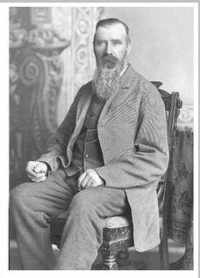
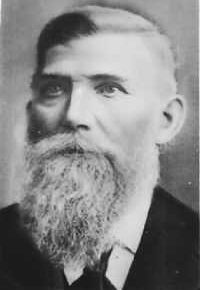
Robert Ustain Orr was born August 2, 1803 at Kilburnie, Ayrshire, Scotland. He was the son of James Orr and Anne Houston. He was an engineer by trade, being employed at one of the large woolen mills where wool fabric was woven.

Robert married Elizabeth McQueen in Scotland April 16, 1828, and they made their home at Kilburnie. It was here they were visited by Missionaries from the Church of Jesus Christ of Latter-day Saints. They embraced the Gospel of the Church and Robert was baptized July 28, 1847 at Kilburnie.

Robert and Elizabeth emigrated to America sailing on the ship “Falcon”, March 28, 1853. Robert was 49 years old and Elizabeth, 47. Robert signed on as an engine keeper on the voyage. Listed on the shipping records sailing with them were their children James, 20, Robert, 17, Matthew, 15, Elizabeth 12, Ann, 9, and John, 7. Elder Cornelius Bagnall was President of the Company and the trip across the ocean took 8 weeks. After landing in America they went directly to Nauvoo, Illinois. They crossed the Missouri River and headed across the Plains with the Appleton-Harmon Company arriving in the Salt Lake Valley on October 16, 1853. After arriving in Utah the family made their home in Salt Lake City where Robert and his older sons were employed hauling granite from the quarries in Little Cottonwood Canyon to the Salt Lake Temple Yard.

The family moved to the Tooele Valley and settled in Grantsville in 1855. The years of 1855 and 1856 will always be remembered as the years of famine. Grasshoppers so thick as to darken the sun.

Robert built a log house on the North-west corner of Clark and Cooley Street. Robert and Elizabeth opened a store which they operated for many years in Grantsville. Robert and his sons freighted to points both East and West.

Robert Orr was quite the character on the stage, taking mostly comedy roles. Adept at showing the humorous side of life, he was a good pantomime and had plenty of chances to use his talent. When they were able to have a stage curtain made, he was in charge of running the curtain up and down and kept the coal-oil lamps all clean and filled. The first play they put on was called “Ten Nights in a Bar Room”, which Robert had a part. This play was a favorite for many years and they played it at the opening of each season. They also took their plays over to Camp Floyd, Eureka and Tooele.

Robert died November 7, 1887, and is buried in the Grantsville Cemetery.


Happy
Happy
0 %
Sad
Sad
0 %
Excited
Excited
0 %
Sleepy
Sleepy
0 %
Angry
Angry
0 %
Surprise
Surprise
100 %
You May Also Like

COX, Amos

Sister Brady Englestead has told me of how her sister who was about 14 years old had been sick for months, and got so she wouldn’t eat, and although they had the elders administer many times, still she seemed to get worse. One day she said “If you will have Amos Cox administer to me I think I will get well.” Father was only 17 years old at the time and had never administered to anyone in his life, but they sent for him out in the field where he was scything grain. He said he was dumb founded, but told them he would come. There in the field he asked Heavenly Father what to say and said he believed it was one of the most humbling experiences of his life. He went to the house, washed his hands, and sealed the anointing. He promised the girl that she would get well, then when he looked at her and saw how frail and pale she looked, he was scared and so weak that he sat down.
View Post

JACKSON, Elizabeth Horrocks: Handcart Pioneer of 1856

“It will be readily perceived that under such adverse circumstances I had become despondent. I was six or seven thousand miles from my native land, in a wild, rocky, mountain country, in a destitute condition, the ground covered with snow, the waters covered with ice, and I with three fatherless children with scarcely nothing to protect them from the merciless storms. When I retired to bed that night, being the 27th of October, I had a stunning revelation. In my dream, my husband stood by me and said, 'Cheer up, Elizabeth, deliverance is at hand'. The dream was fulfilled.”
View Post

HOWARD, Joseph

A canal ran between and divided the 5 acre farm from that of Joseph's father, William. A pleasant pastime of the children was to watch the horses as they pulled the loads of freight and coal in boats along the canal. Locks were located near by and it was such fun to see the boats raised and lowered as they proceeded on the journey to the big cities.
View Post

KENDALL, Elizabeth Clements

While the wagon train was stopped one day for a rest Elizabeth and her girlfriend had taken their knitting and gone down alongside the creek to set in the sun. They looked up from their chattering and laughter to see an Indian watching them. Then he disappeared. Upon their return to camp, the Indian was in consultation with Captain Zebriski. Then later the Captain reported to Elizabeth their conversation. The Indian, attracted to Elizabeth had said to the Captain, “Heap wino squaw, she knit socks, me want her.”
View Post

ANDERSON, Neil

One day, when it was soon time to harvest the beets, he called the boys together to show them how to top the beets. When he had them all around him he took a big beet and his best knife and toped the beet and at the same time he cut the end of his finger off. Then he said, "Boys, that will never do. Don't do it that way!"
View Post