0
0
 1
1
- Born: 12 December, 1832, Salem, Essex County, Massachusetts
- Died: 13 June, 1921, Salt Lake City, Utah
- Parents: George Alley and Mary Symonds
- Arrived in Utah: 1 June, 1848, Brigham Young’s Company
- Spouse: Emma Turner
- Married: 3 October, 1868, Salt Lake City, Utah
- Emma Died: 27 June, 1926, Salt Lake City, Utah
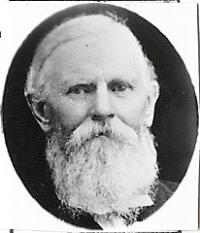
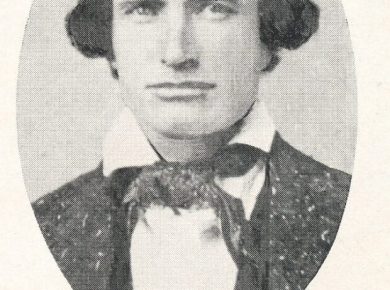
ACCOMPLISHMENTS: Stephen Webb Alley was born on December 12, 1832, at Salem Essex County, Massachusetts, the son of George Alley and Mary Symonds.
He attended the schools in Salem, Massachusetts until about ten years of age. At this time (1842) he emigrated with the rest of the family to Nauvoo, Illinois. His parents had been converted to the Church of Jesus Christ of Latter Day Saints by Apostle Erastus Snow.
The trip to Nauvoo was made by a long route and several modes of transportation were used. They went first to Albany, New York, by “steam cars” and then to Buffalo on the Erie Canal. From Buffalo to Cleveland the journey was a steamboat on Lake Erie, then overland by steam cars again, to Portsmouth, down the Ohio River to the Mississippi and up the Mississippi. At Quincy, they were met by floating ice which prevented their further passage by boat. Hence we deduce that the journey was made in early spring, probably in March. At Quincy they resumed their journey by hiring teams to take them to Nauvoo.
Here at last they had reached their goal to be among the chosen people, to be able to hear the words of a Prophet of God as they fell from his own lips. The feeling possessed by the head of the family is expressed by an entry in his Bible which he made at this time: “Arrived in Nauvoo, 1842, by virtue of the commandment of the Lord, to gather out of Babylon”,
The boy Stephen was entered in the common schools in Nauvoo upon their arrival there. It was during this time that he was baptized in the Mississippi River.
In the fall of 1846, the Prophet having been murdered two years previously, the Alley family went to Winter Quarters by ox-team and the children were again put into school until they were ready to leave for Salt Lake nearly two years later.
On June 1, 1848, in Brigham Young’s company, they set out across the plains on the last leg of their long journey to the “Tops of the Mountains”. George Alley, Stephen’s father, was made the captain of one of the groups in this company. We can only imagine what their feelings were as they faced the hardships they knew they would have to face. They had full knowledge of the calamities which had befallen the companies of the year previous, yet they turned to the wide prairies and the distant mountains with but one thought in mind that their leader wanted them to follow him to the place which inspiration had indicated was their future home and the gathering place of the Saints. He was a Prophet of God and his counsels were not to be spurned or treated lightly. They had no thought of disobeying his instructions or following any course aside from the one he directed. Therefore, it is more than likely that their attitude was one of calm fortitude and their trepidation, if present, was only inward.
The Alley family at the time of this crossing was made up of George and Mary Symonds Alley and the following children: George Hubbard, Lydia Ann, Susan Hannah, Stephen Webb, Elizabeth Royce and Charles H. Another daughter, Margaret, married Brigham Young at Winter Quarters before they started for Great Salt Lake.
The journey was as pleasant as one of this kind could be. Most of the time, the wagons traveled four abreast for protection from Indians and buffalo. The buffalo were a particular danger as they frequently came down in great herds, sweeping everything before them. The only way to stop them was to set the grass afire between the wagon train and the herds.
The trail was well marked as the pioneers had the road staked out for a railroad even at that early date, from Omaha to Salt Lake. Camp grounds and watering places were plainly indicated and this marking was a great help to those who followed the earlier companies.
The first group of the Brigham Young company arrived in Salt Lake Valley, on Sept. 20, 1948, three months and nineteen days after leaving Winter Quarters. However, George Alley’s company did not arrive until Sept. 22. Upon their arrival, they found one log house outside the old fort. This cabin stood on the spot where the Beehive House now stands, on the corner of State and South Temple Streets. There were only a few farms. The rest of the land was covered with sage brush. The Alley family went to North Canyon, Bountiful, where they spent the winter. The next spring they chopped down trees and built a cabin on the corner of 4th South and State Streets. The cabin consisted of one room downstairs and one overhead. The only means of communication between one room and other was by ladder. This cabin was replaced by a seven-room adobe home in which Stephen lived until the fall of 1890.
Stephen helped his father plow and plant. Having reached the age of sixteen, he was a strapping, hard working, young fellow, a great help in performing the hard work that is an integral part of any pioneering enterprise.
Much has been written about the hardships suffered by this faithful group during those first hard years in the barren Salt Lake Valley. The Alley family was no exception. However, it was during the first year that the family endured the worst of these difficulties. They had a certain quantity of corn meal which they brought with them and they could only use one quart a day. They were more fortunate than most of their neighbors in that they had two cows and so did not lack for milk. Taking the milk and thickening it with corn meal, calling the mixture porridge, they prepared their principal food. They also used sego and sego pudding as part of their diet. This state of affairs lasted until those emigrants who had made the long voyage around Cape Horn arrived from California. After that, they were able to get different kinds of food.
Stephen, besides farming helped to get wood from the mountains or in his own words, “roll the logs down the canyon”. Later, he hauled coal from Coalville.
He had a deep interest in music and was himself an accomplished musician. After the old Social Hall was erected he played in the orchestra for dances. As a violinist he was much in demand. When the Salt Lake Theater was completed, in 1862, he played in the orchestra on the opening night.
On April 7, 1863, he received a call to serve on a mission for the Church in England. He was set apart and received his blessing as a missionary at the hands of Amasa M. Lyman, Wilford Woodruff and Lorenzo Snow. His departure was not delayed long inasmuch as he left Salt Lake City on April 26. The journey to New York City occupied about ten weeks. On July 6, in the company of eleven other elders he went aboard the steamship “Mersey” at 12 noon. The Mersey sailed at 1:20 p.m. They landed at Liverpool on July 25–just nineteen days after sailing.
During his mission he frequently played the violin at dances. He labored for several weeks in Sheffield, arriving there on Nov. 7, 1864. Upon his arrival, he was taken to the home of George and Hannah Turner for tea, and it is supposed that it was then he met Emma Turner, his future wife.
He left England after a mission three and one-half years in length. The return trip was made in a sailing vessel. They were on the ocean six weeks.
Almost two years later, on May 24, 1868, Emma Turner left England for Salt Lake, intending to go on south to visit her sister, Selina Turner Cromar who had previously emigrated and was serving with her husband, William T. Cromar, a mission on the Muddy River. Upon her arrival in Salt Lake City, Stephen took her to his mother’s house. Mary Symonds Alley refused to let Emma go farther south until she had rested a few days. She never went on south, but remained and married Stephen Webb Alley on Oct. 3, 1868, just six weeks after arriving in Salt Lake.
Six children were born to the union but one, a daughter, died during birth. Stephen Webb Alley and his family lived in the old home on the corner of 4th South and State Streets until the fall of 1890 when they moved to their new home–a nine-room house on their 10-acre farm in the southeastern portion of the city. This house is still standing at 941 South Eighth East.
Before moving Stephen played for dances at night and farmed in the daytime. He belonged to the Tenth Ward Band. Besides farming and playing at dances, he was a cooper and did a great deal of that kind of work in the early days.
Stephen Webb Alley died June 13, 1921. He was a well-known and greatly respected citizen of Salt Lake City. He was dearly loved by his entire family and they still greatly honor his memory.
Of his brothers and sisters, the following might be mentioned: Margaret Alley married Brigham Young. Both Lydia Ann and Susan Hannah married Daniel H. Wells. Elizabeth Royce Alley married Patrick Lynch. Charles Alley married Adelaide York. George never married but was well known as a Pony Express rider and freighter in early days.
Children:
- Stephen Wells 16 Aug., 1869
- Ellen May 29 Jan., 1872
- Katherine 31 May, 1875
- George 3 Mar., 1878
- Daughter Stillborn
- Edna Emma 3 Sep, 1888


 Brother Joseph