 0
0
 1
1

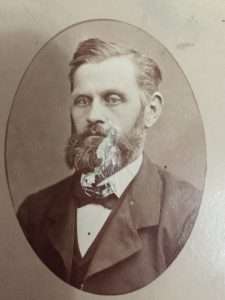
(1836-1899)
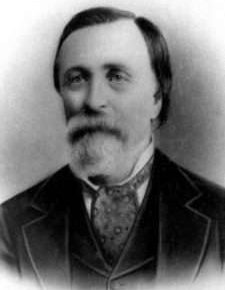
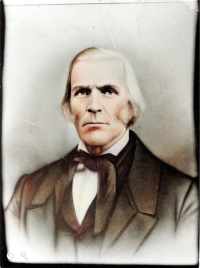
George Atkin was born March 12, 1836, at Louth, Lincolnshire, England. He was the fifth child of Thomas and Mary Morley Atkin. George was the youngest of three children who lived to maturity. Emily and Thomas Junior were the older siblings. George’s parents were well off as his father was a carpenter and joiner and owned four houses on Union Hill, a very nice part of the town of Louth. The family lived in one house and the other three were rented. George had a good education for that period.
When his father heard the message from the elders of the Church of Jesus Christ of Latter-day Saints he embraced the gospel and was baptized. He then taught his wife and three children. The mother and two older children were baptized at this time. George, at age ten, was baptized by Elder George Robbins on September 13, 1846.
The younger Atkin son was 13 when he and his family boarded the ship “Zetland” at Liverpool and set sail for America. The date was January 29, 1849. George, along with many other passengers became seasick. He witnessed a fire in the cookhouse, saw a whale, and felt 117-degree heat in the Caribbean before the ship arrived in New Orleans on April 2.
The group sailed up the Mississippi River to St. Louis. Some of the passengers on the river steamboat contracted cholera. The pilot and six passengers died. From St. Louis, the Atkins and others took another river craft to sail up the Missouri River to Kanesville, Iowa, now called Council Bluffs. The piston rod on the steamboat broke, injuring a horse that was on board, and detaining the ship for six days. Three people from Louth died of cholera while on this part of the journey. George’s mother also became ill with the disease and did not recover until the wagon train was on its way. While sailing up the Missouri River, the European converts saw their first Indians. They were to see many more.
The Atkins bought oxen, used wagons, and the last of their provisions at Kanesville. Other members of their company did the same. All of them, with their gear, crossed the Missouri River on a ferry. While waiting for their departure date, company members visited the vacated community of Winter Quarters now called Florence. George and his family and their company, which numbered about 350 persons, left Florence for the Salt Lake Valley on June 8. Orson Spencer was their appointed leader.
Indians were camped along with parts of the trail so all men were required to muster arms. Fording rivers, which were quite deep and dangerous with quicksand bottoms, caused excitement. By July the group was in buffalo country. George and his brother, Thomas, went with the hunters to see the animals at a closer range. The hunters brought back meat for the wagon train. After more than three months on the trail, the Spencer company arrived in the Salt Lake Valley on September 22.
The family obtained a one and one-fourth acre lot in the Eleventh Ward and soon constructed a one-room adobe house on it. George and his brother, Thomas, slept in one of their wagons. A large garden was planted in the spring which the two brothers tended besides working for shares on the five-acre Greenwood farm south of the city.
In 1851 the Atkin family moved to a forty-acre farm near Settlement Canyon in the Tooele Valley. When Indians became a problem, the family moved to the town fort for protection. When the township of Tooele was formed, George, his father, and his brother all acquired lots on the same street for their homes.
While crossing the plains George met Sarah Matilda Utley, the oldest daughter of one of the pioneer families. Her mother had died during the journey and Sarah had taken over the care of her younger siblings. She was ten and George was 13 at the time. The Utley family also settled in Tooele. The young people continued their friendship. When George was 20 and Sarah was 17 they were part of a double wedding with his brother, Thomas, and bride, Mary Ann Maughan. The date was May 20, 1856. The officiator was Bishop John Rowberry. Two weeks later on June 4, both couples and the Atkin parents traveled to Salt Lake City to receive their endowments and to be sealed in the Endowment House.
George and Sarah had nine children: Mary Elizabeth, Emily, George, Little John, Alice, Sarah Matilda, Thomas Henry, William Thompson, and Mildred. They all lived to maturity. Like his father, George was good with carpenter tools. The two men built a number of homes, the first LDS chapel, and other structures. Their names are on several plaques noting their contributions. George managed the co-op store and it boasted the first telephone in the community. He later operated the Tooele Z.C.M.I. store. He was a member of the County Livestock Association. George and his brother were both members of the Tooele militia. He played in Tooele’s first band and performed on one of a number of instruments brought to Tooele by Scotsman, John Shields. The younger Atkin brother enjoyed being in the Dramatic Club.
George willingly accepted civic responsibilities. He was city marshall, a member of the Tooele City Council for 12 years, and then served a term as mayor beginning in 1883. His fellow-citizens also elected George to a term in the Utah State Legislature.
Many church callings came to George. He was a Sunday School teacher and later superintendent. During a stake conference on October 7, 1876, George, then 40, was called to serve a mission in England. While there he wrote reports of his mission experiences which were published in the Deseret News. After a year Elder Atkin boarded the ship “Idaho” for his return home. While on the ship he was the chaplain of the company of saints and returning elders. Back home he was called to other church positions including counselor to the first bishop of Tooele, John Rowberry, and president of the Twenty-first Quorum of Seventy. George also served as clerk of the Tooele Stake from 1892 to 1894.
On November 22, 1883, following church procedures, George then 47, took a second wife. She was twenty-year-old Emma Johnson, daughter of Swedish handcart pioneers, Andrew John and Elna Petronella Pehrson Johnson. Emma established a home in Salt Lake City where she and George became parents of two daughters, Rebecca Petronella and Effie.
George was ill for about two years with heart problems before he died on January 3, 1899, at the age of 62. He was buried in the Tooele City Cemetery. His first wife, Sarah, moved to Rich county to live with a daughter. Emma and her two girls moved back to Tooele where they operated a millinery store,


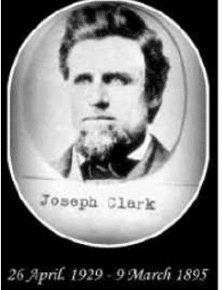
 Brother Joseph